
Low maintenance faucet
Why Low-Maintenance Faucets Have Become a Priority in 2026
In 2026, property developers are facing a very different reality compared to just a few years ago. Rising labor costs, tighter project timelines, and increasing tenant expectations have fundamentally changed how plumbing products are selected for apartments, mixed-use developments, and commercial buildings. Among all fixtures, faucets have become a critical focus point, not because of their appearance alone, but because of how often they fail, leak, or require maintenance over time.
For modern developers, a faucet is no longer judged by its purchase price. Instead, it is evaluated by its total cost of ownership, including installation efficiency, durability, maintenance frequency, and long-term reliability. This shift is exactly why the demand for a low maintenance faucet has surged across residential and commercial projects worldwide.
A single leaking faucet in a residential unit may seem insignificant, but when multiplied across hundreds or thousands of apartments, the cost becomes substantial. Maintenance calls, tenant complaints, water waste, and brand reputation all come into play. Developers increasingly understand that choosing a durable faucet from the beginning reduces operational risks throughout the lifecycle of a property.
At the same time, regulations related to water efficiency, sustainability, and building performance are becoming stricter in many markets. Developers must balance compliance, cost control, and tenant satisfaction, which further reinforces the need for faucets that perform reliably with minimal intervention. In this context, low-maintenance faucets are no longer an upgrade; they are a baseline requirement.
This article explores what property developers truly prefer when selecting low-maintenance faucets in 2026. Rather than focusing on marketing claims, it breaks down the technical, financial, and operational factors that matter most in large-scale projects. From material selection to internal structure, and from apartment use cases to commercial environments, this guide explains why durability and maintenance efficiency now define faucet value.
Real Estate and Commercial Plumbing Trends Shaping 2026 Projects
The growing preference for low-maintenance faucets does not exist in isolation. It is directly influenced by broader real estate and construction trends that are reshaping how plumbing systems are designed and specified in 2026.
Rising Maintenance Costs in Property Management
One of the most influential trends is the steady increase in maintenance-related expenses. Skilled labor shortages in many regions have pushed service costs higher, while response times for repairs have become longer. For property developers and asset managers, this means every avoidable maintenance issue directly impacts profitability.
A low maintenance faucet reduces the frequency of service calls by minimizing common failure points such as cartridge wear, handle looseness, and internal leakage. Developers now factor these long-term savings into procurement decisions, often prioritizing durability over short-term cost reductions.
In apartment projects especially, routine faucet repairs can disrupt tenants and strain management resources. Choosing durable faucet designs helps stabilize operational costs and simplifies ongoing property maintenance.
High-Density Living and Increased Usage Frequency
Urbanization continues to drive high-density housing developments across global markets. In such environments, faucets are subjected to far more frequent use than in single-family homes. Kitchens and bathrooms in apartments, co-living spaces, and serviced residences experience constant daily operation, accelerating wear on internal components.
This increased usage highlights the weaknesses of poorly designed faucets. Developers in 2026 increasingly demand faucets that can withstand continuous operation without frequent breakdowns. As a result, durable faucet engineering has become a critical selection criterion rather than a secondary consideration.
Low maintenance faucets designed for high-cycle usage significantly outperform standard residential models, making them the preferred option for developers managing long-term rental assets.
Commercial Projects Demand Predictability and Consistency
In commercial buildings such as offices, hotels, retail centers, and healthcare facilities, predictability is key. Faucet failures in public restrooms or shared spaces can disrupt operations, affect customer experience, and generate negative feedback.
Developers working on commercial projects prefer faucets with proven performance records, standardized components, and easy access to replacement parts. A low maintenance faucet in this context is one that performs consistently across hundreds of identical installations, reducing uncertainty and simplifying facility management.
Durable faucets designed specifically for commercial environments help developers maintain operational continuity while keeping maintenance budgets under control.
Sustainability and Water Efficiency Expectations
Water efficiency regulations continue to tighten, and sustainability goals are now embedded in many real estate investment strategies. While water-saving features are important, developers increasingly recognize that poorly engineered water-efficient faucets can lead to higher maintenance costs if durability is compromised.
In 2026, the most successful faucet designs balance water efficiency with long-term reliability. A truly low maintenance faucet not only reduces water consumption but also maintains stable performance over time without frequent adjustments or part replacements.
Durable internal components, high-quality cartridges, and corrosion-resistant materials play a crucial role in meeting both sustainability and maintenance expectations.
Shift Toward Lifecycle-Based Procurement
Another defining trend in 2026 is the shift from price-driven procurement to lifecycle-based decision-making. Developers now evaluate faucets based on how they perform over 5, 10, or even 15 years rather than focusing solely on initial cost.
This approach naturally favors low maintenance faucets that offer longer service intervals and fewer failures. Durable faucet construction becomes an investment rather than an expense, particularly in large-scale developments where replacement costs can escalate rapidly.
By adopting lifecycle analysis, developers are reshaping supplier expectations and raising the bar for faucet quality across the industry.
What “Low Maintenance Faucet” Really Means to Property Developers
The term “low maintenance faucet” is frequently used in product catalogs and marketing materials, but for property developers, its meaning is far more specific and practical. In large-scale residential and commercial projects, low maintenance is not about convenience alone; it is about predictability, risk control, and long-term cost management.
Developers do not evaluate faucets the same way end consumers do. While homeowners may focus on design or brand perception, developers assess faucets through the lens of operational impact. A faucet becomes a maintenance issue when it generates service calls, disrupts tenants, or increases water-related costs. Understanding this perspective is essential to grasp why certain faucet designs are preferred in 2026.
Fewer Repairs Over Long-Term Use
For developers, a low maintenance faucet is one that requires as few interventions as possible throughout its service life. This means fewer repairs, fewer part replacements, and fewer unexpected failures.
In apartment complexes, even minor faucet issues such as stiff handles or inconsistent water flow can quickly escalate into dozens of maintenance requests. Each request consumes time, labor, and resources. Over time, these small inefficiencies accumulate into significant operational expenses.
Low maintenance faucets are designed with durability as a primary goal. High-quality cartridges, reinforced internal structures, and precise manufacturing tolerances all contribute to longer service intervals. Developers prefer faucet models that maintain smooth operation after years of daily use, reducing the need for frequent adjustments or repairs.
A durable faucet that performs consistently over time allows property managers to focus on preventive maintenance rather than reactive troubleshooting.
Lower Risk of Faucet Leakage
Among all faucet-related problems, leakage is the most costly and disruptive for property developers. Even slow drips can lead to water waste, staining, mold growth, and tenant dissatisfaction. In multi-unit buildings, a single leaking faucet can affect multiple apartments if left unaddressed.
From a developer’s perspective, a truly low maintenance faucet is one that minimizes the risk of internal and external leakage. This includes leak-resistant cartridge systems, reliable sealing components, and robust valve assemblies.
Many developers now prioritize faucet designs that have been engineered specifically to reduce leakage risk over long-term use. Poor cartridge quality, incompatible materials, or weak internal seals often result in recurring leaks that require repeated service visits. By contrast, durable faucet designs focus on stable performance under constant water pressure and frequent operation.
This is also why developers actively seek educational resources on common leakage causes and prevention methods, often linking faucet selection decisions with long-term leakage management strategies.
Standardized and Easily Replaceable Components
Another critical factor in defining a low maintenance faucet is component standardization. Developers strongly prefer faucets that use widely available cartridges and replacement parts rather than proprietary systems that are difficult to source.
In large developments, maintenance efficiency depends heavily on how quickly repairs can be completed. When replacement parts are standardized, property managers can keep inventory on hand and resolve issues without long delays. This reduces downtime and prevents minor problems from escalating into larger complaints.
Durable faucets designed for professional applications often prioritize modular internal components. This approach simplifies servicing and extends product lifespan, aligning well with the operational priorities of property developers.
Standardization also reduces training requirements for maintenance staff, further lowering long-term operational costs.
Reduced Tenant Complaints and Operational Disruptions
From a developer’s viewpoint, maintenance issues are not just technical problems; they are customer experience issues. Frequent faucet problems directly impact tenant satisfaction and retention, especially in competitive rental markets.
Low maintenance faucets help maintain a consistent living or working environment by reducing the likelihood of unexpected failures. Durable faucet performance ensures that water flow, temperature control, and handle operation remain stable over time.
When tenants experience fewer plumbing-related disruptions, property managers receive fewer complaints, and overall operational efficiency improves. This indirect benefit is one of the strongest reasons developers prioritize low maintenance faucet solutions in 2026.
Predictable Maintenance Planning
Developers increasingly rely on planned maintenance schedules rather than reactive repairs. A low maintenance faucet supports this strategy by offering predictable service intervals and clear maintenance requirements.
Durable faucet designs that have been tested for long-term use allow developers to forecast maintenance costs with greater accuracy. This predictability is especially valuable in large-scale projects where budgeting precision is critical.
By choosing faucet models with proven durability and low failure rates, developers can integrate plumbing maintenance into broader asset management strategies without unexpected cost spikes.
Durable Faucet Design: Engineering for Long-Term Use
Durability is the foundation of every low maintenance faucet, yet it is also one of the most misunderstood concepts in faucet selection. For property developers, durability is not simply about weight, thickness, or appearance. Instead, it is the result of careful engineering decisions that determine how a faucet performs under constant use, pressure fluctuations, and environmental stress over many years.
In 2026, developers increasingly recognize that a durable faucet is engineered from the inside out. While surface finishes and external form contribute to perceived quality, long-term performance depends primarily on internal structure, component interaction, and manufacturing precision.
Durability Is Not About Weight Alone
A common misconception in faucet sourcing is that heavier faucets are automatically more durable. While material density can indicate quality, weight alone does not guarantee long-term reliability. Poor internal design, incompatible materials, or substandard cartridges can cause even heavy faucets to fail prematurely.
Developers have learned through experience that durable faucet performance is defined by how internal components handle repeated movement and pressure cycles. A low maintenance faucet must be able to operate smoothly after tens of thousands of open-and-close actions without loosening, leaking, or degrading.
Engineering-focused manufacturers prioritize internal balance rather than excessive mass. This approach results in faucets that are structurally stable while avoiding unnecessary stress on mounting points and plumbing connections.
Internal Structure Determines Lifespan
The internal structure of a faucet plays a decisive role in its durability. Key elements such as the valve body, cartridge housing, and sealing surfaces must work together seamlessly to prevent wear and leakage.
In durable faucet designs, internal channels are engineered to ensure consistent water flow and balanced pressure distribution. This reduces turbulence, which is a common cause of internal erosion and component fatigue. Over time, reduced internal stress directly translates into fewer failures and lower maintenance requirements.
Developers increasingly favor faucets with simplified internal layouts. Fewer moving parts mean fewer potential failure points, making the faucet easier to maintain and more reliable over its service life.
Precision Manufacturing and Tolerances
Another critical aspect of durable faucet design is manufacturing precision. Tight tolerances between internal components ensure smooth operation and stable sealing performance. Inconsistent tolerances can lead to premature wear, noise, or leakage, even if high-quality materials are used.
For large property projects, consistency across units is just as important as individual faucet quality. Developers need every faucet to perform the same way, regardless of where it is installed. Durable faucets produced under strict quality control systems provide this consistency, reducing the risk of widespread maintenance issues.
Precision manufacturing also improves compatibility with standardized replacement parts, further supporting low maintenance requirements in commercial and residential developments.
Pressure Resistance in High-Rise Buildings
High-rise residential and commercial buildings present unique challenges for faucet durability. Water pressure variations across floors can place significant stress on internal components, especially in systems without proper pressure regulation.
A low maintenance faucet designed for high-rise applications must withstand fluctuating pressure without compromising performance. Durable faucet designs incorporate reinforced internal structures and pressure-resistant cartridges to ensure stable operation under these conditions.
Developers working on vertical projects often prioritize faucets that have been tested under elevated pressure conditions. This proactive approach helps prevent leakage and internal damage that could otherwise occur over time.
Compatibility with Long-Term Maintenance Strategies
Durable faucet engineering also considers future maintenance needs. A faucet that cannot be easily serviced or repaired may appear durable initially but becomes a liability over time. Developers prefer designs that allow for straightforward cartridge replacement and internal inspection without requiring full fixture removal.
Low maintenance faucets that support simple servicing reduce downtime and labor costs. This design philosophy aligns closely with the operational realities of property management, where efficiency and predictability are paramount.
By combining robust internal design with service-friendly construction, durable faucets deliver long-term value that extends beyond initial installation.
Faucet Materials Compared: Brass, Stainless Steel, and Zinc
Material selection is one of the most critical decisions when choosing a low maintenance faucet for property development projects. While finishes and design may influence first impressions, the core material determines durability, corrosion resistance, and long-term maintenance performance.
In 2026, property developers are far more cautious about material choices than in the past. Experience has shown that selecting the wrong material can lead to premature wear, internal corrosion, and frequent maintenance issues—especially in high-usage apartment and commercial environments. Understanding how different materials perform over time is essential for choosing a truly durable faucet.
Brass Faucets: Proven Reliability for Long-Term Projects

Brass remains one of the most widely used materials in durable faucet manufacturing, particularly for commercial and residential developments that prioritize long-term reliability.
From a developer’s perspective, brass offers a strong balance between strength, corrosion resistance, and machinability. High-quality brass faucet bodies maintain structural stability even after years of exposure to water pressure, temperature changes, and daily use.
One key advantage of brass in low maintenance faucet applications is its resistance to internal corrosion. Unlike lower-grade alloys, properly formulated brass resists dezincification and internal erosion, which are common causes of hidden leaks over time. This makes brass faucets especially suitable for apartment projects where internal failures can be costly to detect and repair.
Developers often favor brass faucets when lifecycle cost is a priority. While initial costs may be higher than alternative materials, the reduced risk of leakage and longer service life typically result in lower total ownership costs.
Stainless Steel Faucets: Strength and Hygiene in High-Use Environments
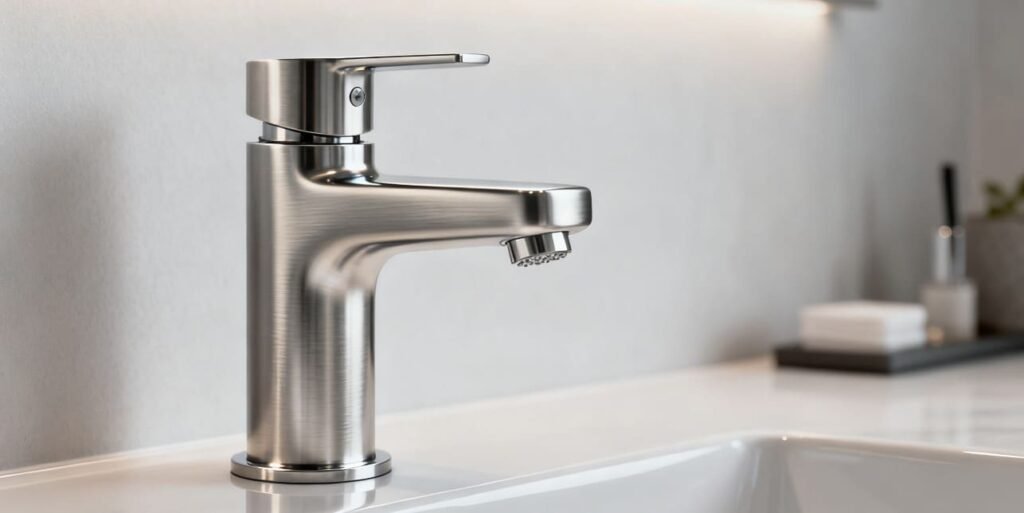
Stainless steel faucets have gained increasing popularity in 2026, particularly in commercial projects and modern residential developments. Known for their strength and clean appearance, stainless steel faucets are often associated with durability and hygiene.
From a structural standpoint, stainless steel offers excellent resistance to impact and deformation. This makes it suitable for high-traffic areas such as public restrooms, shared kitchens, and commercial facilities where faucets are subject to heavy use.
In terms of maintenance, stainless steel performs well against external corrosion and surface wear. It is less prone to finish peeling or discoloration, which reduces cosmetic maintenance over time. For developers managing commercial properties, this visual durability contributes to a consistent and professional appearance.
However, not all stainless steel faucets are created equal. Developers must ensure that internal components are equally robust. A stainless steel exterior combined with low-quality internal parts can still result in leakage or performance issues. For a faucet to be truly low maintenance, material quality must be consistent throughout the entire structure.
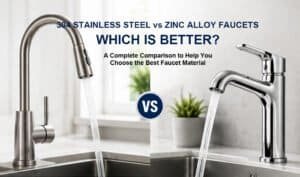
Zinc Faucets: Cost Advantages with Trade-Offs
Zinc faucets are often chosen for their lower initial cost, making them attractive in budget-sensitive projects. However, from a long-term maintenance perspective, zinc presents several challenges that developers must carefully consider.
Zinc alloy is generally less durable than brass or stainless steel, particularly under constant use. Over time, zinc faucet bodies may suffer from internal corrosion, cracking, or thread wear. These issues increase the likelihood of leaks and component failure, leading to higher maintenance frequency.

In apartment projects with high occupancy turnover, zinc faucets may initially perform adequately but often show signs of degradation earlier than alternative materials. For developers focused on minimizing maintenance interventions, this trade-off can outweigh the short-term cost savings.
As a result, zinc faucets are increasingly limited to low-usage applications or short-term developments. In 2026, many developers view zinc as a compromise rather than a long-term solution for low maintenance faucet requirements.
Material Choice and Its Impact on Faucet Leakage
Material selection has a direct impact on leakage risk, which remains one of the primary concerns for property developers. Internal corrosion, weakened threads, and material fatigue are common causes of leakage that often go unnoticed until significant damage occurs.
Durable faucet materials such as high-quality brass and stainless steel provide stronger internal sealing surfaces and better compatibility with long-life cartridges. This reduces the likelihood of leakage over extended periods, especially in buildings with variable water pressure.
Developers increasingly link material choice with leakage prevention strategies, recognizing that durable materials are a foundational element of low maintenance faucet design.
Matching Materials to Project Type
In 2026, developers rarely adopt a one-size-fits-all approach to faucet materials. Instead, material selection is aligned with project type and usage patterns.
- Apartments and rental propertiesoften favor brass faucets for their balance of durability and serviceability。
- Commercial buildings and public facilitiesmay prioritize stainless steel for its strength and visual consistency.
- Low-usage or cost-sensitive projectsmay still consider zinc, but with clear expectations regarding maintenance cycles.
By matching materials to operational demands, developers optimize both durability and maintenance efficiency.
Cartridge Technology and Internal Components Explained
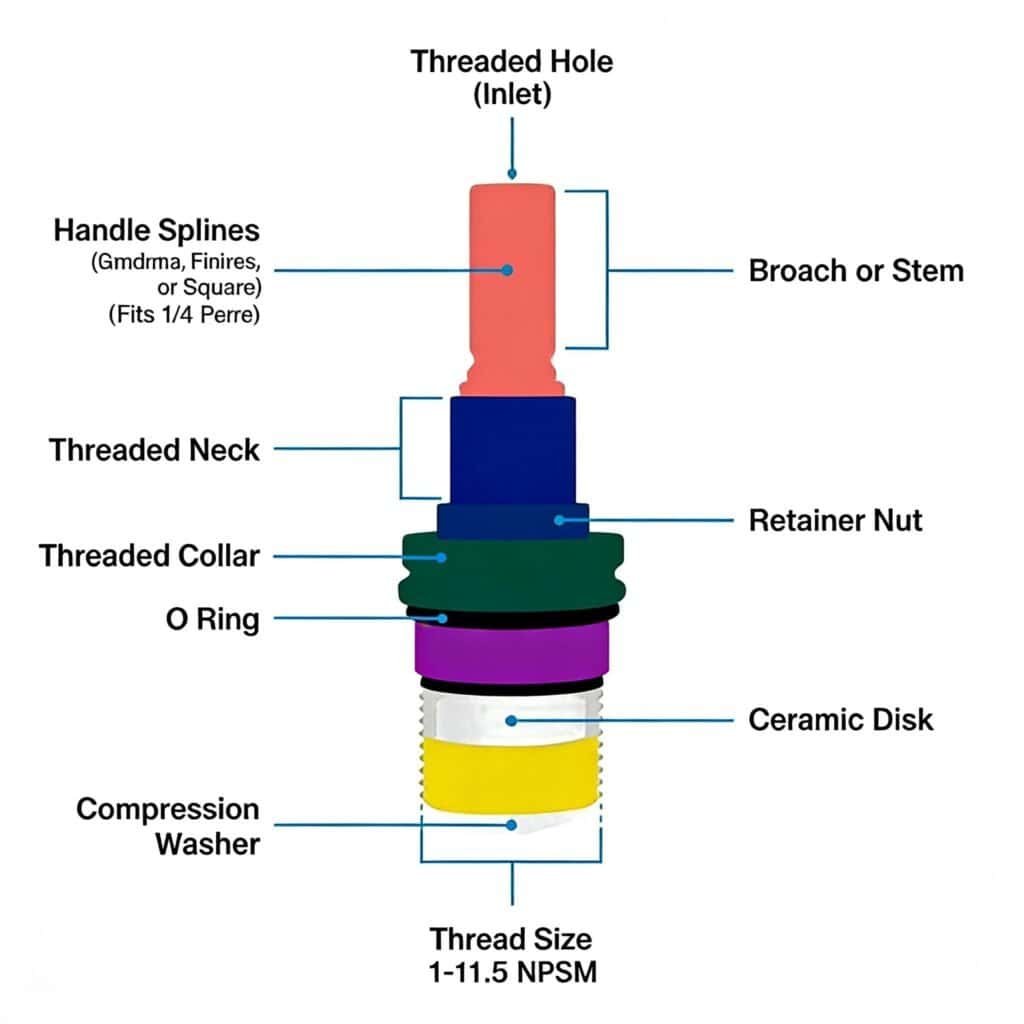
When it comes to low-maintenance faucets, the internal cartridge is truly the heart of the system. The cartridge controls the flow and temperature of water with precision, and its design directly impacts durability, ease of use, and leakage risk. Understanding how cartridges work is essential for property developers, facility managers, and homeowners who want faucets that require minimal upkeep.
Why the Cartridge is the “Core” of Low-Maintenance Faucets
A faucet cartridge functions as a compact valve inside the faucet body, translating the movement of handles into controlled water flow. Unlike traditional compression faucets, where washers and multiple moving parts wear down quickly, a well-designed cartridge simplifies the mechanical process. This simplification reduces friction, limits points of failure, and ensures long-term reliability.
Because the cartridge handles the majority of mechanical and sealing tasks, it is the component most responsible for maintenance frequency. A high-quality cartridge means fewer replacements, less downtime, and minimal service calls — all factors property developers prioritize when choosing faucets for large residential or commercial projects.
Ceramic Disc Cartridges vs Other Internal Structures
The most advanced cartridges use ceramic disc technology, which consists of two precisely engineered discs that slide over each other to control water flow. These discs are extremely hard, wear-resistant, and nearly frictionless. When compared to traditional rubber washer or ball-type cartridges:
- Rubber washer cartridges: Prone to wear, deform, and cause leaks after months of use.
- Ball-type cartridges: More durable than washers but require complex seals that can degrade over time.
- Ceramic disc cartridges: Nearly maintenance-free, highly resistant to mineral buildup, and significantly lower the risk of dripping or leaks.
Ceramic disc cartridges are particularly favored in commercial and multi-unit residential projects because they maintain smooth operation even under frequent, high-volume use.
How Cartridge Design Directly Affects Leakage Risk
Leakage is almost always caused by worn or misaligned internal components. Because the cartridge is the primary sealing mechanism, its material, tolerances, and precision machining determine the faucet’s leak resistance. High-quality cartridges feature:
- Tight manufacturing tolerancesto prevent unintended water escape.
- Durable seals or integrated O-ringsthat resist temperature and pressure fluctuations.
- Smooth operation surfacesto minimize friction and wear over time.
A poorly made cartridge, even in an otherwise premium faucet, can lead to dripping, slow leaks, or sudden failures. Conversely, investing in a superior cartridge upfront drastically reduces faucet maintenance needs and ensures long-term reliability, making it a key selling point for developers and facility managers alike.
How Cartridge Quality Impacts Long-Term Maintenance Costs
Investing in a high-quality cartridge upfront has a direct, measurable effect on long-term maintenance costs. In large-scale residential or commercial projects, even minor faucet issues — like a slow drip — can quickly escalate into significant maintenance overhead. Here’s why cartridge quality matters:
- Fewer Replacements Over Time
Ceramic disc cartridges and other precision-engineered designs are built to last tens of thousands of cycles. A faucet with a premium cartridge may operate flawlessly for 10–15 years without needing internal repairs, whereas faucets with lower-quality cartridges often require part replacements every 1–3 years. Reducing replacement frequency saves both material costs and labor. - Reduced Leakage Risk
As explained in the previous section, the cartridge is the main sealing component. High-quality cartridges maintain tight tolerances and resist mineral buildup, dramatically lowering the chance of leaks. Less leakage not only reduces water waste but also prevents costly water damage and associated repair bills — a key consideration for property developers managing multiple units. - Lower Service Labor
Faucets with durable cartridges are easier and quicker to service. Many ceramic disc cartridges are designed as single units, meaning a plumber can replace the entire cartridge in minutes without disassembling the faucet body. This efficiency reduces downtime and labor costs, an important factor in commercial facilities or high-occupancy buildings. - Enhanced User Experience
Smooth, consistent operation reduces complaints and service calls. Tenants or employees are less likely to report handle stiffness, dripping, or temperature inconsistencies. In large property developments, this translates to fewer maintenance tickets, higher satisfaction, and stronger property reputation.
Cartridge Insights for Faucet Maintenance Planning
Understanding cartridge technology also empowers maintenance teams to plan preventive strategies. For example:
- Routine inspection intervalscan be aligned with the expected lifecycle of a cartridge.
- Water quality monitoringensures mineral deposits don’t shorten cartridge life.
- Upgrading to ceramic disc cartridgesin older units can dramatically reduce recurring maintenance.
By positioning the cartridge as the centerpiece of your maintenance strategy, facility managers and developers can optimize faucet longevity, reduce total cost of ownership, and enhance tenant satisfaction.
Installation and Compatibility: Why the Right Cartridge Matters for Every Faucet Model
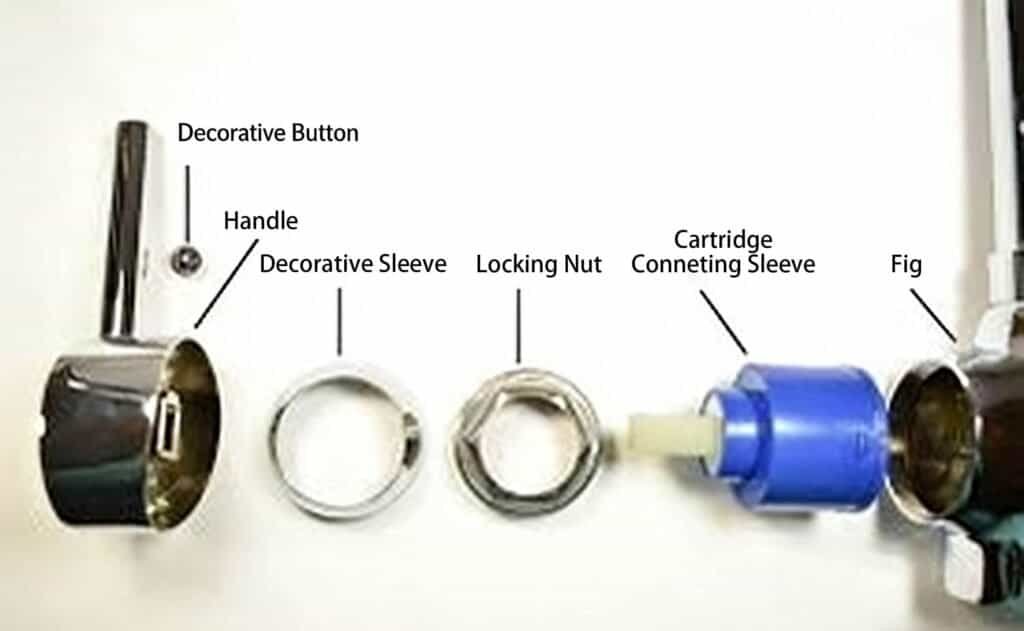
Even the highest-quality cartridge can underperform if it is not properly matched to the faucet model. Cartridge design varies by faucet type — single-handle, double-handle, pull-down, and commercial-grade units all have specific requirements. Choosing the right cartridge ensures smooth installation, optimal performance, and minimal long-term maintenance.
The Importance of Model-Specific Cartridges
Each faucet model is engineered with precise dimensions, water flow rates, and handle mechanics. Cartridges that do not match these specifications can cause:
- Improper sealing, leading to leaks or drips.
- Handle stiffness or uneven movement, reducing user comfort.
- Premature wear, shortening the lifespan of both the cartridge and faucet body.
Using the correct cartridge avoids these issues, maintaining the faucet’s low-maintenance promise and preventing unexpected faucet leakage.
Installation Considerations
A cartridge’s design also affects installation efficiency:
- Ease of Access: Modern faucets often allow cartridge replacement without disassembling the entire faucet body, making maintenance faster and less disruptive.
- Pre-Lubricated Seals: Many ceramic disc cartridges come with factory-applied lubrication on seals, ensuring smooth operation from day one and reducing friction wear.
- Standardized Mounting Dimensions: Quality cartridges often adhere to standardized measurements, allowing compatibility across multiple faucet lines from the same manufacturer — an advantage for property developers managing multi-unit projects.
Compatibility Checks for Low-Maintenance Performance
Before installation, verifying compatibility can save time and prevent long-term issues:
- Match cartridge type to faucet style: e.g., single-handle vs dual-handle, pull-out vs fixed spout.
- Check manufacturer specificationsfor dimensions, flow rate, and pressure ratings.
- Consider water quality: high mineral content or hard water may require cartridges with specialized seals or coatings.
By prioritizing installation accuracy and compatibility, developers and maintenance teams can preserve the durability and leak-free performance that low-maintenance faucets promise.
Cartridge Material Innovations: Enhancing Durability and Longevity
The material of a faucet cartridge is just as critical as its design. Advances in cartridge materials have revolutionized low-maintenance faucets, extending their lifespan and reducing the risk of leakage, even under frequent or heavy use. Developers, facility managers, and homeowners increasingly choose cartridges based on material innovations to optimize performance and reduce long-term costs.
Ceramic: The Gold Standard for Durability
Ceramic discs remain the industry benchmark for premium faucets. Key advantages include:
- Exceptional hardness: Resistant to wear, scratches, and mineral buildup.
- Smooth operation: Frictionless sliding reduces handle stiffness and ensures precise water control.
- Long lifecycle: High-quality ceramic cartridges can last over 50,000 cycles, translating to 10–15 years of maintenance-free use in typical residential applications.
Ceramic discs are particularly effective in hard water regions because they resist scaling, a common cause of faucet leakage and operational issues.
Metal Alloys: Strength and Corrosion Resistance
Some high-end cartridges incorporate stainless steel, brass, or specialized alloys for structural components. Benefits include:
- Corrosion resistance: Prevents rust, which can degrade seals and cause leaks.
- High pressure tolerance: Suitable for commercial buildings or multi-unit residential systems with variable water pressure.
- Impact resistance: Reduces risk of cracks or deformation during installation or accidental stress.
Metal components are often combined with ceramic discs to create hybrid cartridges that maximize both durability and low maintenance performance.
Composite and Polymer Materials: Lightweight and Efficient
Innovative polymers and composite materials are increasingly used in mid-range and commercial faucet cartridges:
- Lightweight design: Easier handling during installation and replacement.
- Chemical resistance: Suitable for areas with chlorinated or treated water supplies.
- Cost-effective: Provides long-term reliability without the high price of full metal or ceramic units.
Although composites may not match ceramic discs in sheer hardness, modern engineering has made them highly reliable and resistant to leaks, making them suitable for high-volume installations.
Material Selection and Maintenance Strategy
Choosing the right cartridge material directly affects maintenance planning:
- Ceramic cartridges: Ideal for long-term, low-maintenance projects; minimal servicing required.
- Metal-alloy cartridges: Best for high-pressure or heavy-use commercial environments.
- Composite cartridges: Efficient for cost-sensitive projects without sacrificing leak resistance.
By aligning cartridge material with project requirements, developers can optimize faucet longevity, reduce repair frequency, and maintain a leak-free experience — all essential for minimizing total cost of ownership.
Water Quality and Cartridge Longevity: Hard Water, Sediment, and Preventive Measures
Even the most advanced cartridge technology can be affected by water quality. Hard water, mineral deposits, and sediment are major factors that impact cartridge lifespan, operational smoothness, and the risk of faucet leakage. Understanding these environmental effects is critical for both property developers and facility managers who aim to reduce maintenance costs and ensure long-term reliability.
Hard Water and Mineral Scaling
Hard water contains high levels of calcium and magnesium, which can accumulate on ceramic discs, seals, and other internal components:
- Increased friction: Mineral deposits create rough surfaces, reducing the smooth operation of handles.
- Seal degradation: Over time, scaling can wear down O-rings and other sealing components, leading to drips and leaks.
- Reduced flow: Build-up may restrict water pathways, affecting faucet performance and user experience.
Cartridges made of high-quality ceramic discs or coated metals resist scaling better than traditional rubber or low-grade components. However, preventive measures remain important for maintaining low-maintenance performance.
Sediment and Particulate Matter
Sediment in water supplies — sand, rust, or other particulate matter — can scratch surfaces inside the cartridge and clog flow channels:
- Abrasion: Particles can erode sealing surfaces, especially in non-ceramic cartridges.
- Clogging: Sediment may reduce water flow or cause uneven temperature mixing, affecting faucet performance.
Installing faucet filters or in-line strainers is a simple yet effective preventive strategy. Regular inspection ensures that sediment does not accumulate to a level that compromises cartridge function.
Preventive Measures for Longevity
To maximize cartridge life and maintain low-maintenance operation, consider the following strategies:
- Water Filtration: Use inline filters or point-of-entry filtration systems to reduce hardness and sediment.
- Routine Flushing: Periodically flush faucets to remove loose particles and prevent scaling.
- Quality Cartridges: Select cartridges specifically rated for high-mineral environments or those with anti-scaling coatings.
- Scheduled Inspections: Incorporate cartridge checks into routine maintenance schedules to catch early signs of wear before leakage occurs。
By proactively addressing water quality issues, developers and facility managers can preserve the durability and leak resistance of faucets, extending the service life of cartridges and reducing maintenance interventions.
Cartridge Replacement vs Full Faucet Replacement: Cost and Practical Considerations
One of the most important decisions for facility managers and homeowners is whether to replace a worn or leaking cartridge or the entire faucet. Understanding the cost, labor, and performance implications can save significant resources and ensure long-term faucet reliability.
Advantages of Cartridge Replacement
Replacing only the cartridge is often the most cost-effective solution:
- Lower Material Costs: Cartridges are significantly cheaper than full faucet assemblies.
- Minimal Labor: Modern faucets with accessible cartridge designs allow quick replacement without removing the entire fixture. A skilled plumber can often complete the task in under 15 minutes.
- Reduced Downtime: Quick cartridge swaps minimize disruption in commercial buildings or multi-unit residential complexes.
- Sustainability: Replacing only the internal component reduces waste, aligning with green building practices.
For faucets equipped with ceramic disc cartridges or high-quality metal/composite units, replacement can restore performance nearly to new, ensuring smooth operation and leak-free service for years to come.
When Full Faucet Replacement is Necessary
Despite the advantages of cartridge replacement, certain situations may require replacing the entire faucet:
- Corrosion or Physical Damage: If the faucet body is compromised due to rust, cracks, or impacts, a new cartridge alone cannot restore performance.
- Obsolete or Non-Compatible Models: Older faucets may use cartridges that are no longer manufactured, making replacement impossible or impractical.
- Repeated Failures: If a faucet has experienced multiple cartridge replacements within a short period, the underlying faucet body may be worn, suggesting a full replacement is more cost-effective in the long run.
Practical Considerations for Property Developers and Facility Managers
- Inventory Management: Stocking commonly used cartridge types ensures rapid maintenance response without holding surplus faucets.
- Cost Analysis: Compare the cost of cartridge replacement (material + labor) versus full faucet replacement over the projected lifecycle. Often, high-quality cartridges provide superior long-term savings.
- Maintenance Planning: Establish a schedule for inspecting and replacing cartridges before leakage occurs, reducing emergency interventions and tenant complaints.
By carefully evaluating whether to replace the cartridge or the full faucet, facility managers can maintain low-maintenance performance, prevent unnecessary faucet leakage, and optimize both operational efficiency and cost savings.
Case Studies: How Cartridge Technology Reduces Maintenance in Multi-Unit Residential and Commercial Projects
Real-world applications demonstrate the profound impact of cartridge technology on long-term faucet performance, maintenance reduction, and cost savings. By examining multi-unit residential and commercial projects, developers and facility managers can better understand the practical benefits of investing in high-quality cartridges.
Case Study 1: High-Rise Residential Development in Mexico City
A 24-story residential complex installed faucets with ceramic disc cartridges across all kitchens and bathrooms. Key outcomes included:
- Minimal Leakage Reports: Over 3 years, fewer than 2% of units experienced minor drips, compared to industry averages of 10–15% for traditional rubber washer faucets。
- Reduced Maintenance Visits: Maintenance teams reported a 60% decrease in service calls related to faucets.
- Long-Term Cost Savings: Investing in ceramic disc cartridges upfront reduced replacement and labor costs by over 35%, compared to using standard cartridge models.
This project highlights how cartridge quality directly impacts both faucet durability and operational efficiency in high-density residential environments.
Case Study 2: Commercial Office Complex in São Paulo
A 12-floor office building opted for hybrid cartridges combining metal alloys and ceramic discs in all public and employee washrooms:
- High Volume Usage: Each faucet averaged 150–200 uses per day.
- Zero Major Failures: Over 5 years, only minor cartridge replacements were needed, with no full faucet replacements.
- Tenant Satisfaction: Smooth operation and leak-free performance contributed to positive tenant feedback and reduced complaints to facility management.
This case illustrates the importance of selecting cartridges engineered for heavy-duty commercial use, where durability and low maintenance are critical.
Case Study 3: Hotel Chain Renovation Project in Rio de Janeiro
During a hotel renovation, management replaced aging faucets with models featuring composite cartridges with anti-scaling coatings:
- Adaptation to Hard Water: The new cartridges resisted mineral buildup in an area with notoriously hard water.
- Maintenance Efficiency: Cartridge replacement time was reduced by 70% compared to previous faucet models.
- Operational Cost Reduction: The hotel reported lower water waste due to minimal leakage, directly contributing to reduced utility bills.
This example emphasizes how cartridge material and technology can be tailored to environmental conditions to maintain low-maintenance performance.
Lessons Learned from Real-World Applications
Across these case studies, several key insights emerge:
- High-Quality Cartridges Reduce Total Cost of Ownership: Upfront investment pays off through fewer replacements, labor savings, and reduced water waste.
- Material Selection Matters: Ceramic, metal-alloy, and composite cartridges each offer specific benefits depending on water quality, usage frequency, and project type.
- Preventive Maintenance is Key: Even low-maintenance faucets benefit from scheduled inspections, especially in hard water regions.
- Compatibility and Installation Affect Longevity: Correctly installed cartridges matched to faucet models ensure optimal performance and prevent leaks.
By learning from these real-world examples, developers and facility managers can make informed decisions about faucet selection, cartridge technology, and maintenance planning, ensuring long-term reliability and tenant satisfaction.
Future Trends in Cartridge Technology: Smart Faucets, Advanced Materials, and Ultra-Low Maintenance Designs
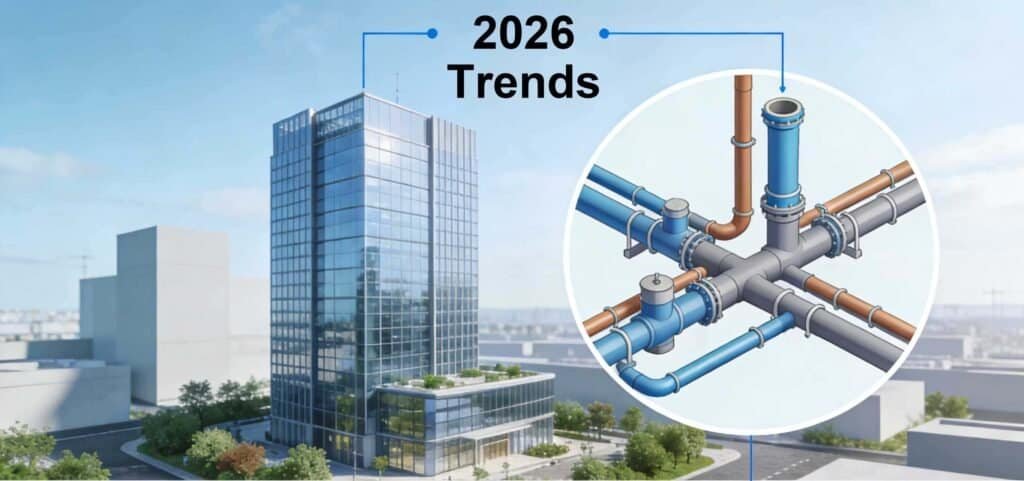
As the demand for low-maintenance faucets grows in residential, commercial, and hospitality projects, cartridge technology continues to evolve. Future innovations focus on enhancing durability, reducing maintenance, and integrating smart functionality to meet modern building standards and user expectations.
Smart Faucets and Sensor-Integrated Cartridges
The integration of digital sensors and smart control systems is transforming how cartridges operate:
- Touchless Activation: Cartridges are now engineered to work seamlessly with infrared or capacitive sensors, enabling touchless faucets that reduce wear on handles.
- Flow Regulation: Smart cartridges can automatically adjust water flow and temperature based on occupancy, minimizing waste and energy costs.
- Predictive Maintenance Alerts: Advanced sensors can detect early signs of wear or leakage within the cartridge, alerting facility managers before minor issues escalate.
These innovations not only improve user experience but also significantly reduce maintenance frequency and associated costs.
Advanced Materials for Next-Generation Durability
Material science continues to push the boundaries of cartridge longevity:
- Nano-Coatings: Anti-scaling and self-lubricating coatings reduce friction and prevent mineral buildup, extending the life of ceramic and metal components.
- High-Performance Polymers: New composite materials combine light weight with chemical and abrasion resistance, making them ideal for both hard water and high-traffic environments.
- Hybrid Alloys: Combining metals and ceramics at the microstructural level increases both mechanical strength and sealing precision, reducing leakage risk under extreme conditions.
These material innovations make cartridges virtually maintenance-free, even in challenging environments, and align with sustainable building practices.
Ultra-Low Maintenance Designs
Modern cartridge designs are increasingly focused on simplicity and modularity:
- One-Piece Cartridges: Entire internal mechanisms can be swapped without disassembling the faucet body, reducing labor time.
- Standardized Modular Components: Interchangeable parts across multiple faucet models simplify inventory management for developers and service teams.
- Enhanced Sealing Systems: Advanced O-rings, gaskets, and disc interfaces maintain consistent performance for decades, minimizing faucet leakage
By combining smart technology, advanced materials, and ultra-low maintenance designs, future cartridges are set to redefine cost-effective, durable, and leak-resistant faucets for both commercial and residential applications.
Summary: Why Cartridge Technology is the Key to Low-Maintenance Faucets
Across residential, commercial, and hospitality projects, the faucet cartridge stands out as the core component that determines performance, durability, and long-term maintenance requirements. From material selection to design precision, cartridges influence every aspect of faucet functionality, including leak resistance, smooth operation, and replacement costs.
Key takeaways include:
Durability and Reliability Depend on Cartridge Quality
- Ceramic discs, metal-alloy hybrids, and high-performance composites provide long-lasting operation with minimal friction, wear, or scaling.
- Investing in a high-quality cartridge upfront dramatically reduces faucet maintenance frequency and emergency repairs.
Material and Design Dictate Leak Resistance
- Tight manufacturing tolerances, advanced sealing systems, and anti-scaling coatings prevent drips and leaks, protecting property assets and minimizing water waste.
- Understanding the interplay between cartridge material, internal design, and environmental conditions is essential for preventing faucet leakage.
Installation, Compatibility, and Maintenance Planning are Critical
- Correctly matched cartridges ensure smooth operation and longevity.
- Modular, one-piece designs simplify replacement, reduce labor costs, and enable preventive maintenance strategies.
Future-Proofing Through Smart Technology and Advanced Materials
- Sensor integration, predictive maintenance alerts, and nano-coatings make modern cartridges nearly maintenance-free while optimizing efficiency.
- These innovations are particularly beneficial in high-use commercial projects or regions with challenging water conditions.
By understanding and leveraging cartridge technology, developers, facility managers, and homeowners can achieve faucets that combine low maintenance, high durability, and leak-free performance. This knowledge also serves as a foundation for the next steps in faucet care, providing strong guidance for both Faucet Maintenance and Faucet Leakage strategies.


 English
 Arabic
 Dutch
Dutch French
 German
 Greek
Greek Irish
Irish Italian
 Latin
Latin Polish
 Portuguese
 Russian
 Slovak
 Spanish
 Swedish
 Turkish