
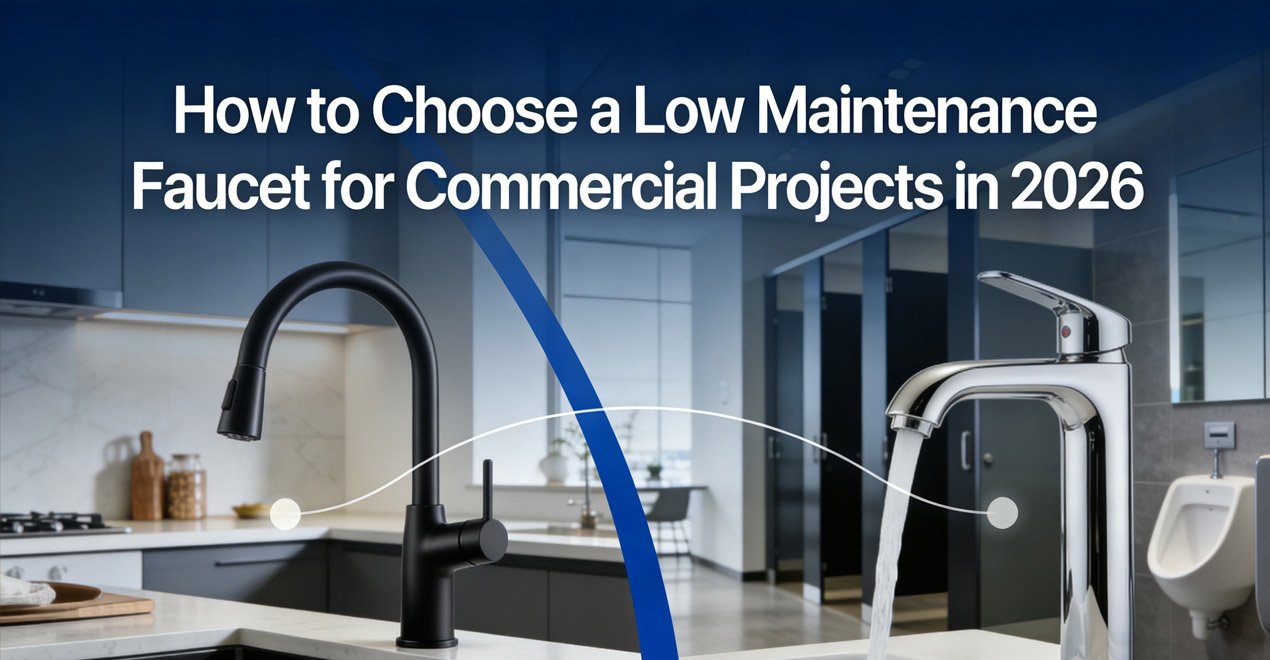
low maintenance faucet for commercial projects
In 2026, property developers are under more pressure than ever to balance construction cost control, long-term maintenance, and occupant satisfaction. From large-scale residential projects to mixed-use commercial developments, every component decision now carries long-term operational consequences. Among these decisions, faucets—often considered small fixtures—are becoming a critical focus point.
A low maintenance faucet is no longer just a “nice-to-have” feature. For property developers, it directly impacts post-handover complaints, maintenance labor costs, water leakage risks, and even brand reputation. Poor faucet selection can lead to frequent cartridge failures, dripping issues, and high after-sales servicing costs across hundreds or thousands of units.
That is why durable faucets with low maintenance requirements are increasingly preferred in 2026 development projects. In this article, we break down what property developers actually look for in low maintenance faucets, why maintenance-friendly design matters, and how choosing the right faucet technology can significantly reduce long-term operational risks.
Why Low-Maintenance Faucets Matter More Than Ever for Property Developers
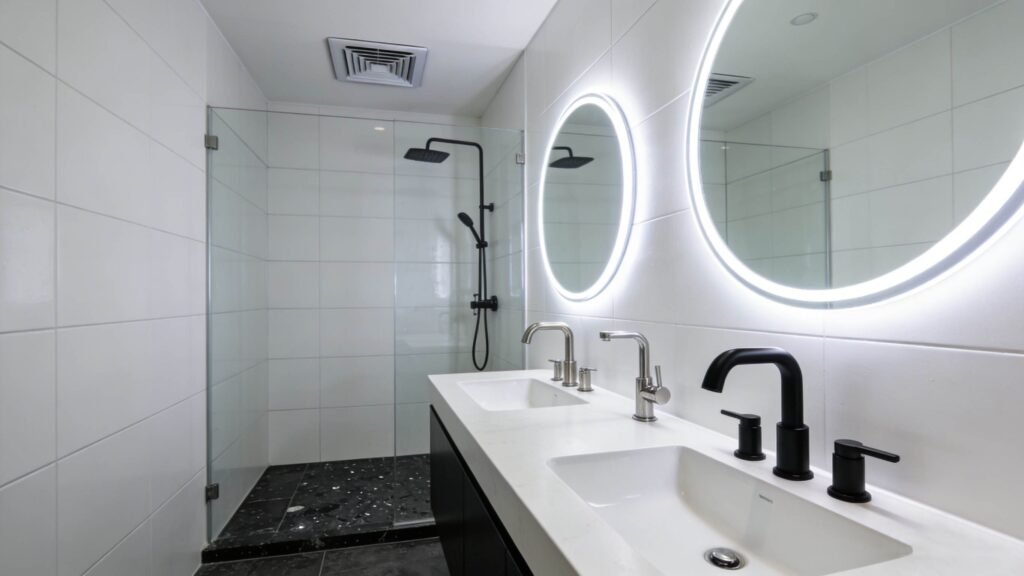
For property developers, faucet maintenance is not an isolated issue—it scales with every unit delivered. A single design flaw, when multiplied across an entire project, can turn into a major cost center.
Maintenance Costs Multiply Across Large Projects
In a residential complex with 500 units, even a minor faucet issue—such as cartridge leakage—can result in hundreds of service requests within the first year. Labor, spare parts, and coordination costs quickly exceed the original savings of choosing a cheaper faucet.
A low maintenance faucet minimizes these risks by reducing failure points, extending service intervals, and lowering the need for on-site repairs. Developers increasingly prioritize durable faucet designs that perform consistently under daily use.
Post-Handover Complaints Affect Developer Reputation
In 2026, online reviews, property management feedback, and social media exposure mean that plumbing issues can directly impact a developer’s brand image. Repeated faucet problems are among the most common complaints raised by residents and facility managers.
By installing durable faucets designed for long-term stability, property developers can significantly reduce negative feedback and improve overall project satisfaction scores.
Labor Shortages Increase the Cost of Maintenance
Across many regions, skilled plumbing labor is becoming more expensive and harder to schedule. This makes frequent faucet repairs both costly and disruptive. A low maintenance faucet reduces dependence on ongoing technical support by using proven internal structures and standardized components.
For developers managing multiple projects simultaneously, this reliability translates into smoother operations and lower lifecycle costs.
Water Leakage Risks Are Now a Compliance Issue
Water conservation regulations and building standards in many markets are becoming stricter. Faucet leakage is no longer just a nuisance—it can lead to compliance violations, water waste penalties, and increased utility costs.
Low maintenance faucets with reliable cartridge systems and stable sealing performance help developers meet water efficiency standards while avoiding long-term leakage risks.
What Defines a Low-Maintenance Faucet in 2026
In 2026, a low maintenance faucet is defined not by appearance, but by how reliably it performs after years of continuous use. Property developers and project engineers evaluate faucets based on internal structure, material stability, and long-term failure risk—not short-term cost savings.
A truly durable faucet must be designed to minimize wear, reduce internal stress, and simplify future servicing. The following factors are now considered essential when defining low-maintenance faucet standards.
Simple Internal Structure Reduces Failure Points
One of the most important characteristics of a low maintenance faucet is a simplified internal design. Faucets with fewer internal components naturally have fewer points of friction, misalignment, or sealing failure.
Complex multi-spring or multi-valve systems increase the chance of internal wear over time. In contrast, modern low maintenance faucets favor streamlined cartridge-based designs that reduce mechanical complexity while improving reliability.
For property developers, this simplicity translates directly into fewer service calls and lower long-term maintenance exposure.
High-Stability Cartridge Systems Are the Core Component
The cartridge is the heart of any durable faucet. In 2026, developers increasingly specify ceramic disc cartridges due to their proven resistance to wear, corrosion, and temperature fluctuation.
A low maintenance faucet uses a cartridge that maintains precise sealing even after hundreds of thousands of open-close cycles. Inferior cartridge systems are one of the leading causes of dripping and leakage in large housing projects.
From a project management perspective, choosing faucets with standardized, replaceable cartridges also simplifies spare parts stocking and long-term maintenance planning.
Material Selection Directly Impacts Durability
Material stability plays a critical role in faucet longevity. Brass bodies with controlled lead content, uniform wall thickness, and proper surface treatment perform significantly better than mixed or low-grade alloys.
A durable faucet must resist internal corrosion, pressure deformation, and thread fatigue. For developers operating in regions with variable water quality, material choice becomes even more critical to maintenance outcomes.
Low maintenance faucets in 2026 are typically built with materials that meet international plumbing standards and are tested for long-term pressure resistance.
Sealing Design Determines Long-Term Leak Risk
Sealing performance is a defining factor in faucet maintenance. Poor sealing design leads to gradual leakage that may not be immediately visible but causes long-term damage.
Modern low maintenance faucets use optimized sealing paths, reinforced O-ring placement, and pressure-balanced internal chambers. These design choices reduce stress on seals and extend their effective lifespan.
For property developers, this means fewer hidden leaks, reduced water waste, and improved compliance with building regulations.
Compatibility with Standard Plumbing Systems
A low maintenance faucet must integrate seamlessly with widely used plumbing standards. Non-standard connectors, proprietary components, or unusual installation requirements often create maintenance complications years after project completion.
Durable faucets designed with standardized fittings and universal cartridge compatibility allow property managers to handle future replacements without specialized tools or factory-only parts.
This compatibility is now a key selection criterion for developers planning long-term asset management.
Cartridge Technology and Internal Components Explained
When evaluating a low maintenance faucet, property developers rarely look at the exterior first. In 2026, the real focus is on what happens inside the faucet—specifically, the cartridge system and internal components that determine long-term reliability.
Cartridge technology is the single most important factor influencing leakage risk, maintenance frequency, and lifecycle cost. A durable faucet is only as reliable as its internal structure.
Why the Cartridge Is the Core of a Low-Maintenance Faucet
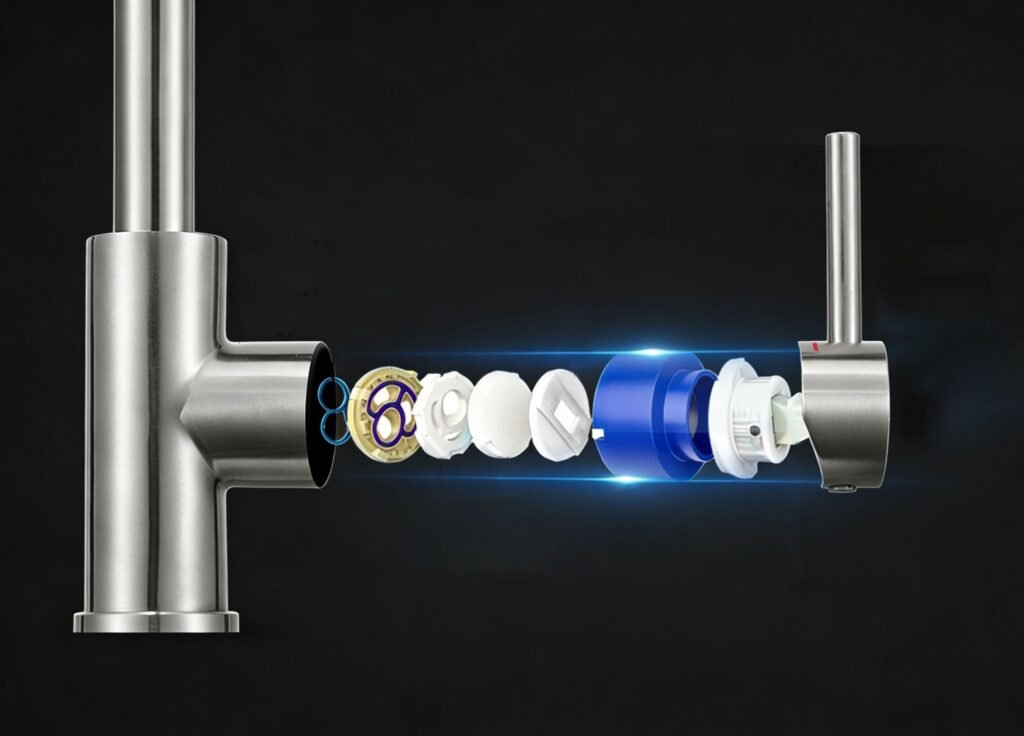
The cartridge controls water flow, temperature mixing, and shut-off precision. Every time a faucet is turned on or off, the cartridge absorbs mechanical stress and pressure variation.
In low maintenance faucets, the cartridge is designed to operate with minimal friction. High-quality ceramic disc cartridges maintain a smooth sealing surface even after prolonged use, significantly reducing wear-related leakage.
For property developers, selecting faucets with proven cartridge performance reduces post-installation failures and prevents widespread maintenance issues across entire projects.
Ceramic Disc Cartridges vs Traditional Valve Structures
In 2026, ceramic disc cartridges are widely regarded as the most reliable option for low maintenance faucet design. Unlike rubber washer or compression valve systems, ceramic discs rely on precision-ground surfaces rather than elastic deformation.
This design offers several advantages:
- Reduced wear under frequent use
- Stable performance under temperature fluctuations
- Lower sensitivity to water impurities
Traditional valve structures are more prone to seal fatigue and deformation, especially in high-usage environments such as apartment buildings and commercial properties.
As a result, durable faucets with ceramic disc cartridges are increasingly specified in developer tenders and engineering standards.
How Cartridge Quality Directly Affects Leakage Risk
Leakage rarely happens suddenly. In most cases, it develops gradually due to microscopic wear inside the cartridge. Inferior cartridges lose sealing accuracy over time, leading to dripping that increases water waste and maintenance costs.
A low maintenance faucet uses cartridges tested for high cycle durability, often exceeding 500,000 open-close operations. This level of performance is critical for projects with high occupancy turnover.
From a lifecycle perspective, investing in high-quality cartridge systems significantly lowers the total cost of ownership for property developers.
Internal Component Alignment and Pressure Stability
Beyond the cartridge itself, internal component alignment plays a major role in faucet durability. Poor internal tolerances can cause uneven pressure distribution, accelerating seal wear and internal stress.
Durable faucets are engineered with precise internal channels that maintain stable water flow and balanced pressure. This reduces vibration, noise, and long-term mechanical fatigue.
For developers managing multi-unit projects, stable internal performance means consistent user experience across all units—an often overlooked but important quality factor.
Replaceability and Standardization Matter in Long-Term Maintenance
Even the best cartridge systems will eventually require replacement. A true low maintenance faucet is designed with easy cartridge replacement in mind.
Standardized cartridge sizes and accessible internal layouts allow maintenance teams to perform quick repairs without removing the entire faucet body. This design approach minimizes downtime and reduces maintenance labor costs.
In 2026, property developers increasingly prefer durable faucets that support standardized spare parts and long-term availability, ensuring maintenance simplicity years after project completion.
How Low-Maintenance Faucets Reduce Lifecycle Costs for Property Developers
For property developers, the real cost of a faucet is not the purchase price—it is the lifecycle cost incurred over years of operation. In 2026, developers increasingly evaluate faucets based on long-term financial impact rather than short-term savings.
A low maintenance faucet reduces costs at every stage of the project lifecycle, from installation to post-handover property management. When multiplied across large developments, these savings become substantial.
Lower Installation and Commissioning Costs
Low maintenance faucets are typically designed with standardized fittings and simplified internal structures. This reduces installation time and minimizes errors during commissioning.
For large-scale projects, faster installation means lower labor costs and reduced delays. Developers benefit from smoother handover schedules and fewer corrective works during final inspections.
A durable faucet that installs easily also reduces the risk of early-stage leaks caused by improper assembly or incompatible components.
Reduced After-Sales Service and Warranty Claims
Post-handover maintenance is one of the largest hidden expenses in property development. Frequent faucet issues—such as dripping, unstable temperature control, or handle stiffness—generate repeated service requests.
By choosing low maintenance faucets with reliable cartridge systems, developers significantly reduce warranty claims and service interventions. This leads to lower after-sales budgets and less operational disruption.
From a portfolio management perspective, fewer maintenance calls improve efficiency across multiple projects.
Minimized Water Loss and Utility Expenses
Even minor faucet leakage can result in significant water waste over time. In multi-unit buildings, this translates into higher utility costs and potential disputes with occupants or property managers.
A low maintenance faucet with stable sealing performance helps prevent gradual water loss. This not only reduces utility expenses but also supports water conservation goals and regulatory compliance.
For developers operating in regions with rising water tariffs, this cost control is increasingly important.
Lower Long-Term Repair and Replacement Costs
Durable faucets are built to withstand long-term use without frequent part replacement. High-quality internal components maintain performance over extended periods, delaying the need for repairs.
When maintenance is required, standardized cartridge systems allow for quick and low-cost servicing. This reduces both material expenses and labor hours.
Over the lifespan of a property, these factors contribute to a significantly lower total cost of ownership.
Improved Asset Value and Project Reputation
Properties with reliable plumbing systems maintain higher perceived value. Persistent maintenance issues, even minor ones, can negatively affect tenant satisfaction and long-term asset performance.
Low maintenance faucets support stable building operations, reduce complaints, and enhance the overall quality perception of a development. For developers, this translates into stronger brand credibility and improved market positioning.
Common Maintenance Failures Property Developers Want to Avoid
Even the best-designed properties can suffer from recurring faucet issues if the wrong products are chosen. Property developers in 2026 are increasingly aware of how faucet failures can impact operational costs, tenant satisfaction, and long-term asset value.
Dripping Faucets and Cartridge Wear
One of the most common maintenance headaches is dripping faucets, often caused by worn or low-quality cartridges. Persistent leaks may seem minor but can escalate into:
- Increased water bills
- Tenant complaints and service calls
- Accelerated wear on surrounding fixtures
Investing in faucets with high-quality ceramic cartridges or proven low-maintenance internal components drastically reduces the risk of leaks.
Corrosion and Finish Degradation
Faucets installed in high-traffic areas, such as commercial kitchens, bathrooms, or public facilities, are prone to corrosion or finish wear if the material is not suitable. Stainless steel, gunmetal, or premium PVD finishes offer:
- Long-lasting durability
- Resistance to daily cleaning agents
- Minimal cosmetic deterioration over time
Developers avoid frequent replacements and maintain aesthetic quality by choosing corrosion-resistant faucets.
Handle Loosening and Mechanical Failures
Another common issue is loose handles or stiff operation, often caused by substandard internal components or improper installation. This leads to:
- Tenant dissatisfaction
- Costly service visits
- Reduced lifespan of the fixture
Low-maintenance faucets designed with robust handles and smooth operation reduce these risks, providing consistent functionality over years.
Scaling and Mineral Build-Up
In regions with hard water, scale accumulation can impair faucet performance, clog aerators, and affect water flow. Property developers can mitigate this problem by selecting faucets with:
- Easy-to-clean aerators
- Low-maintenance water flow designs
- Anti-scale finishes or cartridges
- Such features minimize maintenance labor and extend the lifespan of fixtures.
Temperature Control Malfunctions
In multi-unit or commercial projects, temperature control issues—especially with mixer or thermostatic faucets—can be a frequent source of complaints. Properly engineered low-maintenance faucets with reliable internal valves prevent:
- Sudden hot water bursts
- User dissatisfaction
- Increased service calls
Why Property Developers Prefer Low-Maintenance Faucets
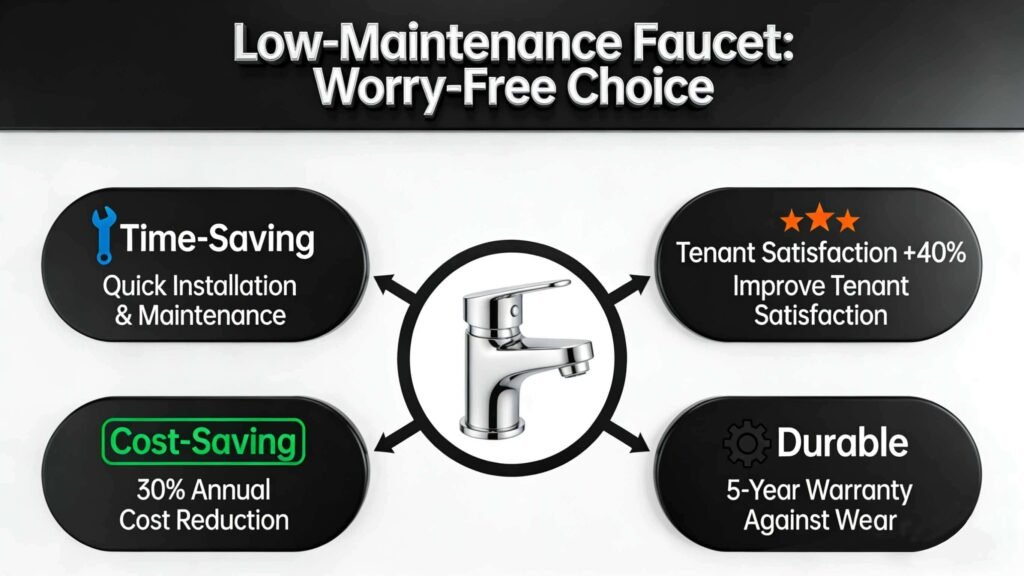
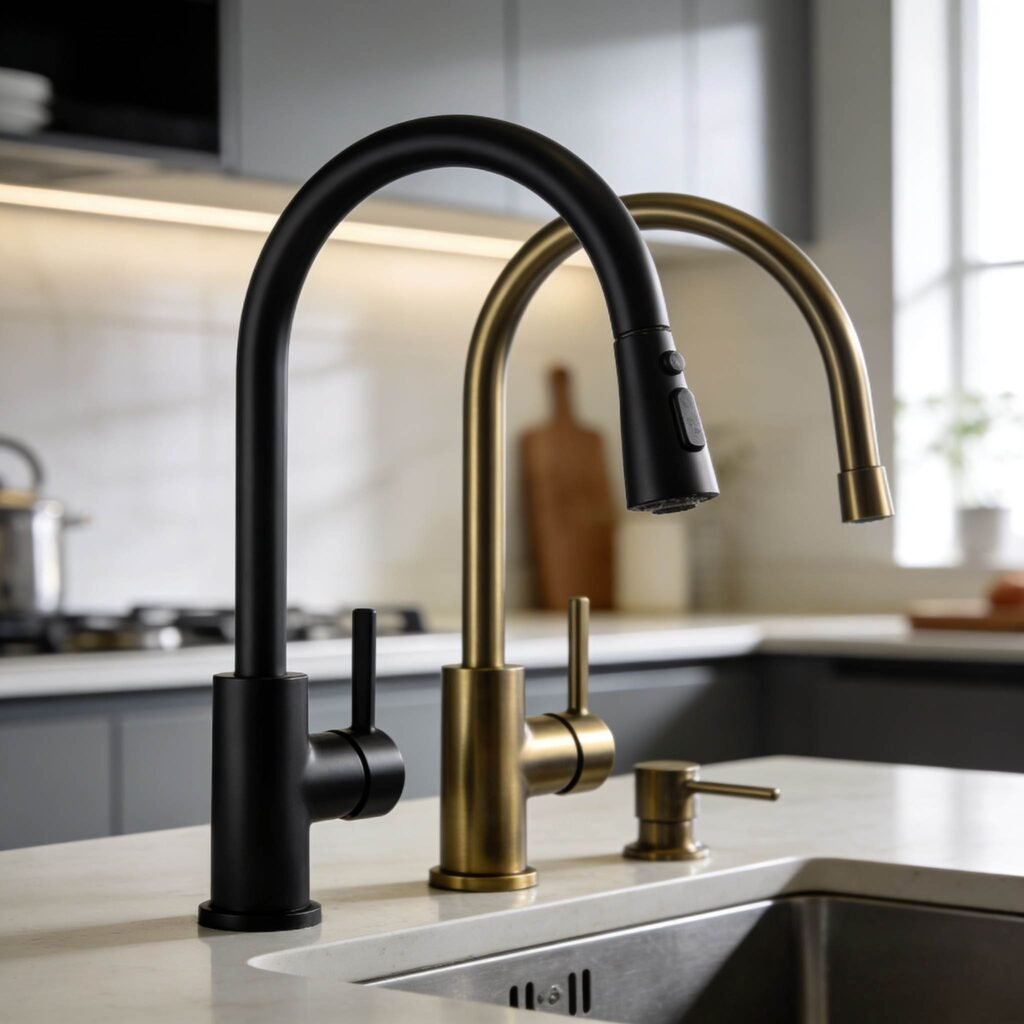
Property developers prioritize efficiency, durability, and tenant satisfaction, making low-maintenance faucets a top choice for modern projects. These faucets reduce long-term operational costs while maintaining a high-quality aesthetic, which is crucial for both residential and commercial developments.
Reduced Operational Costs
Low-maintenance faucets minimize the need for frequent repairs or replacements. This translates into:
Lower service call frequency – fewer maintenance teams needed
Decreased water waste – leaks and drips are minimized
Longer lifespan of plumbing fixtures – durable components withstand daily use
Investing in faucets with ceramic cartridges, corrosion-resistant finishes, and robust internal components ensures fewer disruptions and lower operational expenses over time.
Enhanced Tenant Satisfaction
Tenants and occupants value reliable and easy-to-use fixtures. Faucets that perform consistently reduce complaints and increase perceived property value. Features like:
Smooth handle operation
Consistent water temperature
Anti-splash spouts
…directly improve the tenant experience, which is a priority for developers managing multi-unit properties.
Time-Saving for Maintenance Teams
Maintenance teams benefit from faucets designed for easy cleaning and replacement of components. Low-maintenance faucets often include:
- Quick-connect adapters
- Removable aerators
- Standardized replacement cartridges
This allows maintenance staff to service multiple units quickly, freeing time for other essential tasks and reducing downtime in occupied properties.
Compliance and Sustainability
Many developers are also focusing on water efficiency and environmental standards. Low-maintenance faucets often meet LEED, CUPC, and AB1953 standards, ensuring:
- Reduced water consumption
- Lower environmental impact
- Compliance with local building codes
By selecting lead-free, durable faucets, developers future-proof their projects and appeal to eco-conscious tenants.
Key Features to Look for in Low-Maintenance Faucets for Property Development
When selecting faucets for residential or commercial projects, developers must focus on features that ensure durability, ease of use, and minimal maintenance. Understanding these characteristics helps prevent costly replacements and frequent service calls.
Durable Materials
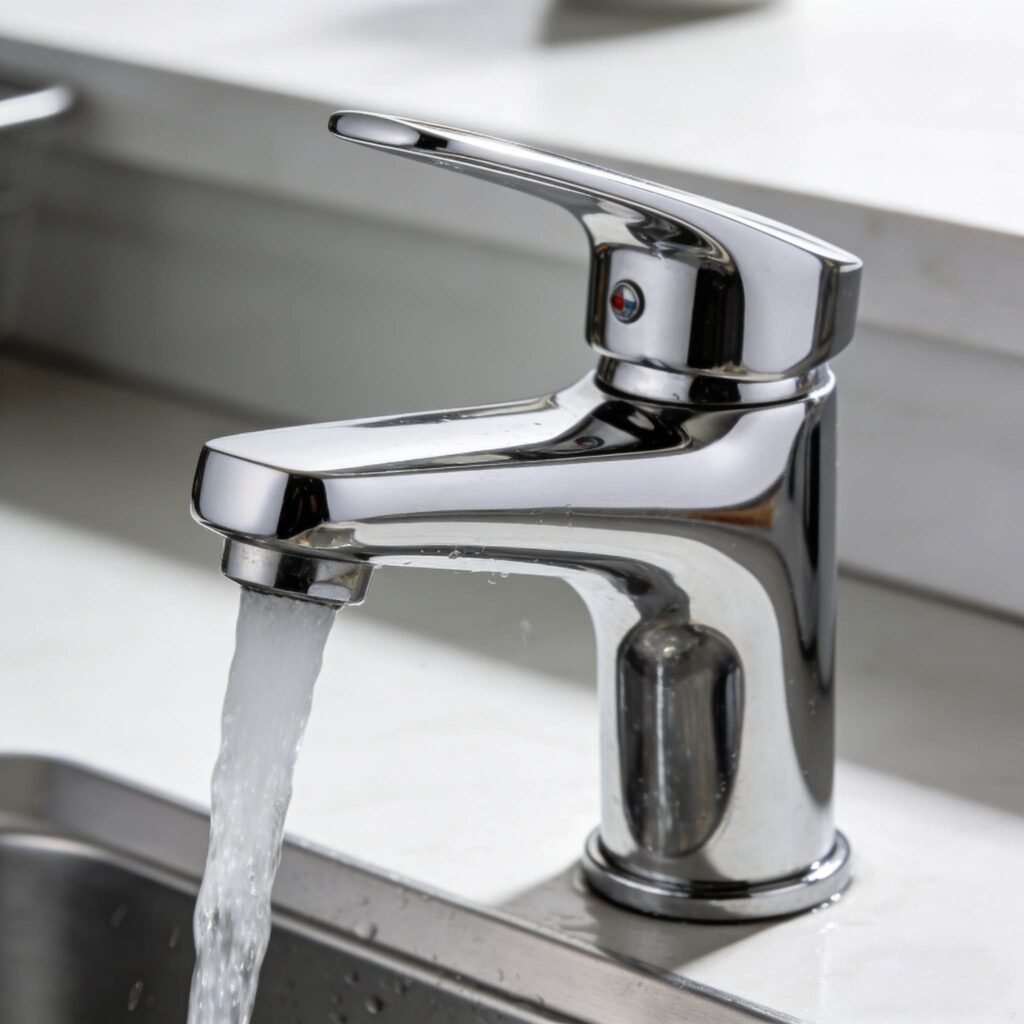
The first consideration is material quality. Faucets made from stainless steel, solid brass, or gunmetal are preferred because they resist corrosion, tarnishing, and wear. These materials maintain both functionality and appearance over time, reducing the need for replacements.
Stainless steel faucets: corrosion-resistant, ideal for both kitchen and bathroom use
Brass faucets: highly durable, excellent for high-traffic areas
Gunmetal finishes: resistant to fingerprints and scratches, low maintenance
Advanced Cartridge Technology
The cartridge is the heart of any faucet. Low-maintenance faucets often feature ceramic disc cartridges that ensure smooth operation, precise water control, and leak prevention. This minimizes the risk of:
- Dripping or leaking handles
- Uneven water flow
- Frequent repairs
A well-designed cartridge significantly extends the life of the faucet and reduces maintenance calls.
Easy-to-Clean Finishes
For property developers, time-saving cleaning solutions are crucial. Faucets with matte black, brushed nickel, or gunmetal finishes resist stains, water spots, and fingerprints, making daily cleaning quick and simple.
- Brushed finishes: conceal minor scratches
- Matte finishes: require less polishing
- Chrome finishes: visually appealing but may need frequent wiping
User-Friendly Design
Finally, faucets should be intuitive for tenants or staff. Features that enhance usability include:
- Single-handle controls for easy temperature adjustment
- Pull-down or pull-out spray heads for kitchens
- Anti-scald and cold-start functions for safety and efficiency
By focusing on these key features, developers can choose faucets that save time, reduce costs, and ensure a better tenant experience.
Top Low-Maintenance Faucet Models Recommended for Developers in 2026
Choosing the right faucet models can make a significant difference in long-term maintenance costs for property developers. In 2026, several low-maintenance faucet models stand out for their durability, functionality, and user-friendly design.
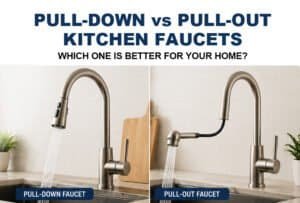
Pull-Down Kitchen Faucets
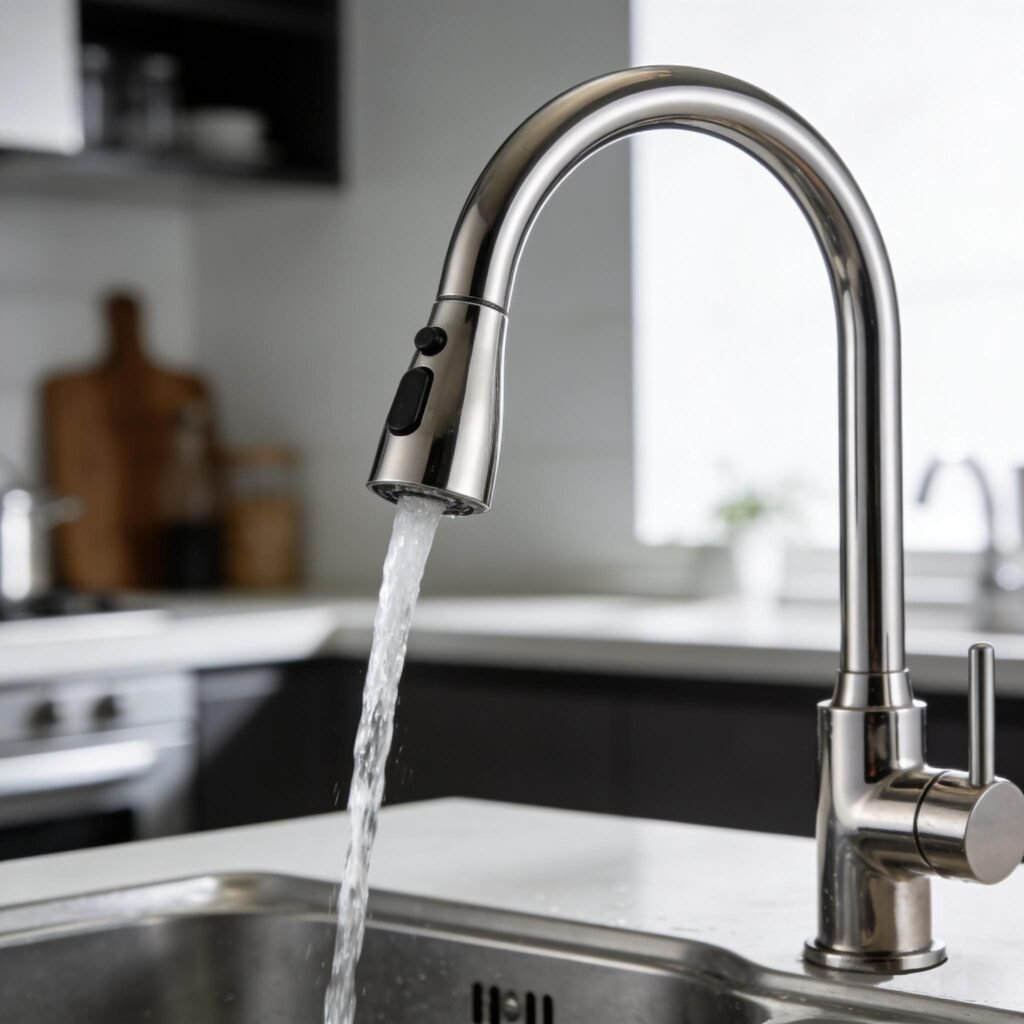
Pull-down kitchen faucets remain a top choice for modern apartments and commercial kitchens. These faucets combine convenience with robust construction, featuring:
High-quality ceramic disc cartridges to prevent leaks
Flexible, retractable hoses for easy cleaning of sinks and dishes
Brushed nickel or gunmetal finishes that resist fingerprints and water spots
This design is especially popular in rental apartments or high-use kitchens, where tenants value ease of use and property managers seek low-maintenance solutions.
Single-Handle Bathroom Faucets
Single-handle faucets are widely recommended for bathrooms due to their simplicity and minimal repair needs. Key benefits include:
- Smooth operation with ceramic cartridges
- Anti-scald protection for safety in family-oriented properties
- Sleek, modern finishes like matte black or brushed nickel that require minimal cleaning
These faucets reduce both service visits and cleaning efforts, making them a favorite among property developers for multi-unit residential buildings.
Touchless and Sensor Faucets
Touchless faucets are gaining traction in commercial and luxury residential developments. They offer hygienic, low-maintenance operation:
Sensors control water flow, reducing wear on handles
Prevent excessive water use with automatic shut-off
Durable finishes like stainless steel or matte black minimize cleaning time
Although initial costs are higher, these faucets save time, reduce water waste, and lower maintenance demands over time.
Installation Tips and Considerations for Property Developers
Even the most low-maintenance faucets can become problematic if not installed correctly. Property developers should prioritize proper installation to ensure longevity, ease of use, and minimal upkeep.
Pre-Installation Planning
Before installing faucets, consider the following:
Water pressure and flow requirements: Ensure the faucet model matches building specifications to prevent leaks or reduced performance.
Sink or countertop compatibility: Measure the sink holes accurately for single-hole, double-hole, or widespread faucet configurations.
Supply line materials: Opt for flexible stainless steel braided hoses, which are durable, corrosion-resistant, and easier to replace than rigid piping.
Professional vs DIY Installation
While some faucets can be installed by skilled DIYers, professional installation is recommended for multi-unit properties or high-end developments. Benefits include:
Correct sealing to prevent future leaks
Proper alignment to maintain ergonomic design and user convenience
Reduced risk of damage to expensive finishes like matte black or gunmetal
Maintenance Access Considerations
Design installations with easy access for future maintenance:
Avoid placing faucets too close to walls or backsplash corners
Provide clearance under sinks for cartridge replacements or supply line inspections
Use quick-connect adapters when possible to simplify future servicing
By following these installation guidelines, property developers can maximize the lifespan of low-maintenance faucets while minimizing maintenance calls and tenant complaints.
Materials and Finishes That Require Minimal Upkeep
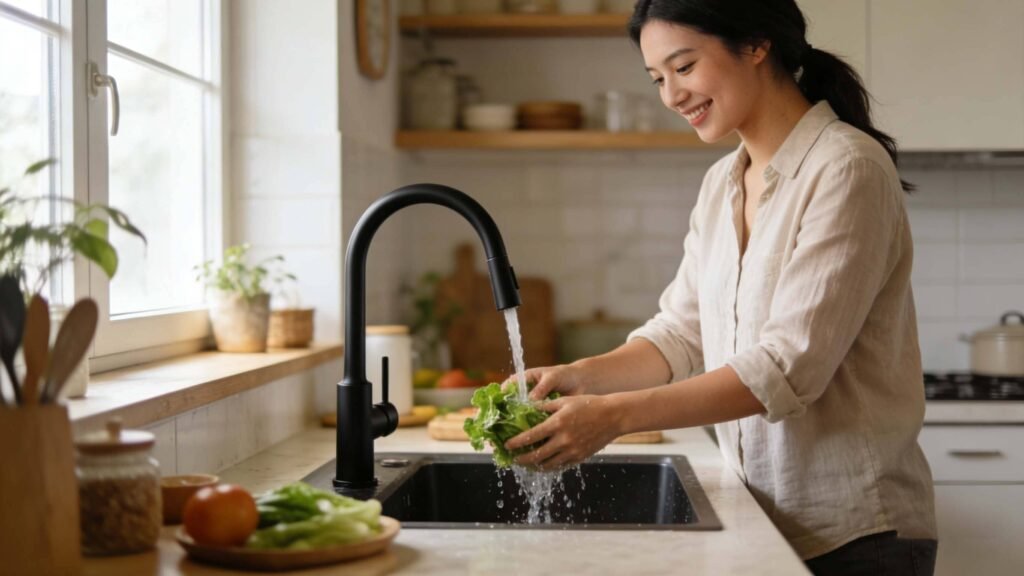
Choosing the right faucet material is critical for property developers seeking truly low-maintenance faucets. Certain materials naturally resist corrosion, staining, and wear, reducing long-term maintenance costs.
Stainless Steel
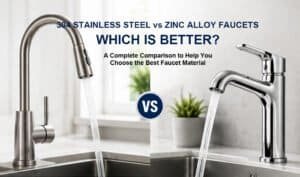
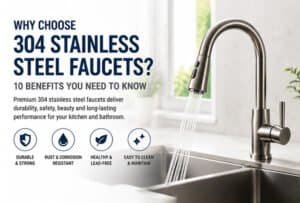
Stainless steel is highly durable, resistant to rust, and ideal for both residential and commercial properties. Its smooth surface prevents mineral buildup, making cleaning easier and less frequent. For property developers, stainless steel faucets are a reliable choice that combines durability with modern aesthetics.
Brass with Protective Coatings
Brass faucets with high-quality finishes, such as chrome or PVD coatings, offer excellent corrosion resistance. Matte black, gunmetal, or brushed nickel finishes add contemporary appeal while reducing fingerprints and water spots. Coatings also protect the faucet from harsh cleaning chemicals, extending its lifespan.
Composite and Ceramic Components
Modern faucets often include ceramic cartridges or composite internal parts, which reduce leakage risks and improve long-term reliability. Faucets with ceramic valves are considered “low-maintenance” because they rarely require repair, even with frequent use.
Conclusion – Why Low-Maintenance Faucets Make Sense for Developers
Investing in low-maintenance faucets is a smart decision for property developers. They save time, reduce long-term maintenance costs, and enhance tenant satisfaction. By selecting durable materials, ensuring proper installation, and designing for accessibility, developers can minimize future issues and elevate the overall value of their properties.
In today’s competitive real estate market, offering modern, easy-to-maintain fixtures is more than a convenience—it’s a selling point. Low-maintenance faucets not only meet functional needs but also reflect thoughtful design, making properties more attractive and sustainable in the long run.

 English
 Arabic
 Dutch
Dutch French
 German
 Greek
Greek Irish
Irish Italian
 Latin
Latin Polish
 Portuguese
 Russian
 Slovak
 Spanish
 Swedish
 Turkish