

Top 10 Most Common Faucet Problems and How to Prevent Them in Commercial Projects

Top 10 Most Common Faucet Problems and How to Prevent Them in Commercial Projects

Home > Blogs

Commercial faucet problems

    Add a header to begin generating the table of contents

    Commercial faucet systems operate under significantly higher stress compared to residential applications. In hotels, malls, restaurants, airports, hospitals, and office buildings, faucets may be used hundreds or even thousands of times per day. This intense usage accelerates wear and exposes weaknesses in materials, workmanship, and design. To truly manage faucet performance in a commercial environment, stakeholders must understand not only the visible problems, but also the hidden risks that lead to early failures.

    1. Leaking Faucets

    Why This Problem Matters

    A single leaking faucet can waste thousands of liters of water annually, increasing utility costs and affecting building sustainability certifications (LEED, BREEAM, WELL). In commercial buildings with dozens or hundreds of faucets, the financial and environmental impact grows exponentially.

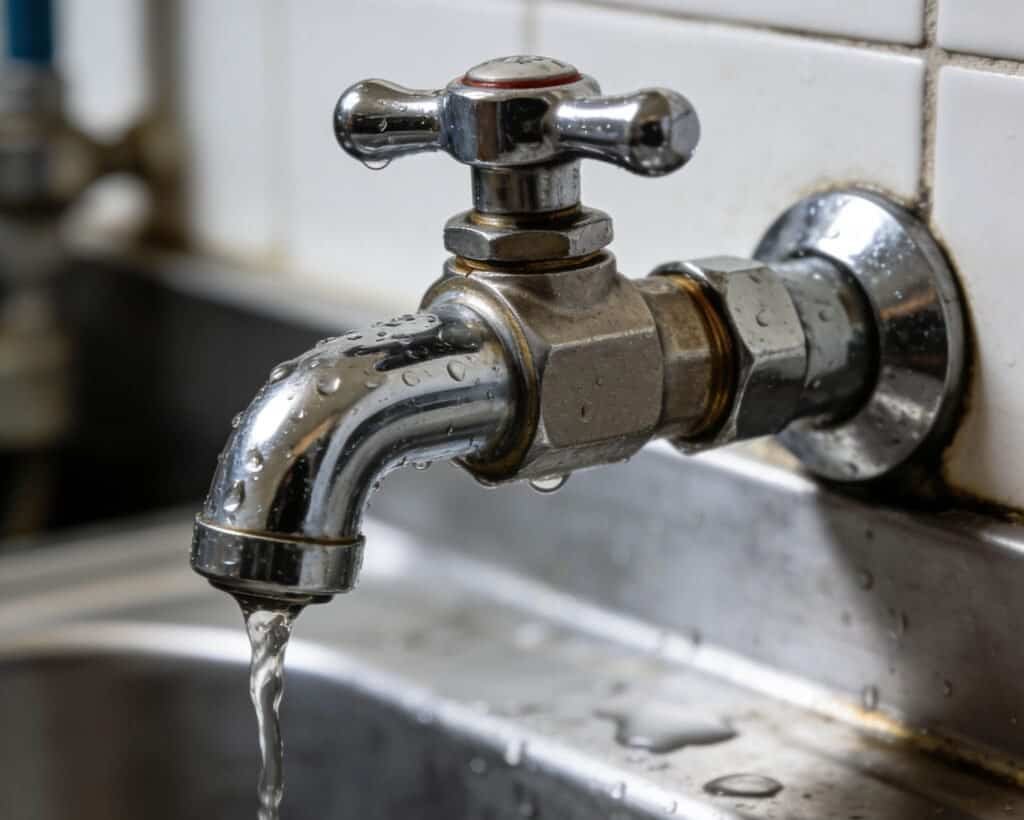
    leaking faucet problem

    Types of Leaks

    1. Cartridge leaks– internal movement wear
    2. Spout leaks– poor sealing or worn O-rings
    3. Base leaks– improper tightening or degraded gaskets
    4. Supply line leaks– damaged hoses or incorrect installation

    Deep Technical Causes

    • Hydraulic shock (water hammer)accelerates cartridge wear
    • High sediment contenterodes valve seats
    • Thermal expansionstresses seals
    • Incorrect aerator pressure rated for commercial systems

    Prevention Framework

    • Install NSF-certified ceramic cartridgesdesigned for high-cycle usage
    • Add pressure regulatorsto reduce stress on internal components
    • Use double O-ring systemsfor spouts in commercial environments

    Conduct commissioning tests before handover, including:

    • Maximum flow test
    • Static pressure check
    • Shut-off stress test

    2. Low Water Flow

    Extended Causes

    Low flow in commercial environments often indicates deeper mechanical or system-level issues:

    • Aerator blockage from lime, sand, rust, or pipe debris
    • Flow restrictors incompatible with local water pressure
    • Supply pipe diameter too small
    • Check valve malfunction
    • Pressure-balancing valve restrictions
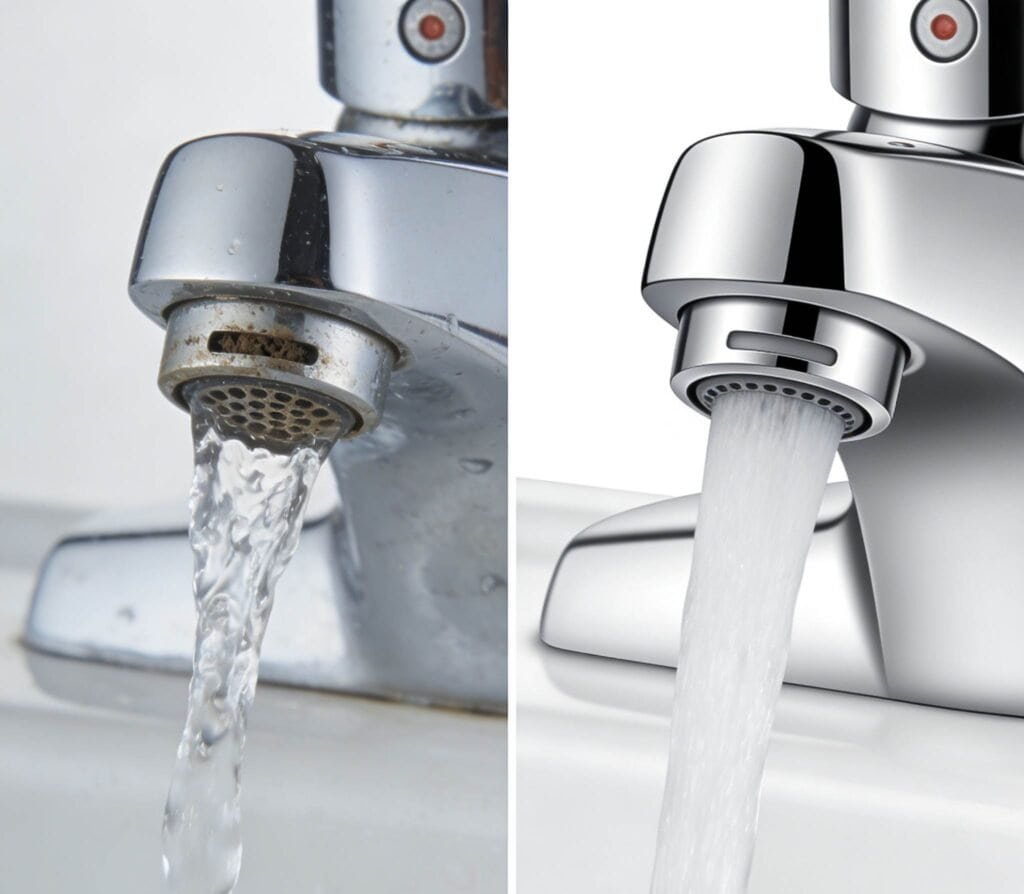
    low water flow problem

    Real Case Example

    In a 200-room hotel project, guest complaints of weak water flow were traced to improper pre-flush of the water supply system before faucet installation. Debris entered aerators, reducing flow rate by 40%.

    Prevention Checklist

    • Flush pipelines before installation
    • Use tool-free removable aerators
    • Choose faucets with built-in sediment filters
    • Implement quarterly descaling using commercial descaling agents

    3. Corrosion on Faucet Surface

    Material Engineering Background

    Commercial faucets are often exposed to:

    • High humidity (spa, gym, hotel bathrooms)
    • Harsh cleaning chemicals used by housekeeping teams
    • Salt or chlorine in coastal regions

    Different material choices perform very differently:

    • Zinc alloy– low corrosion resistance, not recommended for commercial use
    • Brass– excellent corrosion resistance
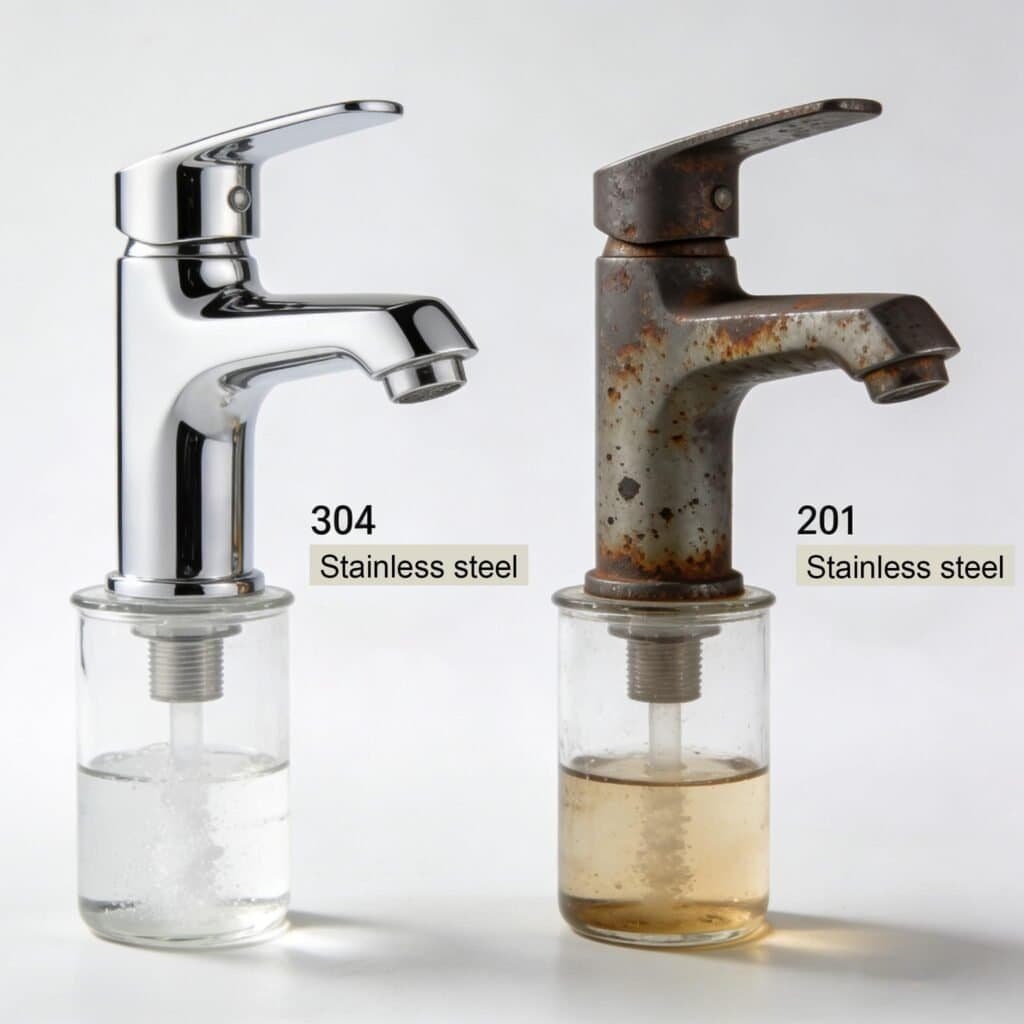
    • 304 stainless steel– high corrosion resistance, ideal for commercial
    • 316 stainless steel– marine-grade, excellent for coastal properties
    corrosion on faucet surface problem

    Environmental Corrosion Triggers

    • Acidic cleaners degrade plating layers
    • Airborne salts corrode low-quality metals
    • Standing water in faucet joints causes internal oxidation

    Prevention Strategy

    • Choose faucets with multi-layer electroplating or PVD
    • Provide cleaning SOPs to facility teams
    • Select corrosion-proof materials for coastal or humid environments
    • Specify 316 stainless steel for maximum durability

    4. Water Temperature Inconsistency

    Expanded Technical Analysis

    Temperature fluctuations pose safety hazards, especially in hospitals and public restrooms. Common deeper causes include:

    • Temperature drift in thermostatic mixing valves
    • Incorrect hot/cold supply balancing
    • Poorly insulated hot water pipes
    • Pressure differentials between building floors

    Prevention Methods

    • Use commercial-grade TMVs (Thermostatic Mixing Valves)
    • Position mixing valves close to point-of-use
    • Ensure installation follows ASME A112.18.1/CSA B125.1standards
    • Conduct thermal calibration during commissioning

    5. Faucet Handle Loosening

    Mechanical Causes

    • High daily usage causes micro-movements inside handle screws
    • Low-quality metal fatigues faster
    • Incorrect torque during installation

    Prevention Methods

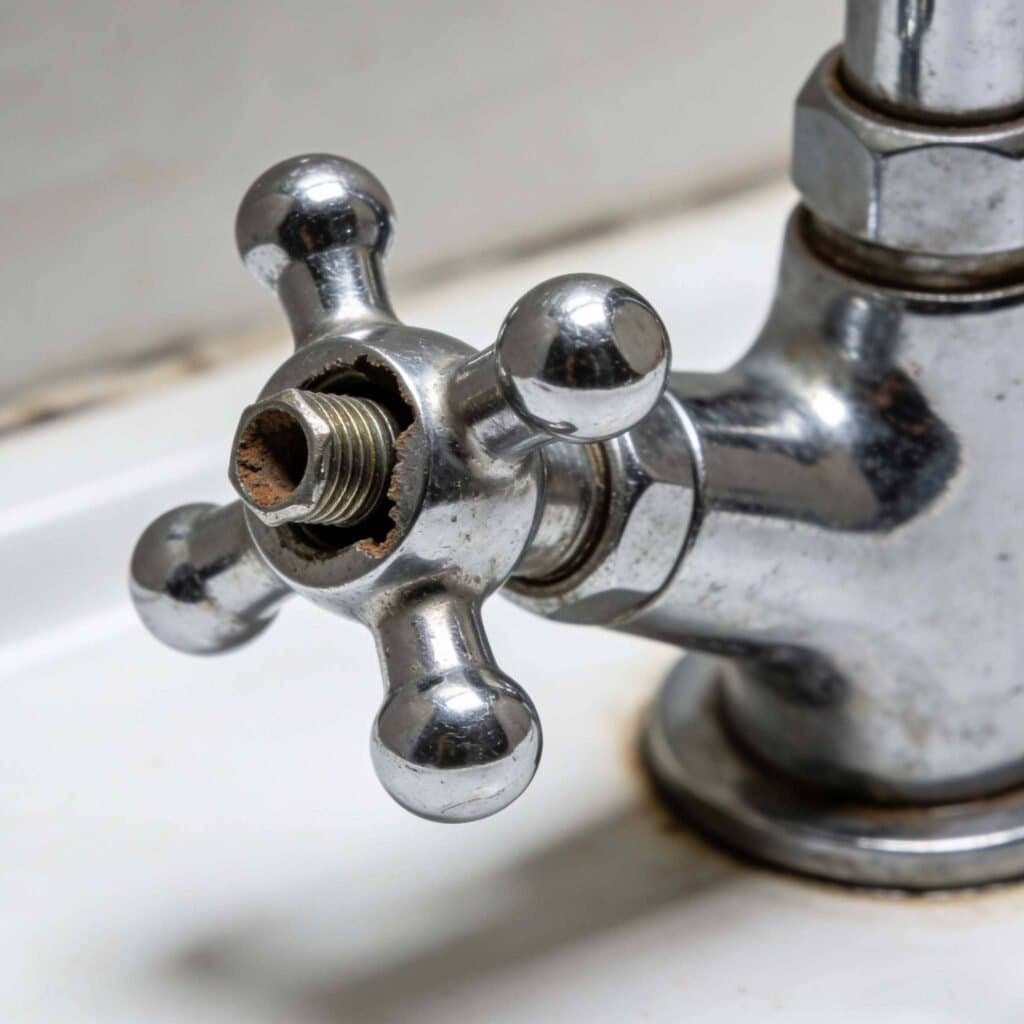
    Faucet Handle Loosening
    • Use stainless screws and reinforced handle bases
    • Conduct torque verification during installation
    • Train maintenance teams to tighten handles quarterly

    6. Dripping from Spout After Shut-Off

    Engineering Breakdown

    Dripping after shutoff is one of the most overlooked yet common issues in commercial buildings. Though it may appear minor, continuous dripping accelerates wear, increases utility costs, and signals internal deterioration.

    Deep Technical Causes

    • Cartridge seal degradationdue to high-cycle usage
    • Valve seat erosioncaused by hard water minerals
    • Internal backflow pressure instabilitywithin mixing chambers
    • Thermal shockdamaging rubber seals in hot water lines
    • Improper shut-off forceapplied by users in public restrooms

    Case Study: Airport Restroom Retrofit

    A major international airport observed postshut-off dripping in over 60% of washbasin faucets within 18 months of installation. Investigation revealed:

    • Incorrect cartridge type selected for high-pressure zones
    • Water hardness exceeding manufacturer tolerance
    • Lack of annual maintenance

    Solution: Upgrading to commercial-grade ceramic cartridges and implementing a descaling program every six months reduced dripping occurrences by 92%.

    Prevention Methods

    • Choose cartridges tested for 500,000–1,000,000 cycles
    • Install pressure-regulating valves in high-pressure systems
    • Use water softeners or anti-scale filters in regions with high mineral content
    • Train facility teams to perform seal inspections every quarter

    7. Noise or Vibration in Faucet

    Commercial buildings often face faucet noise complaints—whistling, rattling, hammering—usually tied to hydraulic issues.

    Types of Noise

    1. Whistling:Narrow aerator openings or high flow velocity
    2. Rattling:Loose internal components or screws
    3. Water Hammer:Sudden pressure surges in supply lines
    4. Pipe Vibration:Poor installation or insufficient pipe insulation
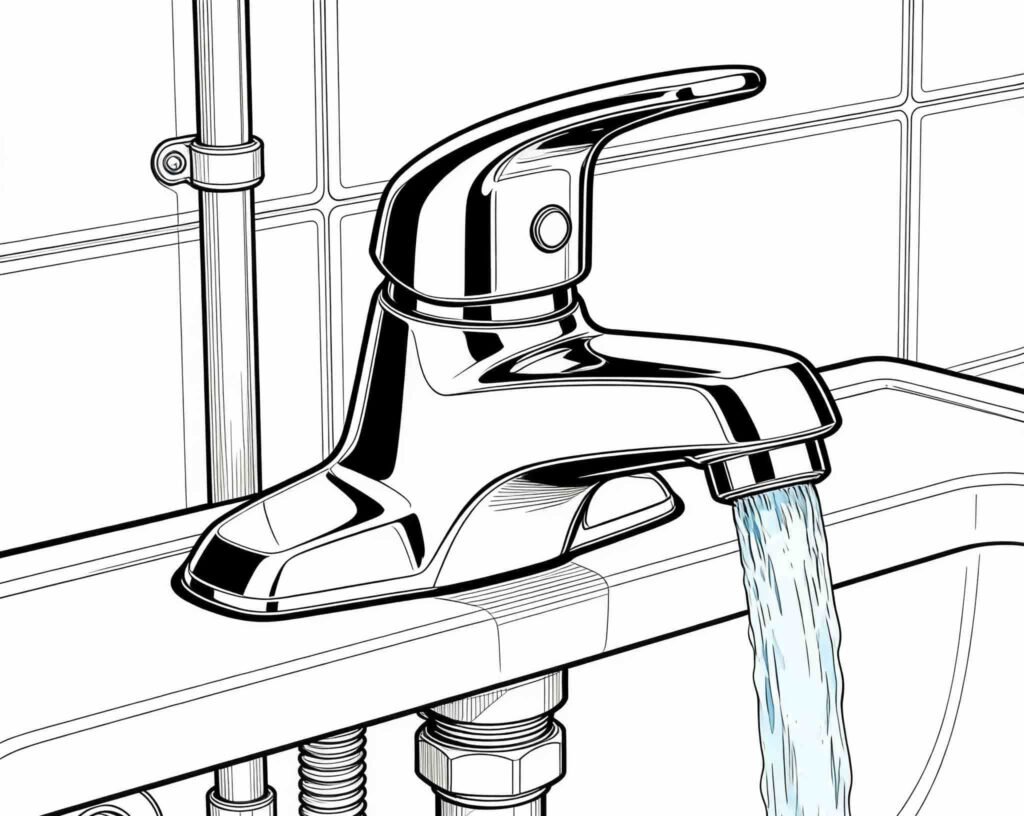
    finish faucet problems

    Technical Causes

    • Excessive water velocity beyond ASHRAE recommendations
    • Aerators not matched with building pressure
    • Insufficient pipe clamps leading to oscillation
    • Quickclosing valves causing shock waves

    How Noise Affects Commercial Projects

    • Impacts guest experience in hotels and offices
    • Causes stress on joints and fittings
    • May lead to long-term pipe damage

    Prevention Solutions

    • Install anti-hammer arrestors
    • Use aerators rated for commercial PSI levels
    • Ensure all faucet mounting hardware is fully secured
    • Add insulation around supply lines near metal structures

    8. Premature Finish Fading

    Surface finish failure affects aesthetics, brand image, and customer perception—critical for hotels, restaurants, and retail stores.

    Why Commercial Faucets Fade Faster

    • High-frequency touching by hundreds of users daily
    • Aggressive chemical cleaners used by janitorial teams
    • Hard-water stains requiring abrasive scrubbing
    • Environmental factors like humidity and UV exposure

    Comparison of Finish Durability

    Finish Type

    Durability Level

    Suitable For Commercial?

    Notes

    Chrome

    Medium

    Yes

    Affordable, easy to clean but prone to water spots

    Brushed Nickel

    High

    Yes

    Resist fingerprints and scratches

    PVD Black / Gold

    Very High

    Excellent

    Best for luxury commercial projects

    Powder Coated

    Medium

    Selective

    Good for design-focused areas

    Prevention Framework

    • Choose PVD-coated finishes(5–10× stronger than electroplating)
    • Educate cleaning staff on proper non-abrasive cleaning
    • Use faucets specifically rated as commercial traffic finishes

    9. Sensor Faucet Malfunctions (Commercial Restrooms)

    Sensor technology improves hygiene but requires correct setup and maintenance.

    Common Issues

    • Delayed detection or no detection
    • Water continues running
    • Battery failure
    • Sensor interference from reflective surfaces
    Sensor Faucet Malfunctions

    Deep Technical Causes

    • Incorrect infrared angle alignment
    • Low-quality solenoid valves
    • Electrical noise from nearby wiring
    • Battery deterioration in high-usage zones

    Best Practices for Prevention

    • Select commercial-gradesensor faucets with stable IR calibration
    • Install with proper grounding and isolated wiring
    • Schedule battery replacement every 6–12 months
    • Use waterproof solenoid valves for humid restrooms

    Advanced Recommendation

    For airports, shopping malls, and public buildings, transition to hardwired sensor faucets to eliminate battery-related downtimes.

    10. Rusting or Leakage Under the Counter

    This hidden issue often causes the most severe structural damage.

    High-Risk Environments

    • Restaurants (high humidity + cleaning chemicals)
    • Shopping malls (constant usage)
    • Hospitals (warm water supply lines)

    Root Causes

    • Condensation on cold-water lines
    • Failure of braided hoses after years of use
    • Poor-quality sealing tape or missing sealant
    • Incorrect tightening torque
    • Lack of under-counter ventilation

    Consequences

    • Mold growth under cabinets
    • Structural damage to wooden countertops
    • Damage to electrical components installed nearby
    • Increased maintenance and insurance claims

    Prevention Strategy

    • Use 316 stainless steel braided hosesfor longest lifespan
    • Apply professional-grade sealants (not generic tape)
    • Add moisture barriers under countertops
    • Conduct annual inspections and replace hoses every 3–5 years

    Commercial projects demand durable, reliable, and low-maintenance faucets. However, even high-quality faucets can face performance issues if not installed or maintained properly. This guide covers the top 10 most common faucet problems, why they happen, and how to prevent them—ensuring long-lasting performance in hotels, restaurants, offices, and public facilities.

    Faucet Cartridge Failure in High-Cycle Commercial Use

    Cartridge failure is one of the most expensive and disruptive faucet problems in commercial buildings, especially in airports, schools, malls, offices, and hotels where daily usage can exceed thousands of cycles. A failed cartridge causes leaks, temperature imbalance, and flow inconsistency, all of which directly impact user experience and maintenance cost.

    Engineering Principles of Cartridge Wear

    Commercial faucets rely on ceramic-disc cartridges that rotate to control water flow. Over time, microscopic abrasions form on the ceramic surfaces due to:

    • Hard water minerals scratching surfaces.
    • High PSI water impact creating pressure stress.
    • Repeated micro-vibrations from high-frequency usage.
    • Temperature shock when switching rapidly between hot and cold.

    Why Cartridge Failure Happens Faster in Commercial Projects

    • Excessive daily usagefar beyond residential levels.
    • Improper pressure regulation, causing stress on internal seals.
    • Poor-quality water, containing sand, rust, or debris.
    • Incorrect cartridge specificationsused in high-flow buildings.

    Recommended Prevention

    • Use cartridges rated for 500,000–1,000,000 cycles.
    • Install pre-filters in older buildings with aging pipes.
    • Use pressure regulators to maintain ideal PSI.
    • Schedule replacement every 2–3 years in heavy-traffic areas.

    12. Aerator & Filter Blockage in High-Traffic Buildings

    Aerator blockage is one of the first visible symptoms of water quality problems. In hotels, airports, and restaurants, the buildup occurs very quickly due to continuous use.

    Sources of Blockage

    • Sand and rust particles from old supply lines.

    • Hard water mineral deposits.
    • Bacterial buildup in humid regions.
    • Pipe sediment after construction.

    Why This Matters for Commercial Projects

    • Reduces water flow, causing complaints from visitors and guests.
    • Increases water pressure inside faucet, stressing internal components.
    • Promotes bacterial growth in stagnant water.

    Prevention

    • Use tool-free removable aerators.
    • Select anti-theft commercial aeratorsfor public restrooms.
    • Implement monthly cleaning schedulesin high-flow locations.
    • Add filters to the main supply if necessary.

    13. Structural Failure of Spout / Faucet Body

    Structural failure refers to cracks, breaks, or deformation of the faucet body or spout.

    Common Causes

    • Poor-quality zinc alloy bodies.
    • Thin-wall brass structures.
    • Metal fatigue from constant use.
    • Vandalism in public restrooms.

    Material Comparison

    Material

    Strength

    Commercial Durability

    Notes

    Zinc Alloy

    Low

    Poor

    Should NOT be used in commercial faucets

    Brass (H59/H62)

    High

    Excellent

    Ideal for long-term durability

    304 Stainless Steel

    Very High

    Excellent

    Corrosion-resistant and hygienic

    316 Stainless Steel

    Superior

    Best

    For coastal, humid, or harsh environments


    Prevention

    • Always specify solid brassor 304/316 stainless steel for commercial use.
    • Reinforce spout designs for anti-vandal performance.
    • Avoid thin-wall construction to reduce risk of cracking.

    14. Seal & O-Ring Degradation

    Seals and O-rings are essential for preventing leaks but degrade faster in commercial buildings.

    Factors Causing Seal Failure

    • High water temperature fluctuations.
    • Hard water causing chemical degradation.
    • Abrasive cleaners used by commercial janitorial staff.

    Material Comparison

    Seal Material

    Temperature Resistance

    Chemical Resistance

    Commercial Suitability

    NBR (Nitrile Rubber)

    Medium

    Medium

    Not ideal

    EPDM

    High

    Very High

    Best for hot water

    Silicone

    Very High

    High

    Excellent for extreme environments

    Prevention

    • Specify EPDMor silicone seals.
    • Schedule regular O-ring replacement in maintenance plans.
    • Train staff to avoid harsh chemicals.

    15. Installation Errors Affecting Long-Term Performance

    Installation problems are one of the top causes of faucet failure—more than materials or usage.

    Common Errors

    • Insufficient sealing around base.
    • Over-tightening hoses, causing micro-cracks.
    • Incorrect torque on mounting hardware.
    • Cross-threading connections.
    • Neglecting to flush supply lines before installation.

    Prevention

    • Provide installers with project-specific installation manuals.
    • Require pressure and leakage tests before project handover.
    • Train contractors on commercial faucet requirements.

    16. Plumbing Compatibility Problems

    Commercial buildings have complex plumbing systems that create challenges.

    Problems

    • High pressure damaging faucet internals.
    • Low pipe diameter restricting flow.
    • Temperature imbalance due to long pipe distances.
    • Pressure variance between building floors.

    Engineering Solutions

    • Use pressure-balancing valves.
    • Install thermostatic mixing valves for consistent temperature.
    • Choose commercial faucets designed for high-pressure systems.

    17. Long-Term Maintenance Plan for Commercial Projects

    A proper maintenance plan significantly reduces downtime and repair costs.

    Quarterly Tasks

    • Aerator cleaning
    • Cartridge lubrication or inspection
    • Seal integrity check

    Semi-Annual Tasks

    • Descaling for hard-water regions
    • Pipe flushing

    Annual Tasks

    • Cartridge replacement (for high-frequency projects)
    • Full faucet dismantle and inspection

    18. ROI Analysis: Cheap vs High-Quality Faucet

    Choosing low-cost faucets may save initial budget but dramatically increases long-term expenses.

    Cost Comparison Over 10 Years

    • Cheap faucet: Frequent repairs, high labor cost, guest complaints.
    • High-quality faucet: Minimal maintenance, longer lifespan.

    Hidden Costs of Cheap Faucets

    • Water waste from leaks.
    • Increased downtime.
    • Faster finish fading affecting brand image (hotels, malls).

    High-quality commercial faucets offer the best long-term ROI.

    19. Materials Engineering Appendix

    A deep dive into faucet material technologies.

    PVD Coating Layers

    • Base layer bonding
    • Intermediate protection layer
    • Surface hardness layer

    Multi-Layer Chrome Plating

    • Copper base layer
    • Nickel protection layer
    • Chrome finish layer

    Brass vs Stainless Steel

    • Brass: Excellent machining and corrosion resistance.
    • 304 Stainless: Hygienic and durable.
    • 316 Stainless: Best for harsh conditions.

    20. Pre-Installation Checklist for Commercial Projects

    For Designers

    • Confirm water pressure requirements.
    • Choose materials suitable for humidity and traffic.

    For Contractors

    • Flush all pipes.
    • Use correct torque during installation.
    • Install pressure-regulating valves.

    For Facility Managers

    • Implement maintenance schedule.
    • Log all repairs and inspections.

    Water Pressure Issues in Commercial Buildings (Extended)

    1. What Causes Water Pressure Problems in Large Commercial Projects?

    Commercial buildings rely on complex plumbing networks, which makes water pressure problems more common. Issues may arise from oversized or undersized supply lines, clogged pressure regulators, corroded pipes, or inconsistent municipal supply. In high-rise buildings, pressure imbalance becomes even more frequent due to vertical pressure loss.

    2. Early Signs of Water Pressure Problems

    • Faucets deliver weaker flow during peak hours.
    • Uneven pressure across multiple restrooms.
    • Aerators frequently clog with debris.
    • Customers complain about inconsistent flow levels.
    • Sensor faucets fail to activate due to insufficient pressure.

    3. How Water Pressure Impacts Faucet Performance

    • Low pressure reduces user experience and increases complaints.
    • High pressure accelerates faucet wear and causes leaks.
    • Pressure spikes can damage cartridges and seals.
    • Inconsistent pressure affects water-saving performance.

    4. Preventive Measures for Water Pressure Stability

    • Use pressure-balancing valves on each floor.
    • Install commercial-grade regulators.
    • Schedule routine pipe flushing to remove scale.
    • Conduct quarterly pressure monitoring using smart sensors.
    • Inspect aerators every 30–45 days in high-traffic facilities.

    5. Best Faucet Specifications for Pressure Management

    • Minimum working pressure: 0.5–1 bar.
    • Ideal pressure for public restrooms: 1–3 bar.
    • Choose faucets with compensation mechanisms for uneven pressure.
    • Prefer ceramic cartridges that tolerate pressure fluctuations.

    Corrosion and Material Degradation in Commercial Faucets (Extended)

    1. Why Corrosion Happens in Commercial Installations

    Corrosion occurs due to water hardness, cleaning chemicals, humidity, and long operating hours. In restaurants, hotels, hospitals, and schools, faucets endure much higher usage frequency, making them more vulnerable.

    2. Materials Most Commonly Impacted

    • Lowgrade stainless steel (201) loses protective chromium layer.
    • Zinc alloys corrode faster in humid environments.
    • Brass resists corrosion but suffers dezincification in poor-quality water.
    • Chrome plating shows pitting if not cleaned properly.

    3. Early Warning Signs of Corrosion

    • Surface discoloration.
    • Small pits forming around the spout base.
    • Rust spots on handles or joints.
    • Reduced water quality (metallic smell).
    • White mineral buildup around aerators.

    4. Preventive Measures

    • Prioritize 304 stainless steel or fullbrass construction.
    • Apply multilayer PVD coatings for surface protection.
    • Use mild detergents instead of acidic cleaners.
    • Install water softeners in hard-water regions.
    • Implement routine inspection schedules for kitchens and public areas.

    5. Commercial-Grade Coating Options

    • PVD (Physical Vapor Deposition) – best for durability.
    • Electroplating – costeffective for large projects.
    • Powder coating – suitable for matte finishes.
    • Lacquer finishes – extra protection for custom colors.

    Cartridge Failure and Internal Mechanism Wear (Extended)

    1. Why Cartridges Fail in Commercial Buildings

    Cartridges are the heart of faucet operation. In commercial environments, constant opening/closing, sediment buildup, and water pressure fluctuations accelerate cartridge wear.

    2. Types of Cartridges Used in Commercial Faucets

    • Ceramic disc cartridge (most common, highly durable).
    • Compression-type cartridge (in older buildings).
    • Thermostatic cartridge (used in hospitals and hotels).
    • Sensor faucet solenoid cartridge.

    3. Early Signs of Cartridge Damage

    • Handle becomes difficult to rotate.
    • Water does not fully shut off.
    • Inconsistent temperature control.
    • Faucet produces strange noise when opening.

    4. Preventive Measures

    • Install sediment filters to protect internal parts.
    • Flush pipelines during renovations or new installations.
    • Replace cartridges every 12–18 months in high-traffic locations.
    • Use OEM-certified cartridges for replacement.

    5. Best Cartridge Types for Commercial Projects

    • 35mm and 40mm ceramic cartridges for long-term stability.
    • Thermostatic cartridges for multi-user safety.
    • High-flow cartridges for kitchens and industrial areas.

    Sensor Faucet Malfunctions in Commercial Buildings (Extended)

    1. Why Sensor Faucets Malfunction More Often in Commercial Environments

    Sensor faucets are widely used in malls, hospitals, airports, hotels, and office buildings. While they improve hygiene and water efficiency, they also face heavier burdens in commercial environments—high foot traffic, long operating hours, inconsistent maintenance, and unstable power supply.

    Common causes include:

    • Sensor eye covered by water stains or soap residue
    • Low battery or power supply interruption
    • Infrared interference from lighting or stainless steel surroundings
    • Blocked solenoid valve due to sediment
    • Incorrect installation distance
    • Excessive water pressure damaging internal electronics

    2. The Most Common Types of Sensor Faucet Issues

    • Delayed activation– sensor recognizes hands slowly.
    • False activation– faucet turns on without hands present.
    • Low or no water flow– solenoid valve blocked.
    • Intermittent performance– wiring or battery problems.
    • Complete failure– electronic board issues.

    3. Early Warning Signs Facilities Should Monitor

    • Users waving hands multiple times to activate water.
    • Water keeps running for several seconds after hands leave.
    • Faucets in the same restroom show similar issues (indicating power or pressure problem).
    • Increased maintenance calls from housekeeping teams.
    • Battery indicators flashing or frequent replacement needed.

    4. Preventive Measures for Sensor Faucet Stability

    • Clean the sensor lens weekly with soft cloth.
    • Avoid installing sensor faucets facing mirrors or shiny tiles.
    • Replace batteries every 6–9 months depending on traffic.
    • Install sediment filters to protect the solenoid.
    • Choose DC+AC dual-power models for 24/7 environments.
    • Calibrate sensing distance during installation.
    • Ensure water pressure stays between 1–4 bar.

    5. Best Sensor Faucet Specifications for Commercial Projects

    • High-speed solenoid valve for fast response.
    • Low-power consumption circuit board.
    • Anti-interference infrared sensor.
    • Stainless steel braided hoses.
    • Water-saving aerator (1.0–1.5 GPM or 3.8–5.7 L/min).
    • IP67-level waterproof electronics.

    6. Recommended Sensor Faucet Applications

    • Hospitals: touchless hygiene requirement.
    • Airports & transportation hubs: 24/7 traffic.
    • Shopping malls: high durability needed.
    • Office buildings: cost-efficient water saving.
    • Restaurants: improved sanitation and experience.

    7. Troubleshooting Guide for On-Site Maintenance Teams

    1. Sensor does not activate
    • Check power supply/battery.
    • Clean sensor lens.
    • Check solenoid valve for blockage.
    • Confirm water pressure.
    1. Weak water flow
    • Remove and rinse aerator.
    • Check debris inside solenoid.
    • Flush water supply lines.
    1. Faucet activates by itself
    • Remove reflective objects nearby.
    • Reduce sensing distance.
    • Verify mounting height.

    Aerator Blockage & Water Quality Issues (Extended)

    1. Why Aerator Blockage Happens Frequently in Commercial Projects

    Aerators mix air with water to create smooth flow, but in commercial environments they clog dramatically faster due to:

    • Hard water minerals
    • Rust from old pipelines
    • Sediment entering during renovation
    • High-frequency use (hundreds or thousands of activations daily)

    2. Early Signs of Aerator Blockage

    • Water flow becomes thin or uneven.
    • Faucet begins to spray sideways.
    • Sensor faucets produce inconsistent streams.
    • Whistling or vibration sound from the spout.

    3. Effects of Blocked Aerators on Commercial Facilities

    • Higher water consumption.
    • Poor user experience.
    • Reduced hygiene in restrooms.
    • Increased maintenance workload.
    • Risk of pressure buildup in faucet body.

    4. Preventive Measures

    • Schedule monthly aerator cleaning.
    • Use anti-limescale aerators for hard-water regions.
    • Flush pipelines before opening a new building.
    • Install central filtration systems.
    • Replace aerators every 6 months in high-traffic locations.

    5. Best Aerator Types for Commercial Projects

    • Honeycomb aerators (anti-clog design).
    • Pressure-compensating aerators for stable flow.
    • Water-saving aerators for airports and malls.
    • Anti-vandal aerators for public restrooms.

    Faucet Handle Loosening & Structural Wear (Extended)

    1. Why Handles Loosen Faster in Commercial Buildings

    In commercial projects such as hotels, malls, schools, and restaurants, faucets experience constant usage. This leads to structural wear, especially around:

    • Handles
    • Joints
    • Mounting hardware
    • Set screws

    Frequent operation causes metal fatigue and loosening.

    2. Early Signs of Structural Problems

    • Handle wiggles when turned.
    • Clicking sound during rotation.
    • Water drips around the handle base.
    • Full shut-off becomes difficult.

    3. Common Causes of Handle Loosening

    • Worn-out set screws.
    • Improper installation torque.
    • Metal fatigue from continuous operation.
    • Damaged cartridge stem.
    • Vibrations from high-pressure supply.

    4. Preventive Measures

    • Use industrial-grade set screws.
    • Apply thread-locking adhesive during installation.
    • Schedule tightening every 3–6 months.
    • Install vibration-reducing hoses.
    • Choose brass handles instead of zinc for high-traffic areas.

    5. Best Commercial-Grade Faucet Construction Materials

    • Full-brass body.
    • 304 stainless steel.
    • Reinforced ceramic cartridges.
    • Brass or zinc alloy handles with anti-corrosion finish.

    Plumbing Design Problems That Affect Faucet Performance (Extended)

    1. Common Plumbing Design Mistakes in Commercial Projects

    Even well-planned buildings can suffer from faucet performance issues due to plumbing design errors. Common mistakes include:

    • Undersized supply pipes, causing low flow at peak hours.
    • Overly complex branch piping creating turbulence and uneven pressure.
    • Lack of pressure-balancing valves on multi-floor installations.
    • Incorrect pipe material selection leading to corrosion or scale.
    • Absence of water hammer arrestors in high-speed valve systems.
    • Poorly designed mixing valve placement causing temperature fluctuation.

    2. How Design Errors Impact Faucet Performance

    • Flow inconsistency at remote faucets.
    • Frequent cartridge or seal failure due to pressure spikes.
    • Noise and vibration in faucet spouts.
    • Premature surface finish wear caused by turbulent flow.
    • Reduced water efficiency and user dissatisfaction.

    3. Best Practices for Plumbing Design in Commercial Buildings

    • Calculate required pipe diameter based on simultaneous fixture demand.
    • Install pressure-regulating valvesat each floor or section.
    • Add water hammer arrestorsnear fast-closing valves.
    • Use corrosion-resistant materialssuch as copper or stainless steel.
    • Plan for future maintenance accessibility.
    • Avoid excessive horizontal runs; keep supply lines as direct as possible.

    4. Checklist for Architects and Engineers

    • Verify flow rate at all faucets during design.
    • Confirm maximum and minimum operating pressures.
    • Choose piping materials suitable for water quality.
    • Ensure TMVs are positioned for optimal mixing and safety.
    • Include isolation valves for maintenance without shutting down entire floors.

    5. Case Example: Multi-Floor Hotel Faucet Issues

    A 20-floor hotel experienced low flow on upper floors and frequent cartridge replacements. Root causes:

    • Pipe diameter insufficient for peak hour demand.
    • No floor-based pressure regulators.
    • Cartridges rated for residential use only.

    Solution:

    • Replaced 1/2-inch supply lines with 3/4-inch lines on upper floors.
    • Added floor-specific regulators.
    • Upgraded to commercial-grade ceramic cartridges.
      Result: Consistent flow, fewer leaks, and lower maintenance cost.

    Installation Errors in Commercial Projects (Extended)

    1. Why Installation Errors are Critical in Commercial Faucets

    Even the best commercial faucets can fail prematurely if installation is not done correctly. Errors during installation can lead to leaks, reduced lifespan, noise, and inconsistent water flow, ultimately increasing maintenance costs and customer complaints.

    2. Most Common Installation Errors

    • Incorrect torque on mounting screws: Over-tightening can crack faucet bodies; under-tightening causes wobbly fixtures.
    • Cross-threaded connections: Leads to leaks and difficult future maintenance.
    • Improper sealant use: Too much or too little sealant can cause leaks or chemical corrosion.
    • Unflushed supply lines: Debris in pipes damages cartridges and solenoids.
    • Misaligned sensor faucets: Poor alignment reduces sensor response and triggers false activation.
    • Incorrect handle alignment: Can cause uneven wear and handle loosening.

    3. Installation Checklist for Commercial Contractors

    • Inspect all faucet components before installation.
    • Flush water lines to remove debris.
    • Use proper torque specifications for mounting screws.
    • Apply manufacturer-recommended sealant and O-rings.
    • Calibrate sensor faucets according to installation height and distance.
    • Test flow rate and temperature after installation.
    • Document installation for facility management records.

    4. Training Recommendations for Installation Teams

    • Conduct workshops on high-traffic commercial faucet installations.
    • Provide manuals with visual diagrams for each faucet model.
    • Perform on-site supervision during initial installations.
    • Schedule follow-up inspections 1–3 months after installation to catch early issues.

    5. Case Study: Mall Bathroom Faucet Failures

    A large shopping mall faced frequent sensor faucet failures and handle loosening shortly after opening. Investigation revealed:

    • Cross-threaded connections in multiple stalls.
    • Sensor misalignment due to varying countertop heights.
    • Over-tightened mounting screws causing spout stress.

    Solution:

    • Reinstall faucets following strict torque and alignment guidelines.
    • Use level templates for sensor installation.
    • Provide training for all maintenance staff on proper adjustment and troubleshooting.

    Result: Drastically reduced failures, improved guest experience, and lower long-term maintenance costs.

    Maintenance Plan Template for Large Facilities (Extended)

    1. Importance of a Structured Maintenance Plan

    A well-structured maintenance plan ensures longevity of commercial faucets, reduces downtime, minimizes water waste, and preserves the appearance and performance of fixtures across hotels, airports, malls, hospitals, and office buildings.

    2. Maintenance Schedule Overview

    Frequency

    Tasks

    Notes

    Daily

    Wipe down faucet surfaces, check for obvious leaks, ensure sensors are responsive

    Prevents buildup of dirt and fingerprints

    Weekly

    Clean aerators, check handle tightness, inspect seals, test water temperature

    Catch early signs of wear and prevent clogs

    Monthly

    Flush pipelines, inspect cartridges and O-rings, test all sensor faucets

    Reduces mineral buildup and ensures smooth operation

    Quarterly

    Deep clean with non-abrasive cleaners, lubricate moving parts, check water pressure

    Extends faucet lifespan, ensures compliance with commercial standards

    Semi-Annual

    Replace worn-out seals and cartridges, check sensor electronics, perform water quality tests

    Prevents major malfunctions and ensures hygiene standards

    Annual

    Full faucet inspection, replace high-wear components, review maintenance logs, update documentation

    Ensures long-term reliability and prepares for warranty reviews

    3. Sector-Specific Considerations

    Hotels:

    • High guest turnover requires more frequent sensor checks.
    • Luxury finishes may require special cleaning products to prevent scratches or fading.

    Airports & Transportation Hubs:

    • 24/7 operation requires staggered maintenance schedules to avoid service interruptions.
    • Anti-vandal components need regular inspection.

    Shopping Malls:

    • Multiple floors require pressure-balancing inspections.
    • Food court areas require more rigorous cleaning to prevent grease and bacteria buildup.

    Hospitals:

    • Focus on hygiene: sensor faucets and high-touch areas need more frequent sanitation.
    • Water temperature must be carefully monitored to avoid scalding.

    4. Recommended Maintenance Tools & Supplies

    • Non-abrasive cleaning cloths
    • Mild pH-neutral cleaners
    • Soft brushes for aerators
    • Replacement cartridges and O-rings
    • Lubricants compatible with faucet materials
    • Water testing kits
    • Torque wrenches for handle checks

    5. Documentation & Reporting

    • Keep a log of all maintenance activities, including date, tasks performed, and any replacements.
    • Note water pressure readings and sensor calibration results.
    • Record any observed defects and corrective actions.
    • Provide quarterly reports to facility management for review and planning.

    6. Benefits of Following a Structured Maintenance Plan

    • Minimizes unexpected downtime.
    • Extends the service life of faucets.
    • Preserves appearance and performance.
    • Reduces long-term maintenance costs.
    • Ensures compliance with health, safety, and water efficiency standards.

    Recommended Faucet Specifications by Commercial Sector (Extended)

    1. Hotels

    Faucet Type: Sensor faucets in guest bathrooms, manual lever faucets in staff areas

    Material: Full brass body with chrome or PVD finish

    Cartridge: High-cycle ceramic cartridge (≥500,000 cycles)

    Water Flow: 1.5–2.0 GPM (5.7–7.6 L/min)

    Features: Anti-scald mixing valve, vandal-resistant handles, water-saving aerators

    Installation Notes: Ensure sensor height matches countertop; install floor-specific pressure regulators for multi-story hotels

    2. Airports & Transportation Hubs

    Faucet Type: High-durability sensor faucets

    Material: 304/316 stainless steel or brass with PVD finish

    Cartridge: Industrial-grade ceramic cartridges

    Water Flow: 1.0–1.5 GPM (3.8–5.7 L/min) for water saving

    Features: Anti-vandal, easy maintenance, IP67 electronics for sensors

    Installation Notes: Consider high-traffic scheduling; install backup batteries or dual AC/DC power supply

    3. Shopping Malls

    Faucet Type: Sensor faucets in public restrooms, lever faucets in kitchens and food courts

    Material: Brass or stainless steel with durable finish

    Cartridge: High-cycle ceramic cartridges

    Water Flow: 1.0–2.0 GPM depending on application

    Features: Pressure-compensating aerators, anti-limescale, anti-vandal designs

    Installation Notes: Install isolation valves for each section; flush supply lines before opening

    4. Hospitals & Healthcare Facilities

    Faucet Type: Sensor faucets for hygiene, manual faucets in staff areas

    Material: Stainless steel (304) for hygiene and corrosion resistance

    Cartridge: Thermostatic or high-cycle ceramic cartridges

    Water Flow: 1.0–1.5 GPM

    Features: Touchless operation, anti-scald, easy-to-clean surfaces

    Installation Notes: Follow health code guidelines; ensure easy maintenance access; monitor temperature precisely

    5. Offices & Corporate Buildings

    Faucet Type: Mix of sensor faucets in restrooms and manual lever faucets in kitchens

    Material: Brass body with chrome finish

    Cartridge: Ceramic cartridge rated for high-cycle usage

    Water Flow: 1.5 GPM average

    Features: Water-saving aerators, anti-scald valves, durable finish for aesthetic consistency

    Installation Notes: Balance pressure between floors; provide clear maintenance access

    6. Schools & Universities

    • Faucet Type:Manual lever faucets in classrooms and restrooms, sensor faucets in high-traffic areas
    • Material:Brass or stainless steel
    • Cartridge:Ceramic cartridge for durability
    • Water Flow:0–1.5 GPM
    • Features:Anti-vandal, easy-to-clean, water-saving designs
    • Installation Notes:Consider height for students; schedule more frequent inspections due to high usage
    Summary Table of Commercial Faucet Specifications

    Sector

    Faucet Type

    Material

    Cartridge

    Flow Rate

    Special Features

    Hotels

    Sensor/manual

    Brass + PVD

    High-cycle ceramic

    1.5–2.0 GPM

    Anti-scald, vandal-resistant, water-saving

    Airports

    Sensor

    304/316 SS

    Industrial ceramic

    1.0–1.5 GPM

    Anti-vandal, IP67, easy maintenance

    Malls

    Sensor/manual

    Brass/SS

    High-cycle ceramic

    1.0–2.0 GPM

    Pressure-compensating, anti-limescale

    Hospitals

    Sensor/manual

    304/316 SS

    Thermostatic/ceramic

    1.0–1.5 GPM

    Hygiene, anti-scald, touchless

    Offices

    Sensor/manual

    Brass

    Ceramic

    1.5 GPM

    Water-saving, durable finish

    Schools

    Sensor/manual

    Brass/SS

    Ceramic

    1.0–1.5 GPM

    Anti-vandal, easy maintenance

    Real Case Studies in Commercial Faucet Applications (Extended)

    1. Airport Terminal Restrooms

    Problem: Frequent sensor faucet malfunctions and short lifespan of cartridges due to heavy traffic.
    Solution:

    • Replaced old faucets with high-durability 304 stainless steel sensor models.
    • Installed dual AC/DC power supply for uninterrupted operation.
    • Added floor-specific pressure regulators.
      Outcome:
    • Reduced sensor malfunctions by 80%.
    • Decreased maintenance calls.
    • Improved passenger satisfaction.

    2. Multi-Floor Hotel

    Problem: Low water flow on upper floors and leaking faucet handles.
    Solution:

    • Upgraded supply lines from 1/2″ to 3/4″ for higher flow.
    • Installed commercial-grade ceramic cartridges rated for 1 million cycles.
    • Applied proper torque and anti-vandal set screws on handles.
      Outcome:
    • Consistent water flow on all floors.
    • Extended faucet lifespan.
    • Positive guest feedback on bathroom experience.

    3. University Dormitories

    Problem: Aerator blockage, handle loosening, and vandalism in student restrooms.
    Solution:

    • Installed anti-vandal aerators and sensor faucets in high-traffic areas.
    • Scheduled monthly maintenance and quick replacement of worn seals.
    • Used durable brass handles.
      Outcome:
    • Minimized downtime.
    • Reduced water waste.
    • Improved hygiene and user satisfaction.

    4. Hospital Patient Rooms

    Problem: Inconsistent water temperature and frequent sensor errors.
    Solution:

    • Replaced faucets with thermostatic sensor faucets.
    • Monitored water pressure and installed balancing valves.
    • Implemented strict sanitation and maintenance schedule.
      Outcome:
    • Safe water temperature maintained.
    • Reduced sensor failures.
    • Compliant with health regulations.

    5. Shopping Mall Food Courts

    Problem: High usage causing aerator clogs and leaks in kitchen faucets.
    Solution:

    • Upgraded to pressure-compensating aerators.
    • Installed high-cycle ceramic cartridges in kitchen faucets.
    • Implemented quarterly deep cleaning and inspection routine.
      Outcome:
    • Reduced clogging and leaks.
    • Lowered maintenance costs.
    • Maintained consistent water flow for multiple tenants.

    6. Office Building Restrooms

    Problem: Frequent handle loosening and uneven water flow.
    Solution:

    • Installed high-cycle brass faucets with reinforced handles.
    • Added floor-specific pressure regulators.
    • Trained maintenance team for monthly tightening and inspection.
      Outcome:
    • Handles remained tight and functional.
    • Water flow consistent across all restrooms.
    • Decreased emergency repair requests.

    7. High School Restrooms

    Problem: Vandalism and improper faucet use causing leaks and surface damage.
    Solution:

    • Installed anti-vandal sensor faucets with durable brass bodies.
    • Implemented monthly maintenance checks.
    • Educated students on proper faucet use.
      Outcome:
    • Reduced vandalism incidents.
    • Faucets maintained appearance and functionality.
    • Lowered maintenance costs.

    Frequently Asked Questions (FAQ) for Commercial Faucets (Extended)

    1. General Questions

    A: Daily, weekly, monthly, quarterly, and annual checks are recommended depending on traffic, with detailed schedules provided in the maintenance plan.

    A: Brass, 304/316 stainless steel, and high-quality zinc alloys with durable finishes.

    A: Yes, but considerations include sensor placement, power supply, and water pressure.

    A: 1–3 bar is optimal for most faucets; sensor faucets may require pressure regulators to ensure consistency.

    A: Use corrosion-resistant materials, avoid acidic cleaners, implement water softening if needed, and schedule regular inspections.

    2. Sensor Faucet Questions

    A: Check for reflective surfaces, sensor misalignment, or infrared interference.

    A: Typically every 6–9 months in high-traffic areas, or sooner if indicators show low battery.

    A: Yes, touchless operation reduces unnecessary flow and promotes water efficiency.

    A: High-quality models can last 5–10 years with proper maintenance.

    A: Check aerator for blockages, inspect solenoid valve, ensure proper water pressure, and flush supply lines.

    3. Cartridge & Internal Mechanism Questions

    A: High-cycle ceramic cartridges can last 1–3 years depending on traffic and water quality.

    A: Install sediment filters, maintain water pressure, and schedule periodic flushing.

    A: Yes, with OEM parts and following manufacturer instructions; high-traffic sites may require professional maintenance.

    A: Frequent use, improper torque, worn set screws, and vibrations from high-pressure water.

    4. Installation & Design Questions

    A: Over/under-tightened screws, cross-threaded connections, unflushed supply lines, and misaligned sensor faucets.

    A: Use level templates and follow manufacturer installation guides.

    A: Yes, they allow maintenance without shutting down entire floors or sections.

    A: Pipe diameter, material, pressure regulation, and layout directly impact flow, pressure, and durability.

    5. Maintenance & Cleaning Questions

    A: Use mild pH-neutral cleaners, soft cloths, and avoid abrasive pads or harsh chemicals.

    A: Monthly for high-traffic areas, less frequently in lower-use zones.

    A: Soft brushes, non-abrasive cloths, torque wrenches, replacement cartridges/O-rings, and water testing kits.

    A: Yes, structured maintenance reduces leaks, clogs, sensor failures, and extends lifespan.

    A: Pressure-compensating aerators, sensor faucets, and flow regulators can significantly reduce water usage.

    A: Use anti-vandal models, durable finishes, and schedule regular inspections.

    A: Install commercial-grade faucets, schedule frequent maintenance, use durable materials, and implement user education if possible.

    Best Practices for Preventing Faucet Problems in Commercial Projects

    • Choose commercial-grade materials(brass, 304 stainless steel)
    • Use PVD coatingor corrosion-resistant finishes
    • Follow manufacturer installation guidelines
    • Implement preventive maintenance schedules
    • Use certified components for water safety compliance

    By choosing high-quality commercial faucets and applying proper installation and maintenance practices, businesses can prevent most common faucet problems. Reliable faucets improve user experience, reduce operational costs, and extend the lifecycle of plumbing systems.

    For architects, contractors, and facility managers, this guide ensures your commercial projects remain problem-free and efficient.

    Looking for commercial-grade faucets with OEM service, competitive pricing, and fast delivery? Contact Faucetu to get a customized solution for your project.

    For commercial projects seeking durable, high-quality faucets that meet industry standards, Faucetu.com offers a wide range of solutions. From sensor faucets to high-cycle ceramic cartridge models, our products are designed for heavy-duty commercial use with water-saving features and corrosion-resistant finishes.

    Visit Faucetu.com to explore our complete commercial faucet catalog, request customized solutions, or speak with our technical experts to optimize your next project. Ensure your facilities benefit from the best commercial faucets, backed by professional guidance and reliable supp

    Leave a Reply

    Your email address will not be published.

    11 − 7 =

    On Key

    Latest Posts

    Get about our free contact for more information, FaucetU goal is to let you sit back and relax.

    Ask For A Quick Quote