
Why Faucet Water Pressure Problems Are Often Misdiagnosed
Water pressure problems in faucets are among the most common complaints from homeowners, contractors, and property developers. However, despite how frequently these issues occur, the real causes of faucet water pressure problems are often misunderstood or incorrectly diagnosed.
Many users immediately blame municipal water supply pressure when they experience weak flow at a faucet. In reality, most water pressure problems in faucets originate inside the faucet itself—from design limitations, installation errors, or hidden internal restrictions.
This 2026 guide provides a deep, professional-level explanation of faucet water pressure problems, combining design analysis, installation insights, and real-world failure cases. The goal is to help buyers, installers, and manufacturers identify true causes and apply correct solutions.
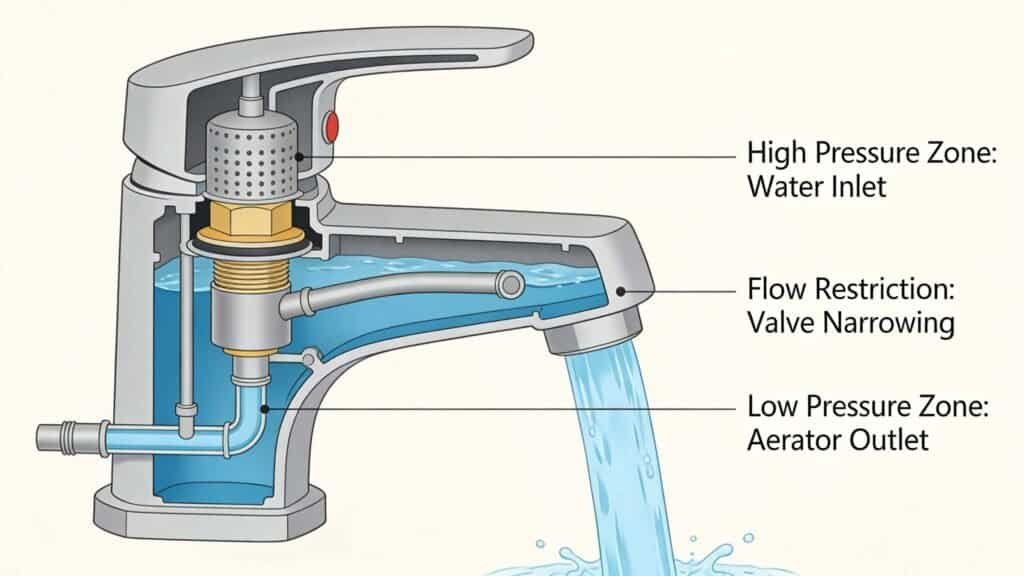
Understanding Water Pressure vs Flow Rate in Faucets
Before solving water pressure problems in faucets, it is essential to understand the difference between pressure and flow rate. These two terms are often confused, leading to incorrect conclusions and unnecessary faucet replacements.
1.1 What Is Water Pressure?
Water pressure refers to the force that pushes water through pipes and fixtures, usually measured in PSI (pounds per square inch). In most residential systems, normal supply pressure ranges from 40–60 PSI.
True low water pressure problems affect all fixtures in a building simultaneously, not just one faucet.
1.2 What Is Flow Rate?
Flow rate refers to the volume of water delivered by a faucet over time, measured in gallons per minute (GPM). Most modern faucet water pressure problems are actually flow restrictions rather than pressure loss.
Typical faucet flow standards:
- Kitchen faucets: 1.5–2.2 GPM
- Bathroom faucets: 0.5–1.2 GPM
- Commercial faucets: 1.8–2.5 GPM
When users complain about low pressure, they are usually experiencing reduced flow caused by internal faucet components.
Common Symptoms of Faucet Water Pressure Problems
Water pressure problems in faucets rarely present in a single, obvious way. Instead, they manifest through a combination of symptoms that evolve over time.
Common signs include:
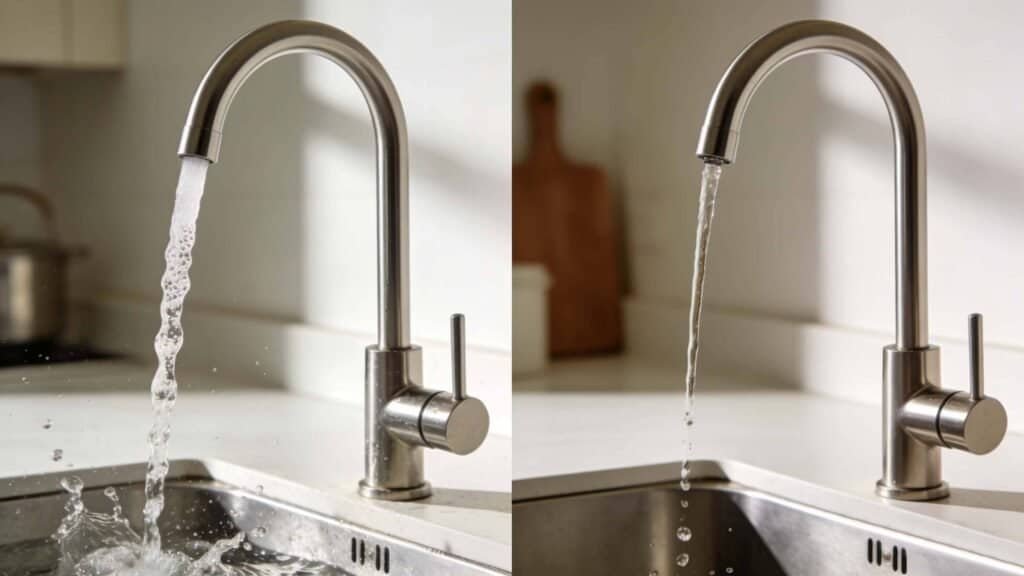
- Weak or dispersed water stream
- Splashing caused by uneven flow
- Slow filling of sinks or containers
- Noticeable difference between hot and cold flow
- Pressure drop after several months of use
These symptoms often indicate internal restrictions rather than supply-side pressure loss.
Design-Related Causes of Water Pressure Problems in Faucets
Water pressure problems in faucets are very often created at the design stage, long before installation or daily use begins. From a factory and engineering perspective, faucet performance is largely determined by internal structure decisions that are invisible to end users but critical to long-term flow stability.
In this chapter, we analyze faucet water pressure problems from a design × manufacturing viewpoint, explaining how specific design choices directly affect water flow, pressure perception, and after-sales complaint rates.
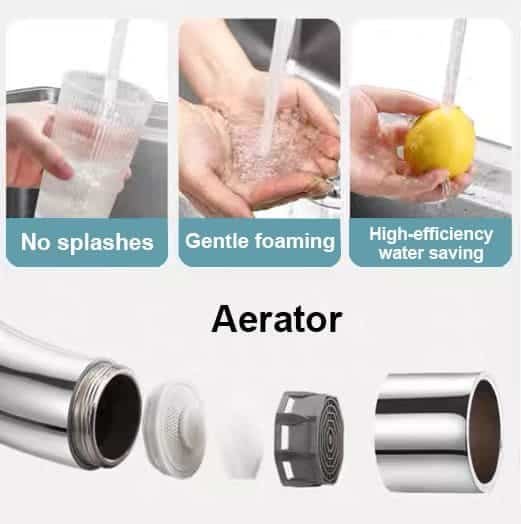
3.1 Aerator Design: The First and Most Common Flow Bottleneck
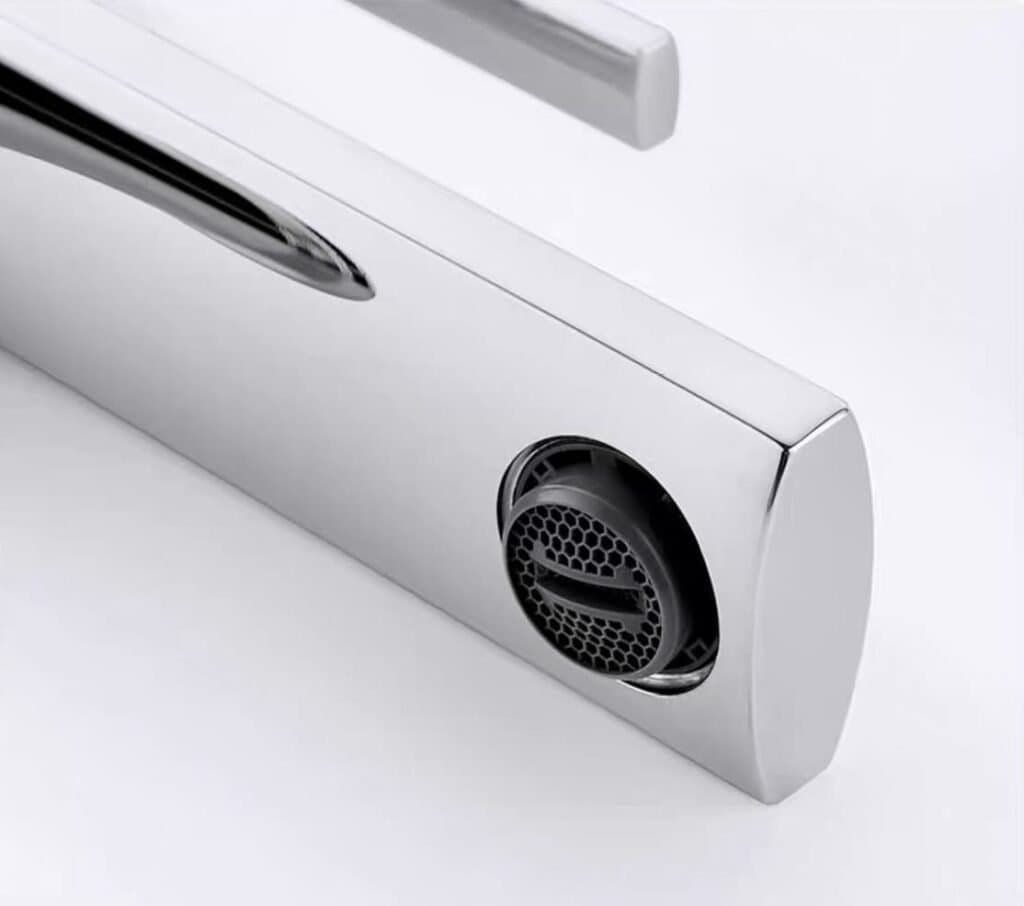
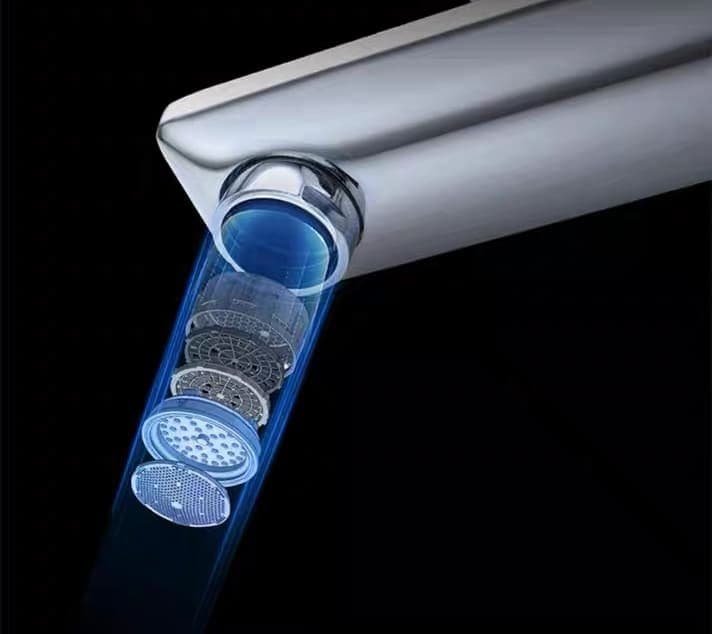
From a factory perspective, the aerator is both a functional component and a regulatory compliance tool. While its purpose is to stabilize flow and reduce splash, poor aerator design is the single most common cause of faucet water pressure problems.
3.1.1 Mesh Density and Clogging Risk
High-density mesh aerators are frequently used to meet strict water-saving standards. However, excessive mesh density dramatically increases the risk of clogging from:
- Sediment in municipal water
- Construction debris in new buildings
- Mineral scale in hard-water regions
Once partially clogged, the aerator creates the illusion of low water pressure, even when internal faucet pressure is normal.
3.1.2 Flow Restrictor Calibration Errors
standpoint, small calibration differences can significantly impact perceived faucet pressure.
Common factory-side mistakes include:
- Overly aggressive GPM reduction
- Inconsistent restrictor hole diameters
- Plastic deformation during injection molding
These issues frequently result in customer complaints within the first 3–6 months of use.
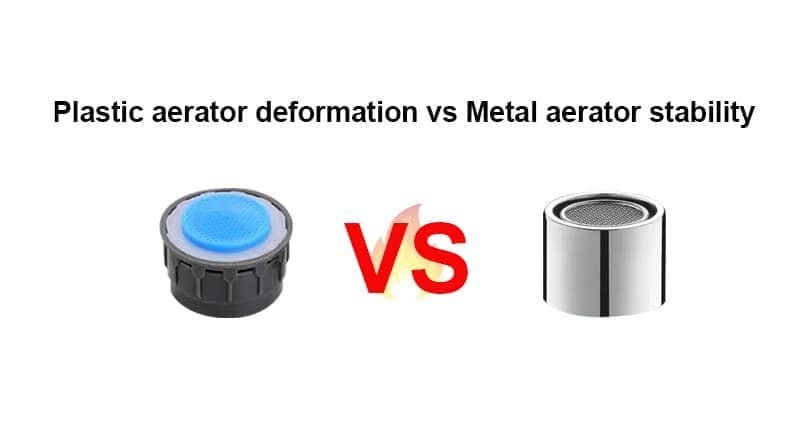
3.1.3 Material Selection: Plastic vs Metal Aerators
Low-cost faucets often use all-plastic aerators to reduce BOM cost. However, plastic components are more susceptible to:
- Heat deformation
- Chemical degradation
- Thread wear during maintenance
Metal or hybrid aerators maintain consistent flow characteristics over a longer lifespan.
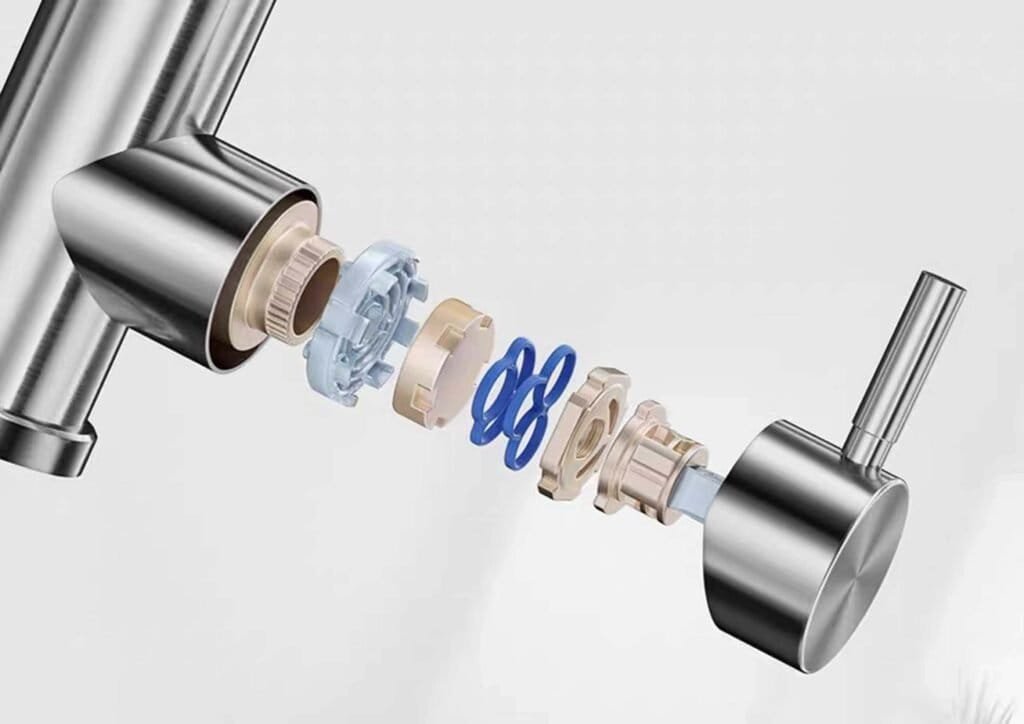
3.2 Cartridge Engineering and Internal Channel Design
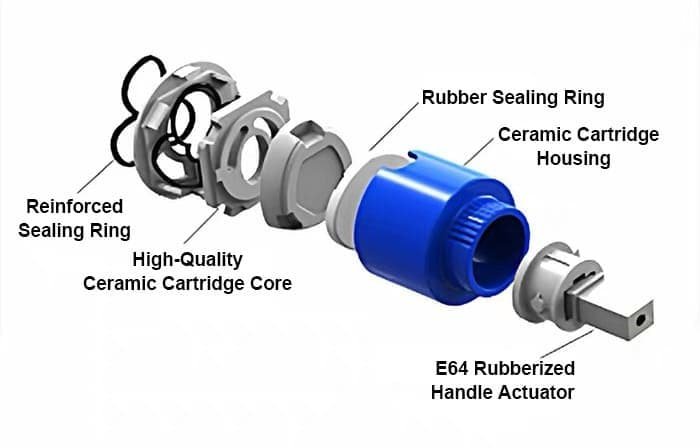
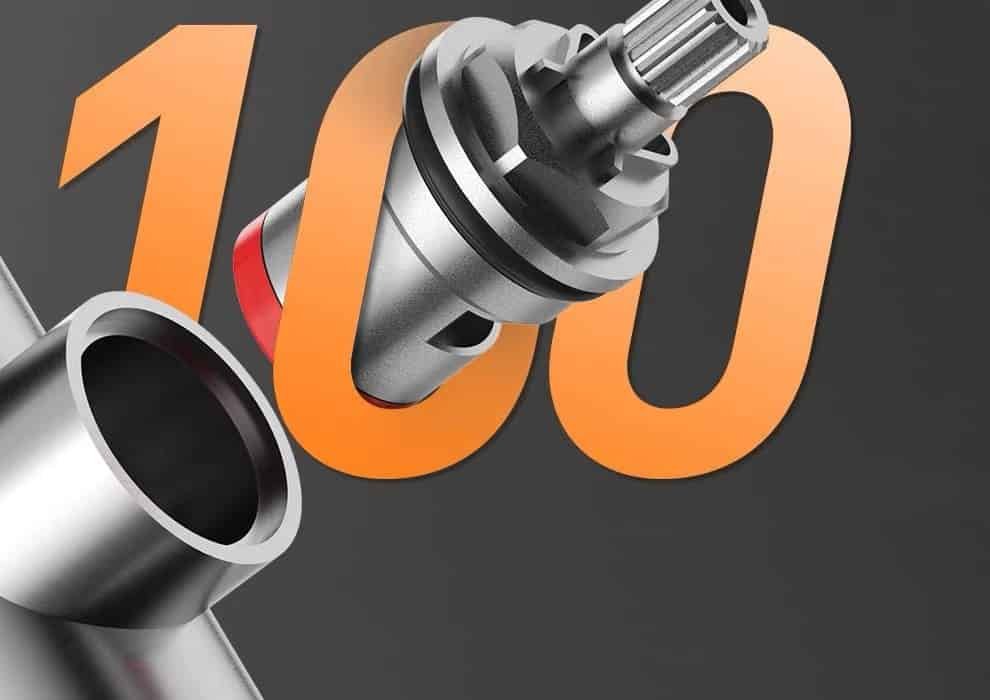
The cartridge is the core hydraulic component of any faucet. From a factory design standpoint, cartridge geometry directly determines water pressure stability and flow efficiency.
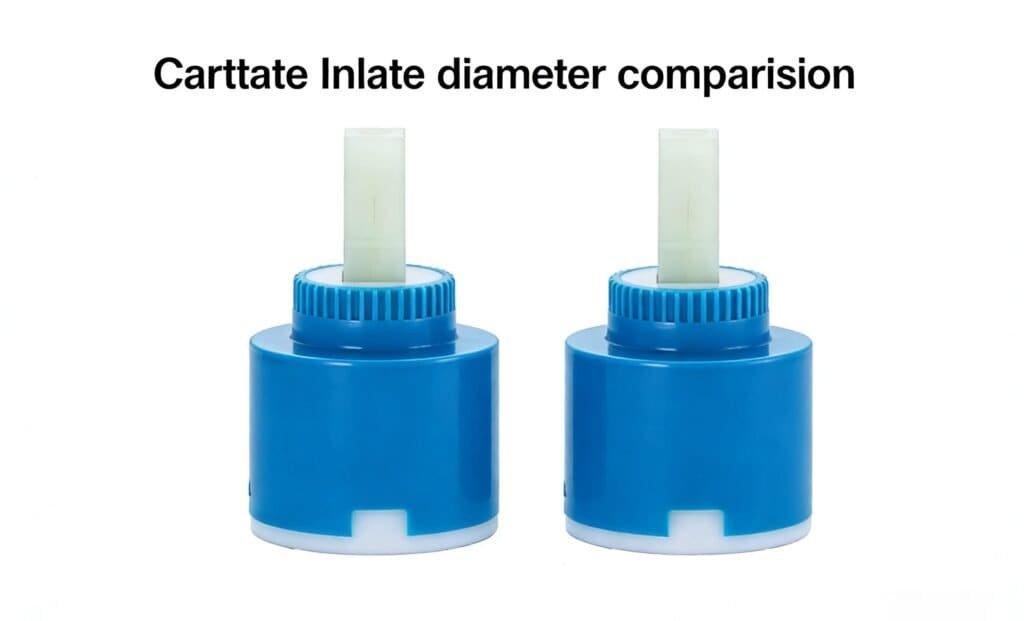
3.2.1 Inlet Size and Internal Channel Diameter
One of the most overlooked causes of faucet water pressure problems is undersized cartridge inlets. To reduce material cost or meet compact design goals, some cartridges use narrow internal passages that restrict flow.
Design trade-offs include:
- Smaller inlets for cost reduction
- Thinner ceramic discs for compact housings
- Reduced internal cavity volume
These compromises create permanent flow limitations that cannot be corrected during installation.
3.2.2 Ceramic Disc Alignment and Surface Finish
High-quality ceramic cartridges rely on precise disc alignment and mirror-level surface finishing. Poor alignment increases flow resistance and creates uneven pressure output.
Manufacturing issues that cause water pressure problems include:
- Inconsistent grinding tolerances
- Warped ceramic discs
- Improper disc preload force
From a factory QA perspective, these defects often pass short-term testing but fail during extended use.
3.2.3 Cartridge Housing Materials and Deformation
Plastic cartridge housings are widely used, but low-grade polymers can deform under sustained water pressure and temperature fluctuations. This deformation subtly reduces internal flow area over time.
Metal-reinforced or high-grade engineering plastics significantly reduce this risk.
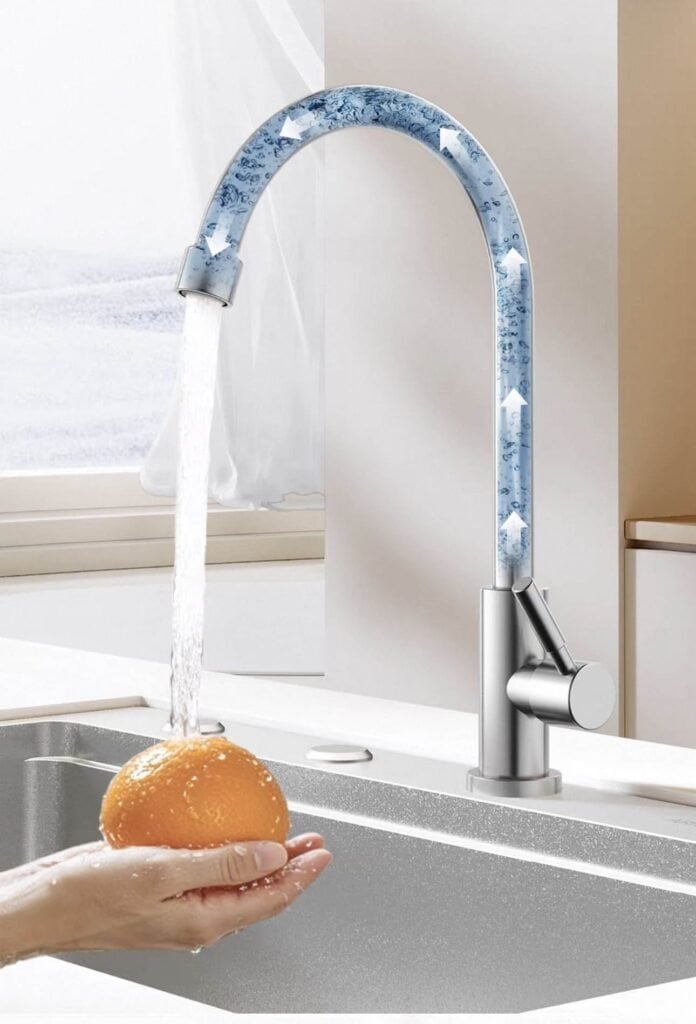
3.3 Faucet Body Geometry: Where Aesthetics Conflict with Hydraulics
From a product design perspective, faucet bodies must balance appearance, ergonomics, and internal flow performance. Unfortunately, aesthetic-driven designs often introduce hidden water pressure problems.
3.3.1 Internal Wall Thickness and Channel Reduction
Heavy-look faucets frequently use thick outer walls to convey a sense of quality. Internally, this reduces the diameter of water channels.
Even small reductions in internal diameter create:
- Increased friction loss
- Turbulence at bends
- Noticeable flow reduction at the spout
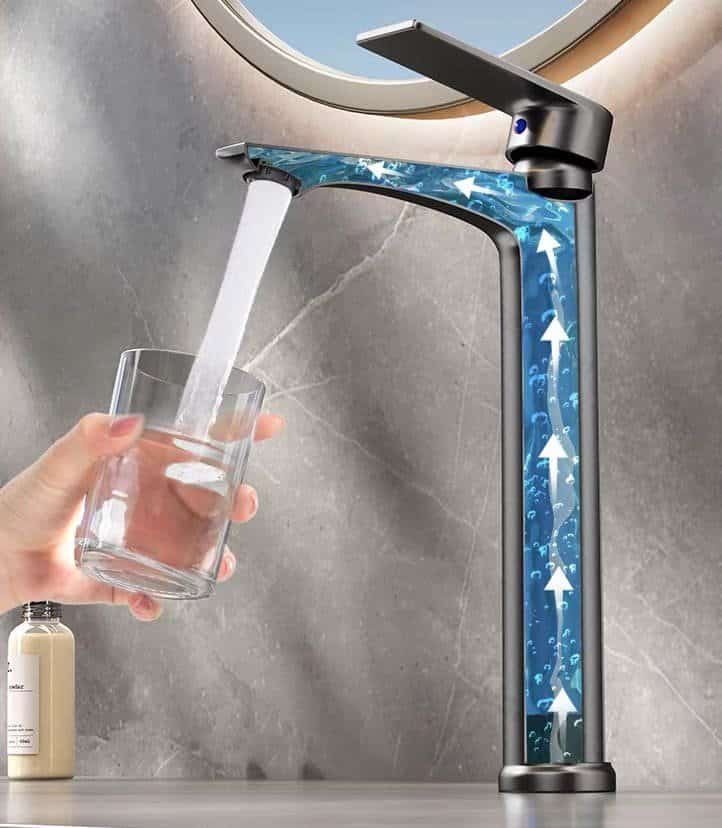
3.3.2 Sharp Turns and Flow Turbulence
From an engineering standpoint, sharp internal turns are highly inefficient. However, complex exterior shapes often force water through abrupt directional changes.
This results in:
- Pressure loss
- Audible flow noise
- Unstable stream patterns
Optimized faucet designs use gradual curves and consistent cross-sections.
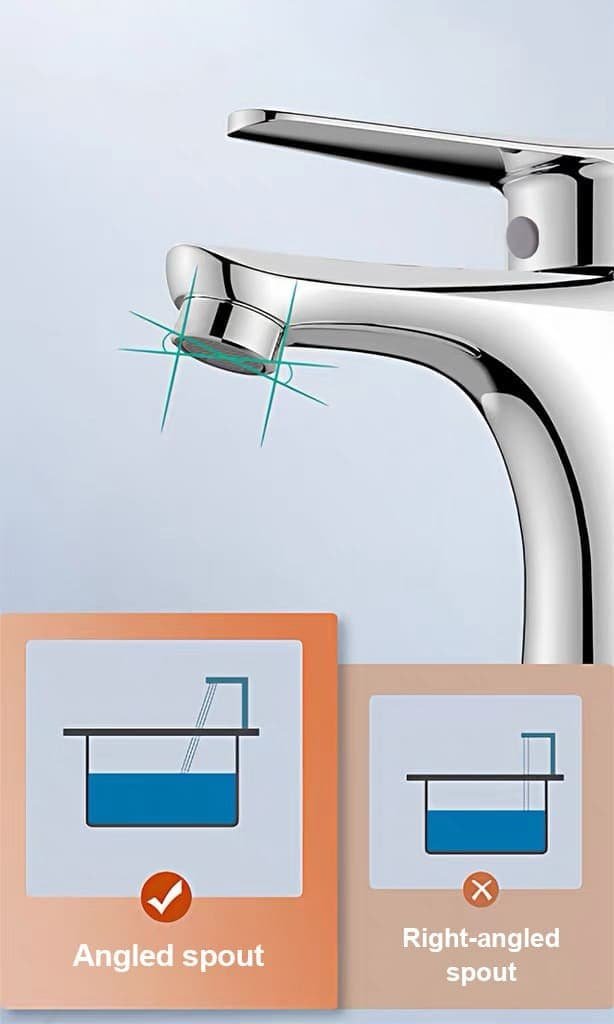
3.3.3 Decorative Spouts and Hidden Restrictions
Tall or sculptural spouts sometimes contain internal reducers to control splash. These reducers frequently become unintended flow bottlenecks.
3.4 Valve Seat, Base Structure, and Hidden Transition Points
Beyond the cartridge and body, several lesser-known structural elements can cause faucet water pressure problems.
3.4.1 Valve Seat Misalignment
Improper valve seat positioning creates partial blockage at critical transition points. This issue is often caused by:
- Poor machining accuracy
- Casting tolerance errors
- Assembly misalignment
Once assembled, these defects are extremely difficult to correct.
3.4.2 Base Inlet Geometry and Connector Design
The transition from supply hose to faucet base is another frequent restriction point. Poor base inlet design creates sudden diameter changes that disrupt flow.
3.5 Factory Cost-Control Decisions That Lead to Pressure Complaints
From an OEM and factory standpoint, many faucet water pressure problems originate from cost-driven decisions made during early development.
Examples include:
- Downsizing cartridges to fit universal bodies
- Reducing internal machining steps
- Using lower-grade polymers
- Combining multiple functions into single restrictive components
While these decisions reduce unit cost, they significantly increase long-term complaint rates.
3.6 Design Best Practices from High-Quality Faucet Manufacturers
Factories with low after-sales complaint rates consistently apply the following design principles:
- Oversized internal water channels
- Precision ceramic cartridge systems
- Metal-reinforced flow-critical components
- Modular, service-friendly aerator designs
These practices result in faucets that maintain stable pressure even under challenging supply conditions.
3.7 Design Checklist: Preventing Water Pressure Problems at the Factory Level
Before mass production, faucet designs should be evaluated using a pressure-focused checklist:
- Are all internal channels optimized for diameter and smoothness?
- Does the cartridge maintain flow stability under low PSI?
- Are aerator and restrictor components serviceable?
- Have decorative elements been evaluated for hydraulic impact?
Addressing these questions early prevents costly revisions and market complaints.
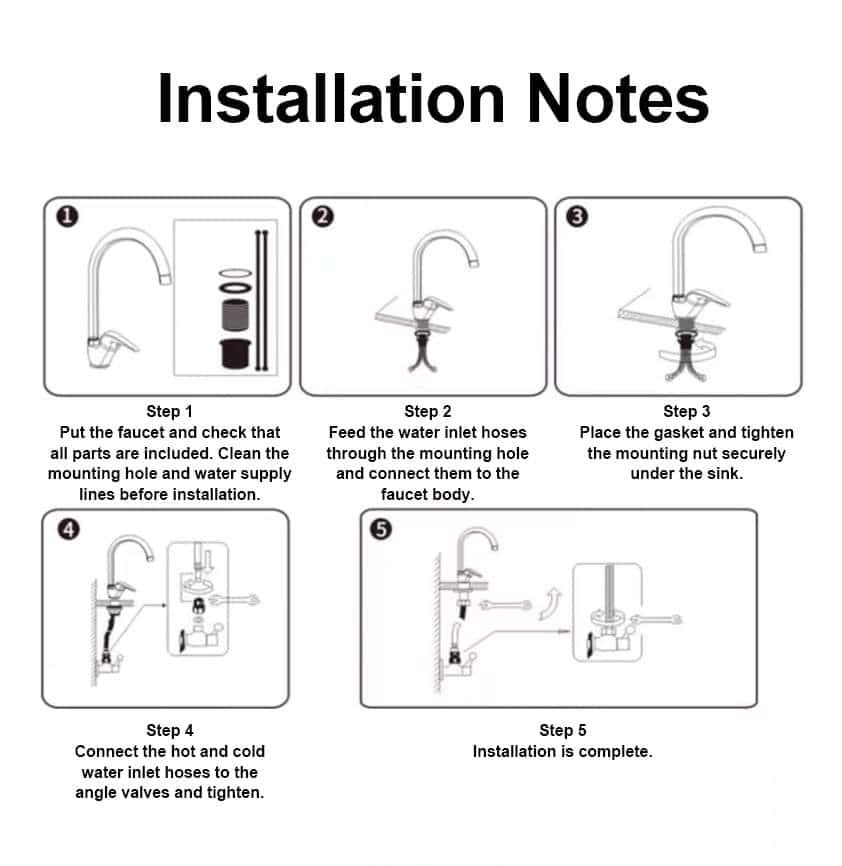
Installation Errors That Create Faucet Water Pressure Problems
Even well-designed faucets can suffer from water pressure problems if installed incorrectly. Installation-related issues are among the most overlooked causes.
4.1 Partially Closed Shut-Off Valves
Angle valves under sinks are frequently left partially closed after maintenance or renovation. This creates localized water pressure problems affecting only one faucet.
4.2 Supply Hose Bending and Collapse
Flexible supply hoses are designed for convenience, but improper routing can restrict flow.
Common mistakes include:
- Tight bending radius
- Twisting during installation
- Crushing behind cabinets
Low-quality braided hoses are especially prone to internal collapse over time.
4.3 Hot and Cold Line Pressure Imbalance
Inconsistent pressure between hot and cold lines creates unstable faucet performance. This issue is common in buildings with:
- Tankless water heaters
- Long pipe runs
- Pressure-reducing valves
The result is uneven flow that feels like a faucet water pressure problem.
Hidden Internal Causes of Faucet Water Pressure Problems
Many faucet water pressure problems remain unresolved because their causes are hidden deep inside the faucet assembly. These issues are rarely visible during installation and often develop gradually, making them difficult for users and even installers to identify.
From a factory, engineering, and after-sales perspective, hidden internal causes are responsible for a large percentage of long-term faucet pressure complaints. This chapter expands deeply into these invisible factors and explains how they form, how they evolve, and how they can be prevented.
5.1 Sediment, Debris, and Construction Residue Accumulation
One of the most underestimated causes of faucet water pressure problems is sediment and debris buildup inside internal components. This issue is especially common in new buildings, renovation projects, and regions with unstable municipal water quality.
5.1.1 Sources of Internal Debris
Sediment entering a faucet system typically originates from:
- Municipal pipeline repairs releasing rust and sand
- New building construction debris
- Aging galvanized or iron pipes
- Mineral particles in hard-water regions
Although supply hoses may appear clean externally, microscopic particles gradually accumulate at critical flow points.
5.1.2 Where Sediment Accumulates Inside Faucets
From an internal flow perspective, sediment does not distribute evenly. It concentrates at:
- Cartridge inlet ports
- Aerator chambers
- Flow restrictor edges
- Pressure-balancing valve slots
Even a thin layer of debris can significantly reduce effective flow area.
5.1.3 Progressive Flow Reduction Over Time
Unlike sudden pressure loss, sediment-related faucet water pressure problems develop gradually. Users often report that the faucet “used to work fine” and slowly became weaker.
This progressive nature makes sediment buildup one of the most misdiagnosed pressure issues.
5.2 Manufacturing Tolerance Accumulation and Stack-Up Effects
From a factory engineering standpoint, water pressure problems in faucets often result from tolerance stack-up rather than a single defect.
5.2.1 What Is Tolerance Stack-Up?
Tolerance stack-up occurs when multiple small dimensional variations combine to create a significant restriction. Individually, each part may be within specification, but together they reduce flow.
Common contributors include:
- Cartridge inlet diameter variance
- Valve seat position deviation
- Body casting shrinkage
- Base inlet machining tolerance
5.2.2 Why These Issues Escape Factory Testing
Short-duration flow tests performed at the factory often fail to reveal tolerance-related problems. Under clean conditions and controlled pressure, the faucet appears compliant.
However, once installed in real-world conditions with sediment, temperature changes, and pressure fluctuations, flow degradation becomes evident.
5.2.3 Long-Term Deformation and Material Creep
Low-grade plastics used in cartridges and internal connectors may slowly deform under constant pressure and temperature cycling.
This deformation narrows internal passages over time, creating delayed faucet water pressure problems that appear months after installation.
5.3 Pressure-Balancing and Anti-Scald Components as Hidden Restrictors
Pressure-balancing and anti-scald mechanisms are designed to improve safety, but they frequently become unintended sources of flow restriction.
5.3.1 How Pressure-Balancing Valves Work
These components regulate hot and cold water ratios to prevent sudden temperature spikes. They do so by dynamically restricting one side when pressure changes.
5.3.2 Common Design and Calibration Issues
From a manufacturing standpoint, problems arise when:
- Balancing pistons are undersized
- Return springs are too stiff
- Internal channels are overly narrow
These issues cause the valve to remain partially closed, reducing overall flow even under normal conditions.
5.3.3 Regional Pressure Compatibility Problems
Pressure-balancing designs optimized for high-pressure markets often perform poorly in low-pressure regions, leading to widespread faucet water pressure complaints after export.
5.4 Internal Sealing Elements and O-Ring Resistance
Internal sealing components play a crucial role in preventing leaks, but they can also contribute to hidden pressure loss.
5.4.1 O-Ring Compression and Friction
Over-compressed O-rings increase friction against moving components, especially in cartridges and diverter systems.
This friction slows internal water movement and reduces effective flow rate.
5.4.2 Material Swelling Due to Water Chemistry
Certain rubber compounds swell when exposed to chlorinated or mineral-rich water. This swelling subtly reduces internal clearance.
From an after-sales perspective, this issue is difficult to diagnose because it does not involve visible damage.
5.5 Internal Surface Finish and Flow Resistance
The internal surface finish of faucet components significantly affects hydraulic performance.
5.5.1 Rough Surfaces and Micro-Turbulence
Poor casting or machining leaves micro-roughness inside water channels. These surfaces create turbulence that reduces flow efficiency.
Even when channel diameter is sufficient, rough internal walls can cause measurable pressure loss.
5.5.2 Coating and Plating Intrusion
In some designs, internal plating or coating slightly intrudes into flow paths. While visually insignificant, this intrusion reduces cross-sectional area.
Repeated plating cycles during rework further worsen the issue.
5.6 Assembly Errors That Create Hidden Restrictions
Certain assembly-stage mistakes introduce internal restrictions that are invisible externally.
Common examples include:
- Misaligned internal gaskets
- Excess sealant squeezed into flow paths
- Improperly seated cartridges
These errors are difficult to detect without full disassembly.
5.7 Diagnostic Techniques for Identifying Hidden Causes
Professionals diagnosing faucet water pressure problems should use targeted methods to identify hidden internal restrictions.
Recommended techniques include:
- Comparing flow before and after aerator removal
- Cartridge bench testing
- Differential pressure measurement
- Internal visual inspection after disassembly
This approach prevents unnecessary replacement and improves repair accuracy.
5.8 Factory-Level Prevention Strategies for Hidden Pressure Problems
From a manufacturing and OEM perspective, preventing hidden faucet water pressure problems requires systematic control.
Best practices include:
- Pre-flush testing during assembly
- Stricter tolerance management
- Material validation for long-term stability
- Region-specific pressure calibration
5.9 Why Hidden Internal Causes Drive After-Sales Complaints
Hidden internal causes are the most expensive type of faucet water pressure problem for manufacturers and distributors.
They result in:
- Delayed customer complaints
- High diagnostic labor costs
- Warranty replacements
- Brand reputation damage
Addressing these causes early significantly improves long-term product performance.
5.10 Key Takeaways: Understanding What You Cannot See
Faucet water pressure problems are often rooted in internal factors that users never see. Sediment buildup, tolerance accumulation, pressure-balancing components, and material behavior all interact to restrict flow over time.
By understanding these hidden causes, manufacturers, installers, and buyers can make better design, installation, and maintenance decisions—dramatically reducing pressure-related failures.
Regulations, Market Differences, and Why the Same Faucet Performs Differently Across Regions (2026)
6.1 Why Water Pressure Is a Regulatory Topic, Not Just a Technical One
In global faucet sourcing, water pressure performance is rarely governed by a single factor. Instead, it is shaped by regional plumbing regulations, infrastructure realities, and enforcement practices. For OEM buyers, this means one critical truth:
A faucet that passes testing and sells well in one market can become a liability in another — without any visible design change.
From a factory perspective, water pressure complaints often trace back not to manufacturing defects, but to regulatory mismatches between the product’s original design assumptions and the destination market’s standards.
[Image Placeholder: Global map showing typical household water pressure ranges by region]
Key misunderstanding among buyers:
- Regulations do notstandardize real-world pressure
- Pressure limits are often maximums, not operating averages
- Compliance does not guarantee user satisfaction
This chapter breaks down how North America, Mexico, South America, and other emerging markets differ — and how OEM projects must adapt at the design stage.
6.2 North America: Flow-Restricted by Law, Not by Infrastructure
6.2.1 Regulatory Framework (US & Canada)
North American faucet performance is heavily shaped by mandatory flow-rate regulations, primarily:
- EPA WaterSense (US)
- ASME A112.18.1 / CSA B125.1
Typical requirements:
- Kitchen faucets: max 1.8 GPM (6.8 L/min)
- Lavatory faucets: max 1.2 GPM (4.5 L/min)
Importantly:
- These limits apply at 60 PSI test pressure
- Real household pressure often ranges from 45–80 PSI
This creates a paradox:
- High pressure supply
- Artificially restricted outlet
Resulting OEM risks:
- Consumers perceive “low pressure” despite compliance
- Aerator clogging becomes more noticeable
- Cartridge tuning errors are amplified
6.2.2 OEM Design Implications for North America
Factories supplying this market must design for:
- Precise aerator selection (laminar vs spray)
- Pressure-compensating cartridges
- Stable flow under variable inlet pressure
Common OEM mistake:
Reusing EU or LATAM cartridge specs with NA aerators
This mismatch leads to:
- Noise complaints
- Pulsing flow
- Early cartridge wear
6.3 Mexico: NOM Compliance vs Real-World Pressure Volatility
Mexico represents one of the most misunderstood faucet markets for OEM buyers.
6.3.1 NOM Standards and Their Limits
Key regulation:
NOM-012-CONAGUA-2021
Focus areas:
- Water efficiency
- Labeling
- Basic performance
What it does not guarantee:
- Stable municipal pressure
- Consistent installation quality
- Uniform plumbing infrastructure
Pressure reality:
- Urban apartments: 15–30 PSI
- Houses with rooftop tanks: gravity-fed, fluctuating
- New developments: booster-pump driven spikes
6.3.2 Why OEM Faucets Fail Silently in Mexico
From factory feedback data:
- Faucets pass NOM testing
- Bulk shipments receive no early complaints
- Issues appear after 3–6 months of use
Root causes:
- Cartridge seals not optimized for low-pressure sealing
- Aerators designed for high-pressure atomization
- Installers removing flow restrictors
OEM solution strategies:
- Dual-version aerator supply
- Low-pressure-optimized cartridge tuning
- Installation guidance localized for gravity systems
6.4 South America: Infrastructure First, Regulations Second
Markets such as Brazil, Colombia, Peru, and Chile share a common trait:
Infrastructure variability outweighs written standards.
6.4.1 Pressure Profiles Across South America
Typical patterns:
- New urban zones: high pressure, unstable
- Older districts: low pressure, sediment-heavy
- Rural areas: tank-fed systems
OEM consequences:
- Cartridge abrasion from particulates
- Aerator clogging complaints
- Uneven hot/cold balance in mixers
6.4.2 Why “One Model Fits All” Fails Here
Factories often ship:
- Single SKU
- Single cartridge spec
- Single aerator
But successful OEM buyers request:
- Region-specific flow kits
- Spare aerators in bulk packaging
- Higher tolerance cartridge clearances
6.5 Europe vs Emerging Markets: Opposite Pressure Assumptions
European faucet design traditionally assumes:
- Lower average pressure
- Higher installation consistency
- Strong enforcement of plumbing codes
When EU-designed faucets are exported unchanged:
To LATAM → flow feels weak
To NA → flow feels restricted
OEM takeaway:
Design assumptions travel poorly
6.6 Compliance Is Not Performance: What OEM Buyers Must Demand
A recurring sourcing error:
“The faucet is certified, so water pressure won’t be an issue.”
Certification proves:
- Maximum flow compliance
- Structural safety
It does not prove:
- User satisfaction
- Local pressure compatibility
- Installation tolerance
OEM buyers should require:
- Pressure range testing (not single-point)
- Cartridge life testing under low-flow conditions
- Aerator clogging simulation
6.7 Factory Checklist: Matching Faucet Design to Target Market
Before mass production, OEM projects should confirm:
- Target country & city pressure assumptions
- Regulation vs real pressure gap
- Cartridge spec origin
- Aerator type & mesh density
- Installer behavior assumptions
6.8 Strategic OEM Insight: Designing for Pressure Diversity
Leading faucet factories increasingly adopt:
- Modular flow systems
- Market-specific BOM variations
- Dual-compliance designs
This approach:
- Reduces after-sales risk
- Improves buyer confidence
- Increases long-term OEM relationships
For B2B buyers, understanding regional pressure differences is no longer optional — it is a sourcing competency.
Residential vs Commercial Faucet Water Pressure Problems
Water pressure problems in faucets differ significantly between residential and commercial applications.
Residential Faucets
- Lower pressure tolerance
- Higher sensitivity to aerator clogging
- Gradual sediment buildup
Commercial Faucets
- High usage cycles
- Pressure-balancing wear
- Code-driven flow restriction
Understanding usage context is critical for correct diagnosis.
Manufacturer Design Strategies to Reduce Pressure Problems
From a manufacturing perspective, preventing faucet water pressure problems begins at the design stage.
Key strategies include:
- Optimized internal channel geometry
- High-grade ceramic cartridges
- Service-friendly aerator systems
- Stable flow restrictor calibration
These improvements significantly reduce after-sales complaints in B2B projects.
Repair or Replace? Making the Right Decision
Not all faucet water pressure problems require replacement.
Repair is recommended when:
- Aerator or cartridge is clogged
- Installation error is confirmed
- Faucet body is structurally sound
Replacement is recommended when:
- Internal body restrictions exist
- Manufacturing defects are present
- Flow design is outdated
Future Trends in Faucet Water Pressure Design (2026+)
As global water regulations tighten and faucet designs become more compact and efficient, water pressure problems in faucets are increasingly driven by design optimization rather than supply limitations.
Future faucet development trends focus on:
- Laminar flow optimization under low PSI
- Pressure-adaptive cartridge systems
- Smarter flow restrictor calibration
- Modular internal components for easier maintenance
Manufacturers that proactively address pressure performance at the design stage will gain a competitive advantage in both retail and B2B markets.
B2B & OEM Procurement Guide: How to Evaluate Faucet Water Pressure Performance Before You Buy
For B2B buyers, importers, project contractors, and OEM clients, faucet water pressure problems represent more than a user inconvenience—they translate directly into after-sales costs, warranty claims, and brand risk.
This chapter provides a practical, factory-aligned framework for evaluating faucet water pressure performance before placing bulk orders, helping OEM buyers avoid hidden design risks.
11.1 Why Water Pressure Performance Is a Critical B2B Risk Factor
In large-scale projects and private-label programs, even a small design flaw can scale into thousands of customer complaints.
From a B2B perspective, faucet water pressure problems lead to:
- High after-sales service costs
- Product returns and replacements
- Negative distributor feedback
- Loss of repeat orders
Unlike leaks or surface defects, pressure-related issues are difficult to prove and slow to resolve, making them especially damaging.
11.2 The Most Common OEM Mistake: Focusing Only on Appearance and Price
Many OEM buyers prioritize external design, finish quality, and unit price while overlooking internal hydraulic performance.
Common procurement blind spots include:
- Assuming all cartridges perform similarly
- Ignoring internal channel geometry
- Accepting factory flow test reports without context
These oversights are a major reason faucet water pressure problems appear months after market launch.
11.3 Key Internal Components OEM Buyers Must Evaluate
OEM buyers should request detailed information on the following components:
11.3.1 Cartridge Specifications
Critical cartridge parameters include:
- Inlet diameter
- Ceramic disc thickness
- Material grade of housing
- Pressure performance range
A cartridge that performs well in high-pressure markets may fail in low-pressure regions.
11.3.2 Aerator and Flow Restrictor Design
Buyers should verify:
- Restrictor calibration method
- Replaceability of aerator
- Resistance to sediment clogging
Low-cost aerators are a frequent source of pressure complaints.
11.3.3 Faucet Body Internal Geometry
Request internal cross-section drawings to confirm:
- Channel diameter consistency
- Absence of sharp internal turns
- Proper transition at base inlets
11.4 Region-Specific Pressure Compatibility
OEM buyers supplying multiple markets must account for regional pressure differences.
Examples:
- Latin America: often lower and less stable pressure
- Europe: strict flow regulations
- North America: higher average PSI
A single faucet design may not perform equally well in all regions.
11.5 Red Flags in Factory Communication
Certain factory responses often signal future faucet water pressure problems:
- “This cartridge is standard for all models”
- “Pressure complaints are caused by local water”
- “We have no data for low-pressure testing”
These responses indicate limited pressure-performance control.
11.6 How Experienced OEM Buyers Reduce Pressure-Related Risk
Experienced buyers mitigate risk by:
- Approving cartridge suppliers directly
- Conducting pre-production flow audits
- Specifying pressure performance in contracts
These steps significantly reduce post-launch issues.
11.7 Key Takeaways for B2B and OEM Buyers
For OEM and B2B buyers, faucet water pressure performance should be evaluated as a core functional requirement—not an afterthought.
By understanding internal design, testing samples properly, and working with transparent factories, buyers can avoid costly pressure-related failures and build stronger, longer-term partnerships.
Conclusion: Solving Faucet Water Pressure Problems the Right Way
Water pressure problems in faucets are rarely caused by a single factor. Design decisions, installation quality, and internal components all play critical roles in long-term performance.
By understanding the real causes behind low water pressure, professionals and buyers can avoid unnecessary replacements, reduce complaints, and select faucets that deliver stable, efficient flow for years.
A well-designed faucet should balance water efficiency, pressure stability, and serviceability—without hidden compromises.
Contact FaucetU learn More.