
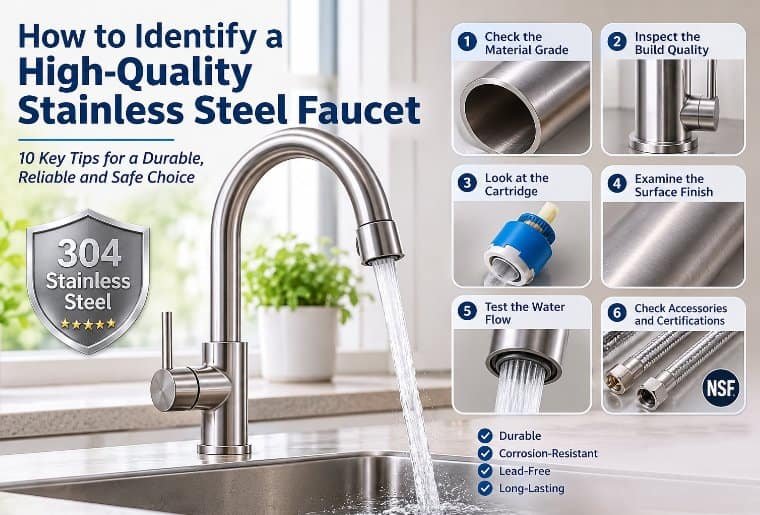
How to Identify a High-Quality Stainless Steel Faucet: 10 Tips
Meta Description:
Learn how to identify a high-quality stainless steel faucet. Discover 304 stainless steel, cartridge quality, finishes, durability and buying tips.
Stainless steel faucets have become increasingly popular in modern kitchens and bathrooms because of their durability, corrosion resistance, attractive appearance, and easy maintenance. Whether you are renovating your home, purchasing products for a construction project, or sourcing faucets for your plumbing business, choosing a high-quality stainless steel faucet is an important decision.
However, not all stainless steel faucets offer the same level of quality. Some products use genuine 304 stainless steel, while others combine different materials or use lower-grade components. Even faucets that look almost identical can differ significantly in material quality, internal structure, manufacturing standards, and service life.
So, how can you identify a high-quality stainless steel faucet?
In this guide, we will explain 10 important factors to consider when choosing a stainless steel faucet, including material grade, cartridge quality, surface finish, water flow performance, construction, and certifications. These tips will help homeowners, contractors, wholesalers, and importers make more informed purchasing decisions.
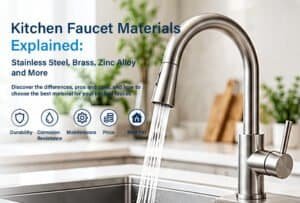
Stainless steel is one of the most popular materials used in modern faucets. To understand how different materials affect durability and performance, read our guide to [Kitchen Faucet Materials].
1. Check the Stainless Steel Grade: 304 Is a Popular Choice
One of the first things to check when buying a stainless steel faucet is the material grade.
Stainless steel is available in different grades, and each grade has different properties. For faucet manufacturing, 304 stainless steel is one of the most commonly used options because it offers a good balance of corrosion resistance, strength, durability, and processing performance.
304 stainless steel typically contains approximately 18% chromium and 8% nickel. Chromium helps create a protective oxide layer on the surface, while nickel improves corrosion resistance and material performance.
Why Is 304 Stainless Steel a Good Choice?
There are several reasons why 304 stainless steel is widely used in kitchen and bathroom faucets:
Excellent corrosion resistance: It performs well in normal indoor water-use environments.
Good durability: It offers good mechanical strength for everyday use.
Rust resistance: It is more resistant to rust than ordinary carbon steel.
Hygienic properties: Its smooth, non-porous surface is easy to clean.
Good processing performance: It can be manufactured into different faucet shapes and designs.
For customers looking for durable stainless steel kitchen faucets or bathroom basin faucets, 304 stainless steel is often a worthwhile option.
What About 201 Stainless Steel?
Some manufacturers use 201 stainless steel as a lower-cost alternative.
Although 201 stainless steel also contains chromium, it generally has less nickel and relies more heavily on manganese. Its corrosion resistance is usually lower than that of 304 stainless steel, particularly in environments with higher chloride exposure.
Feature | 304 Stainless Steel | 201 Stainless Steel |
|---|---|---|
Nickel content | Higher | Lower |
Corrosion resistance | Generally better | Generally lower |
Durability | Good | Depends on application |
Cost | Usually higher | Usually lower |
Common application | Higher-quality faucets | Cost-sensitive products |
Buying tip: Always ask the supplier to specify the exact stainless steel grade used in the faucet body. Do not assume that every product advertised as a stainless steel faucet is made entirely from 304 stainless steel.
If you are comparing different faucet materials, our guide to [304 Stainless Steel vs Zinc Alloy Faucets] explains the differences in durability, corrosion resistance, maintenance, and cost.
2. Examine the Faucet Body and Overall Construction
The faucet body is one of the most important parts of the product. It affects structural strength, stability, appearance, and long-term performance.
A high-quality stainless steel faucet should have a well-designed body with consistent dimensions, smooth edges, and carefully finished connections.
When inspecting a faucet, pay attention to the following details:
Body thickness: Check whether the faucet body has sufficient material for its intended design and application.
Structural strength: The faucet should feel stable and should not have obvious loose or weak sections.
Welding quality: Welded areas should be smooth, consistent, and free from visible defects.
Connection design: Threaded connections should be accurately manufactured and fit properly.
Surface consistency: There should be no obvious dents, scratches, cracks, or uneven finishing.
A faucet that looks attractive from the outside may still have poor internal construction.
For wholesale buyers and importers, it is especially important to request product specifications, production samples, and quality inspection reports before placing large orders.
For more information about choosing durable stainless steel products, check out our [Best Stainless Steel Faucets] buying guide.
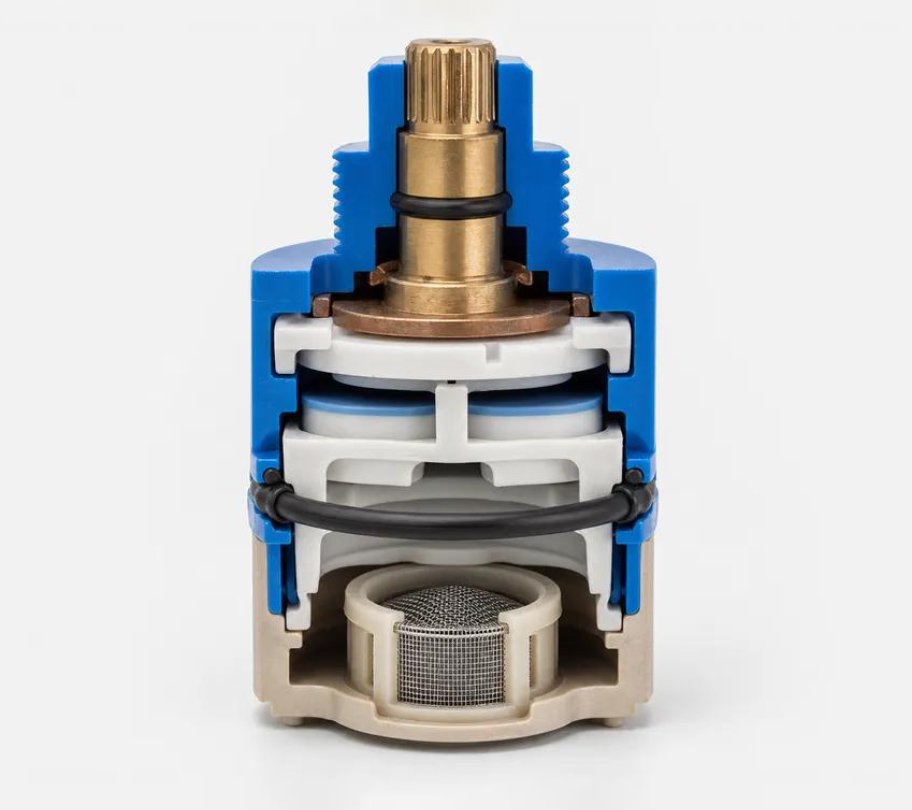
3. Check the Cartridge Quality
The cartridge is one of the most important internal components of a modern faucet. It controls water flow and temperature, directly affecting the faucet’s daily performance.
Even if a faucet uses high-quality 304 stainless steel, a poor cartridge can cause problems such as dripping, leaking, difficult handle operation, and unstable water temperature.
Why Choose a Ceramic Disc Cartridge?
Ceramic disc cartridges are widely used in modern single-handle and double-handle faucets because they offer several advantages:
Smooth handle operation
Good wear resistance
Reliable water-flow control
Reduced risk of leakage when properly manufactured and installed
Long service life under appropriate operating conditions
When evaluating a stainless steel faucet, check the following cartridge features:
Is the cartridge made with quality ceramic discs?
Does the handle move smoothly without excessive resistance?
Can the cartridge control hot and cold water accurately?
Has the cartridge passed durability or cycle testing?
Is the cartridge replaceable if maintenance is required?
For commercial projects, hotels, apartments, and other high-use environments, cartridge performance is particularly important.
The ceramic cartridge is another important factor affecting faucet performance. Learn more about [how to replace a ceramic faucet cartridge] and maintain smooth faucet operation.
Buying tip: Ask the manufacturer about the cartridge brand, specifications, pressure testing, and expected operating cycles. A reliable supplier should be able to provide relevant technical information.
4. Inspect the Surface Finish and Appearance
The surface finish is another important indicator of stainless steel faucet quality.
A high-quality faucet should have a consistent appearance, smooth surface, and uniform finishing. Poor surface treatment may result in visible scratches, rough edges, uneven color, or premature surface deterioration.
Common stainless steel faucet finishes include:
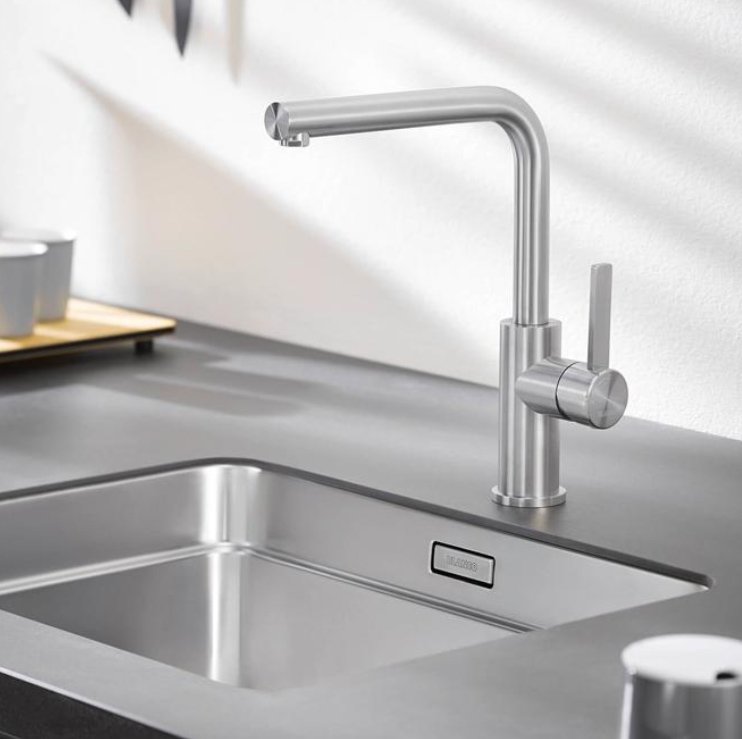
Brushed Stainless Steel
Brushed stainless steel has a fine linear texture that creates a modern, understated appearance. It can help make minor fingerprints and watermarks less noticeable compared with highly polished surfaces.
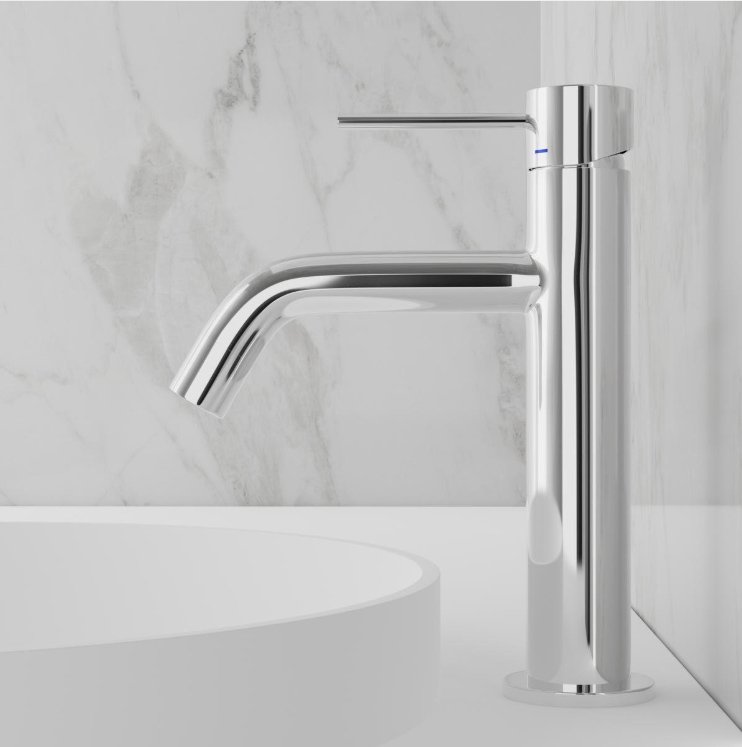
Polished Stainless Steel
Polished stainless steel has a smooth, reflective appearance. It is popular in contemporary bathrooms and kitchens, although fingerprints and water spots may be more visible.
PVD Stainless Steel Finish
PVD (Physical Vapor Deposition) is a surface-coating technology used to create different colors and finishes, including gold, black, and other decorative effects.
A properly applied PVD coating can offer good wear and corrosion resistance, depending on the coating system and production quality.
When inspecting the finish, look for:
Consistent color and texture
No visible scratches or peeling
Smooth transitions between different surfaces
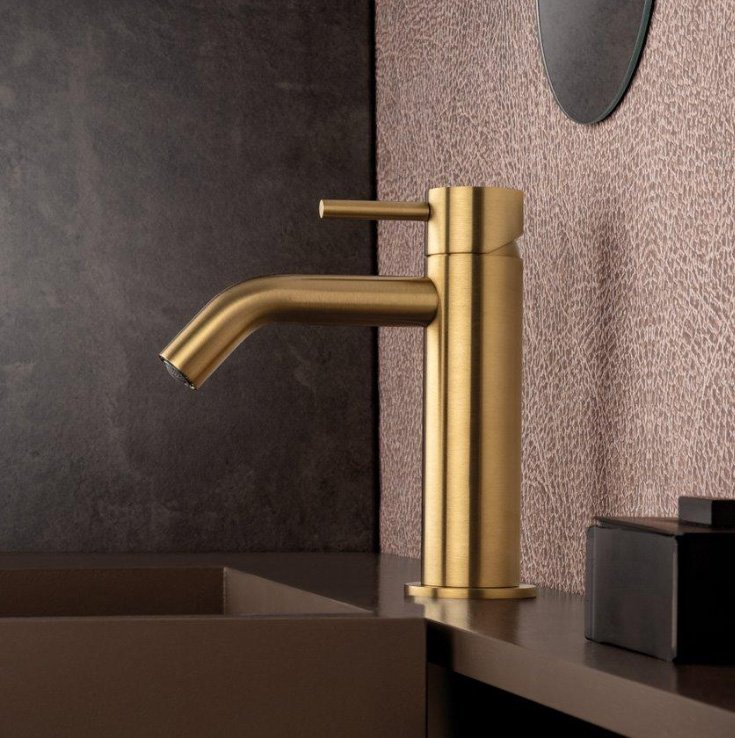
- No rough edges or obvious polishing marks
Good resistance to normal cleaning and handling
Remember that a beautiful finish does not automatically mean the faucet has a high-quality internal structure. Material, construction, and functional testing are equally important.
Different surface treatments can affect the appearance and durability of a faucet. Read our comparison of [PVD vs Stainless Steel Faucets] to learn more about their differences.
5. Check the Water Flow and Aerator Performance
The aerator is a small but important component located at the faucet outlet. It mixes air into the water stream, helping create a more controlled flow.
A high-quality faucet should provide a stable and comfortable water stream without excessive splashing.
What Should You Look for in a Faucet Aerator?
Consistent water flow
Reduced splashing
Easy cleaning and maintenance
Resistance to mineral buildup
Appropriate flow rate for the application
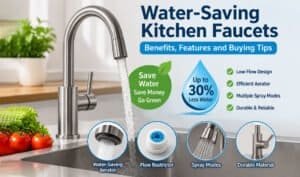
Some modern kitchen faucets also feature water-saving aerators designed to reduce water consumption while maintaining a comfortable user experience.
However, the ideal flow rate depends on the faucet type, local regulations, and intended use. A kitchen faucet, bathroom basin faucet, and commercial faucet may have different requirements.
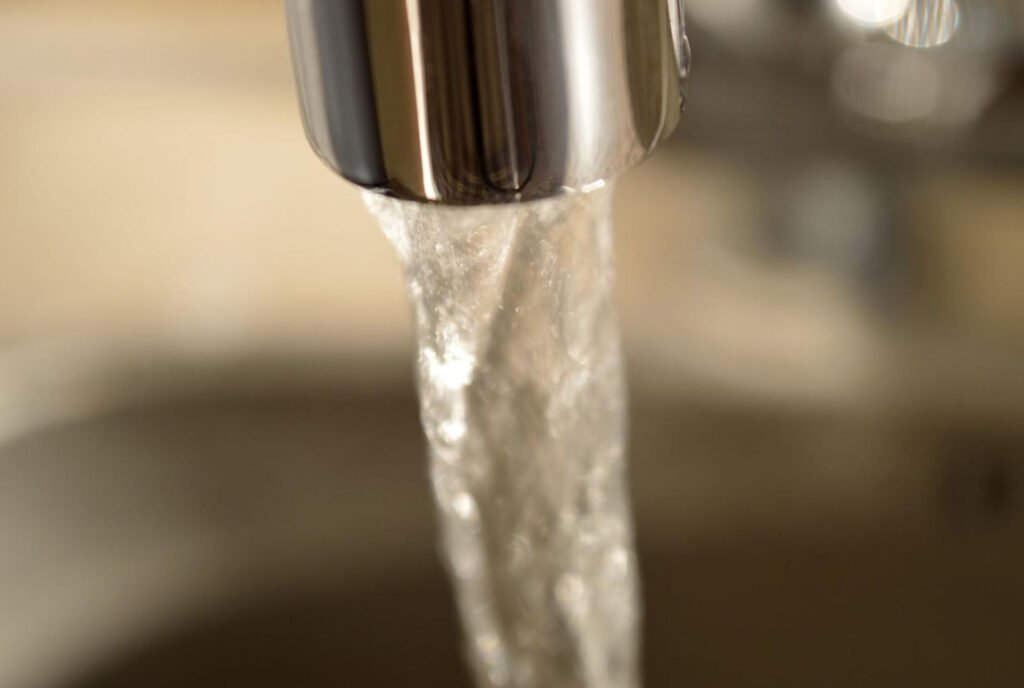
Buying tip: Test the faucet under normal water pressure. Check whether the stream is stable and whether the aerator can be removed and cleaned when necessary.
Regular aerator maintenance helps maintain consistent water flow. Follow our guide on [how to replace a faucet aerator] for practical maintenance tips.
6. Evaluate the Faucet's Weight and Material Quality
Many buyers use faucet weight as a quick way to judge product quality. While weight can provide some clues, it should never be the only factor.
A well-designed stainless steel faucet should have an appropriate structure and material thickness for its intended application.
However, a heavier faucet is not necessarily better. Weight can vary depending on the design, internal components, wall thickness, and construction method.
For example, some faucets have solid stainless steel bodies, while others use a combination of stainless steel, plastic, and other materials.
How to Check Material Quality
Instead of judging by weight alone, consider these methods:
Ask for the material specification.
Confirm whether the faucet body is 304 stainless steel.
Request a material test report when necessary.
Check the material of the spout, handle, and internal components.
Compare product construction with a verified sample.
For B2B buyers, it is important to distinguish between the main faucet body and other accessories. A product may have a 304 stainless steel body but use different materials for its cartridge, aerator, decorative components, and connecting hoses.
A transparent material specification helps prevent misunderstandings during bulk purchasing.
7. Check the Flexible Hoses and Connection Accessories
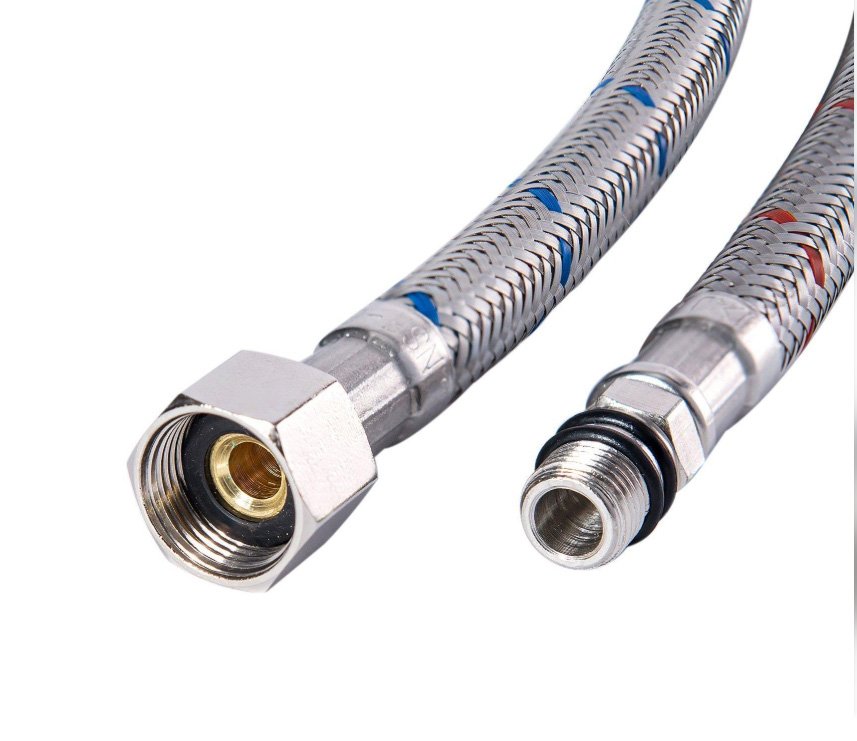
The connecting hoses are often overlooked when purchasing stainless steel faucets. However, they are essential for safe and reliable installation.
A high-quality faucet should come with suitable connection accessories that meet the installation requirements of its target market.
Important details include:
Flexible hose material: Check the quality of the inner tube, outer braid, and fittings.
Thread specifications: Common connection standards vary by country and market. Make sure the thread size and type match the local plumbing system.
Pressure resistance: The hoses should be suitable for the expected water pressure.
Leak prevention: Connections should fit properly and use appropriate sealing components.
Installation convenience: Accessories should be clearly specified and easy to install.
For international importers, it is especially important to confirm whether the faucet uses 1/2-inch, 3/8-inch, or another connection specification.
Do not assume that all countries use the same plumbing connections. Confirm local requirements before ordering.
8. Look for Relevant Quality Certifications and Test Reports
Certifications and testing documents can provide additional confidence when purchasing stainless steel faucets.
However, not every certification applies to every market or product type. Buyers should check the requirements of their destination country.
Some relevant standards and certifications include:
Standard / Certification | What It Relates To |
|---|---|
NSF/ANSI/CAN 61 | Health effects of drinking water system components |
NSF/ANSI/CAN 372 | Lead content requirements for drinking water system components |
WRAS | UK water fittings approval |
WaterMark | Australian plumbing product certification |
cUPC | Plumbing product certification for applicable North American markets |
For faucets used in drinking water systems, lead-content and drinking-water safety requirements are particularly important.
Keep in mind that a manufacturer claiming to use 304 stainless steel does not automatically mean the finished faucet is certified as lead-free.
Ask suppliers for:
Material composition reports
Relevant product certificates
Pressure testing reports
Leakage testing records
Salt spray or corrosion testing reports, where applicable
Cartridge durability testing records
For importers, distributors, and construction contractors, checking documentation before ordering can reduce purchasing risks and improve product consistency.
9. Evaluate Water-Saving Performance and Daily Functionality
A high-quality faucet should not only look good but also perform reliably in everyday use.
Water-saving performance is becoming increasingly important as consumers and businesses pay more attention to water consumption and environmental sustainability.
Many modern stainless steel faucets incorporate practical features such as:
Water-saving aerators
Smooth single-handle operation
Pull-down or pull-out spray functions
Multiple spray modes
Easy-to-clean outlets
Temperature control mechanisms
For bathroom faucets, comfortable water flow and precise temperature control are important.
For kitchen faucets, flexibility, reach, swivel range, and spray functionality may be more important.
The best faucet is not necessarily the one with the most features. It is the one that provides reliable performance and matches the user’s actual needs.
When selecting a faucet for a commercial project, consider the expected frequency of use, maintenance requirements, and availability of replacement components.
10. Choose a Reliable Faucet Manufacturer or Supplier
Even a well-designed faucet can become a poor investment if it comes from an unreliable supplier.
For wholesalers, importers, distributors, and construction companies, choosing the right faucet manufacturer is just as important as choosing the product itself.
A reliable faucet supplier should have professional manufacturing capabilities, stable quality control, and good communication.
What Should You Check Before Choosing a Faucet Manufacturer?
1. Manufacturing experience
Check the manufacturer’s experience in producing kitchen faucets, bathroom faucets, and other sanitary ware products.
2. Product range
A supplier with a comprehensive product range can make sourcing easier and help you develop a more competitive product portfolio.
3. OEM and ODM capabilities
If you need customized faucets, packaging, logos, or product designs, check whether the factory provides OEM and ODM services.
4. Quality control system
Ask how the manufacturer handles incoming material inspection, production inspections, and finished-product testing.
5. Sample availability
Request samples before placing a bulk order. This allows you to check the material, finish, cartridge, installation accessories, and actual performance.
6. After-sales support
A professional supplier should provide clear warranty terms, technical assistance, and replacement-part support.
For overseas buyers, working directly with an experienced stainless steel faucet manufacturer can help improve communication, control purchasing costs, and maintain consistent product quality.
11. Stainless Steel Faucets vs Other Faucet Materials
When choosing a faucet, stainless steel is not the only available material. Brass and zinc alloy are also widely used in the faucet industry.
Understanding the differences can help buyers select the most suitable product for their budget and application.
Comparison | Stainless Steel | Brass | Zinc Alloy |
|---|---|---|---|
Corrosion resistance | Good, depending on grade | Good | Generally lower |
Strength | Good | Good | Moderate |
Weight | Moderate | Relatively heavy | Moderate |
Cost | Medium to high | Medium to high | Usually lower |
Surface finishing | Excellent | Excellent | Good |
Common applications | Kitchen and bathroom | Kitchen and bathroom | Budget-friendly faucets |
Which Material Should You Choose?
Stainless steel faucets: A good choice for buyers who prioritize corrosion resistance, durability, and modern appearance.
Brass faucets: Popular for traditional and premium faucet designs, with good machinability and manufacturing flexibility.
Zinc alloy faucets: Suitable for cost-sensitive applications where competitive pricing is a priority.
There is no single material that is best for every application. The right choice depends on the intended use, budget, local market requirements, and product specifications.
12. Common Mistakes to Avoid When Buying Stainless Steel Faucets
Even experienced buyers can make mistakes when selecting faucets. Here are some common issues to avoid.
Mistake 1: Choosing a faucet based only on appearance
An attractive design does not guarantee good internal quality. Always inspect the cartridge, construction, and materials.
Mistake 2: Assuming all stainless steel faucets are 304 stainless steel
Different stainless steel grades have different properties. Always confirm the material specification.
Mistake 3: Ignoring the cartridge
A poor-quality cartridge can lead to dripping, leakage, and difficult operation, even when the faucet body is made from good-quality stainless steel.
Mistake 4: Focusing only on the lowest price
Very low prices may indicate differences in material grade, accessories, production processes, or quality control. Compare complete product specifications rather than price alone.
Mistake 5: Not checking local installation standards
Different markets may require different hose connections, thread sizes, and product certifications. Confirm these details before placing an order.
Mistake 6: Not testing samples before bulk orders
For wholesalers and importers, testing samples is an important step in reducing the risk of inconsistent product quality.
13. How to Maintain a Stainless Steel Faucet and Extend Its Service Life
Even high-quality stainless steel faucets require proper maintenance.
Following a few simple cleaning practices can help maintain their appearance and performance.
Clean regularly: Use a soft cloth and mild soap to remove dirt, fingerprints, and water stains.
Avoid harsh chemicals: Avoid chlorine bleach, strong acids, and abrasive cleaning products that may damage the surface or protective layer.
Remove mineral deposits: Use a suitable mild cleaning solution according to the manufacturer’s instructions.
Clean the aerator: Remove and clean the aerator periodically to prevent mineral buildup.
Check connections: Inspect flexible hoses and fittings regularly for signs of leakage or wear.
Dry the surface: Wipe the faucet after cleaning to reduce water spots and mineral deposits.
With appropriate maintenance, a well-manufactured stainless steel faucet can provide reliable performance for many years.
14. Final Thoughts: How to Choose the Best Stainless Steel Faucet
Identifying a high-quality stainless steel faucet requires more than checking its appearance or price.
You should consider the stainless steel grade, faucet construction, cartridge quality, surface finish, aerator performance, connection accessories, certifications, and manufacturer reliability.
For homeowners, these factors help ensure a durable and practical faucet.
For wholesalers, importers, and distributors, they are also essential for maintaining product quality, reducing after-sales problems, and building long-term customer relationships.
If you are looking for a reliable stainless steel faucet, prioritize verified material specifications, professional manufacturing, consistent quality control, and suitable product designs.
A good stainless steel faucet is not simply a product that looks attractive. It is a product that combines reliable materials, functional design, and dependable long-term performance.
15. Frequently Asked Questions (FAQs)
The following questions target additional long-tail Google search keywords and can be used as an FAQ section at the end of the article.
The most reliable way is to request a material test report or have the material analyzed using suitable testing equipment, such as X-ray fluorescence (XRF). Visual appearance and weight alone cannot confirm whether a faucet is made of 304 stainless steel.
A magnet test is also not reliable because the magnetic response of stainless steel can change depending on its manufacturing and processing history.
Both materials have advantages. 304 stainless steel offers good corrosion resistance and a modern appearance, while brass is widely used for its strength, machinability, and manufacturing versatility.
The better choice depends on the faucet design, application, budget, and quality of manufacturing.
Stainless steel faucets are corrosion-resistant, but they are not completely rust-proof.
Prolonged exposure to chloride, harsh chemicals, surface contamination, and poor maintenance can cause staining or corrosion. Choosing an appropriate stainless steel grade and maintaining the faucet properly can reduce these risks.
A high-quality stainless steel faucet can last for many years under normal conditions. Its actual lifespan depends on material quality, cartridge performance, water quality, installation, usage frequency, and maintenance.
Stainless steel can be suitable for drinking water applications, but the safety of the finished faucet depends on all water-contact materials and applicable regulations.
Look for relevant drinking-water certifications and lead-content compliance, such as NSF/ANSI/CAN 61 and NSF/ANSI/CAN 372 where applicable.
304 stainless steel is a popular choice for kitchen and bathroom faucets because it offers a good balance of corrosion resistance, strength, and manufacturing performance.
Other grades may also be suitable depending on the intended environment and product requirements.
Yes. Most stainless steel kitchen faucets are relatively easy to maintain. Regular cleaning with mild soap and a soft cloth is usually sufficient. Avoid abrasive cleaners and harsh chemicals.
Wholesalers should evaluate material specifications, cartridge quality, surface finishing, connection standards, certifications, product pricing, factory production capacity, and quality control procedures.
Requesting samples and testing products before placing bulk orders is also recommended.

 English
 Arabic
 Dutch
 French
 German
 Greek
 Irish
 Italian
 Latin
 Polish
 Portuguese
 Russian
 Slovak
 Spanish
 Swedish
 Turkish